Super deals: At least 50% off
Guide
Climbing shoes
Climbing footwear must suit your foot shape and footholds. Scarpa advises beginners to prioritise a comfortable fit over excessive downsizing.
Key points
- A close fit need not be painful; pressure points are not a sign of quality.
- Compare sole stiffness and downturn separately.
- Scarpa explains that stiffer soles offer more support on small edges.
- Check the specific last and width; the audience label alone is insufficient.
Which construction for your use?
| Use | Look for | Why |
|---|---|---|
| Learning and training | Look forComfortable fit | WhyA suitable last helps learning; pain should not distract you from technique. |
| Small footholds | Look forEdging support | WhyA more supportive sole can help you stand on small edges. |
| Volumes and smearing | Look forAdapt to surfaces | WhySofter construction can conform to broad surfaces but calls for appropriate foot tension. |
Types compared
Hook-and-loop (Frequent changes)
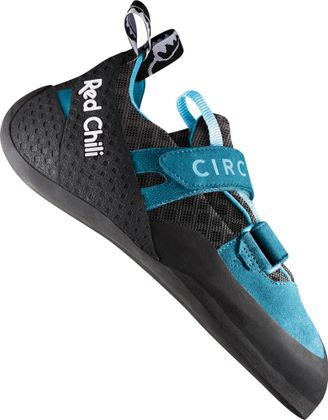
For climbing sessions with frequent shoe changes.
- Advantage: Quick to open
- Drawback: Less detailed than extended lacing
Laces (Detailed fit)
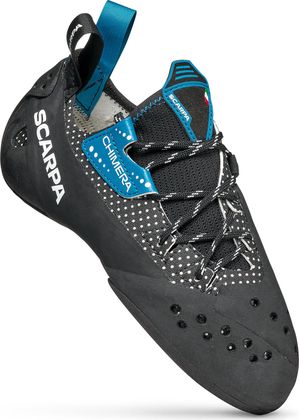
For targeted adjustment along the instep.
- Advantage: Adjustable across several zones
- Drawback: Takes longer to put on
What to check before buying
| Question | In brief | Why |
|---|---|---|
| Which foot shape? | In briefLast first | WhyHeel and forefoot need to match the shape. Not every asymmetry suits every toe profile. |
| How tight? | In briefKeep control | WhyExcess space reduces precision; painful pressure can restrict movement. |
| Which fastening? | In briefAdjustment or quick changes | WhyLaces allow detailed adjustment; straps help with frequent changes. |
| Audience and fit | In briefCheck this model | WhyCompare the actual heel shape, instep volume and width. Size labels alone cannot establish the fit. |
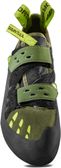
| Sole rubber | In brief4 mm | WhyLa Sportiva specifies 4 mm for the La Sportiva Tarantula. This is model-specific; compare other models separately. |
Frequently asked questions
Must I buy several sizes smaller?
Not as a blanket rule. Sizing varies between brands and models. Scarpa particularly recommends a comfortable, close fit for beginners.
Do I immediately need a strong downturn?
No. Foot shape, technique and the footholds you use matter. A well-fitting, less aggressive model may make more sense for learning.
Are men’s shoes always wider?
The label alone is insufficient. Last volume and heel shape are model-specific, so compare the manufacturer’s description.
When should I inspect the sole?
Check rubber and rand regularly. Repair may be possible before the rand wears through; ask the brand or a specialist repairer.
What matters for this audience?
A men’s or unisex label does not specify width. Compare heel hold, instep volume and forefoot width on the actual model; extra length cannot fix a last that is too narrow.
Last updated: October 2026
What matters to you?
Learning & training
For learning, prioritise a close but comfortable fit. Compare lasts and sole support without treating painful pressure as a necessary climbing-shoe feature.
- Suitable last
- Comfortable fit
- Compare support
Find your fit
Heel, instep and toe shape need to match the last. A men’s category does not mean one standard width. Compare the actual model’s volume and fit.
- Suitable heel shape
- Check instep volume
- No painful toe pressure
Compare soles
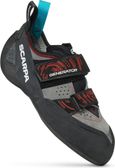
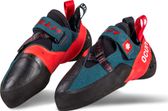
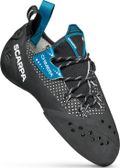
Compare stiffness and friction for your footholds. Scarpa explains that stiffer soles can support small edges while softer construction conforms better to broad surfaces.
- Consider foothold shapes
- Compare sole stiffness
- Assess downturn separately
Choose a fastening
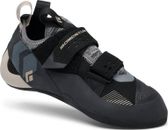
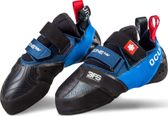
Straps help with frequent changes, while laces can distribute tension across more zones. Check whether the fastening adjusts to your instep without pressure.
- Instep adjustment
- Consider frequent changes
- Fastening without pressure
No products match these filters.


