Super deals: At least 50% off
Guide
Skis
Choose skis by terrain, ability and how much touring you do. Width and flex affect edge changes and float; bindings and boots must be approved to work together.
Key points
- Narrower skis change edges more easily on firm pistes.
- Wider models add surface area for soft and deep snow.
- Bindings and boots must match; use a specialist for mounting and adjustment.
Which ski for which terrain?
| Use | Choice | Limit |
|---|---|---|
| Giant slalom or slalom turns on hard piste | ChoiceRace | LimitNeeds strength and technique. Hard work on a relaxed day |
| Fast piste days, short to medium turns | ChoiceSports Carver | LimitToo narrow away from the piste |
| Piste, chopped-up snow, detours off the side | ChoiceAll Mountain | LimitA carver grips better on ice, a powder ski floats better |
| Deep snow off-piste | ChoicePowder Skis (freeride) | LimitSlow from edge to edge on hard piste. For confident skiers only |
| First seasons on blue and red runs | ChoiceBeginner Skis | LimitUnsettled at speed |
Types compared
All-mountain

For pistes and mixed snow conditions.
- Advantage: Balance of edging and float
- Drawback: Wider than a dedicated piste ski
Freeride
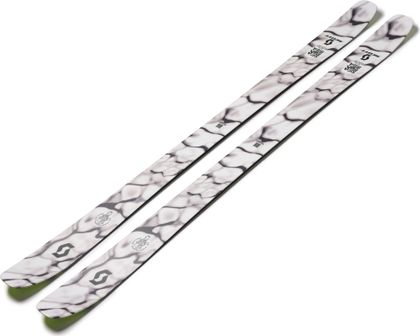
More surface area for soft and deep snow.
- Advantage: Float in soft snow
- Drawback: Less nimble on firm pistes
What to check before you buy
| Question | In short | Why |
|---|---|---|
| How long should my skis be? | In shortHeight minus 5–15 cm | WhyBeginners choose skis 10 to 15 cm shorter than their height, intermediates 5 to 7 cm shorter. Strong skiers go close to their own height. These are manufacturers' guidelines. |
| What waist width do I need? | In short63 to 120 mm | WhyWaist width is measured under the binding. At 63 to 74 mm a ski is quick from edge to edge and grips on hard piste. 74 to 92 mm is all-mountain territory. |
| What does the turn radius tell me? | In short13 m tight, 19 m wide | WhyRadius is the arc a ski carves when set on edge. Around 13 m gives short turns, 15 to 17 m does a bit of everything, 19 m or more stays calm at speed. |
| Rocker or camber? | In shortCamber for edge grip | WhyCamber is the arch under your foot; it presses the edge into groomed snow. Rocker means the tip or tail rises early, so the ski starts a turn more easily and floats in powder. |
Frequently asked questions
Are bindings included?
Only when the description names a set. Otherwise you need compatible bindings and professional mounting.
Does every boot fit every binding?
No. Manufacturer approvals decide compatibility. Have boots, bindings and adjustment checked together by a specialist.
When should I wax skis?
When the base looks dry and grey or glide deteriorates. Follow the care instructions for your skis.
What is waist width?
The width under the binding, in millimetres. It helps compare edge changes and float, but is not the only selection criterion.
Last updated: October 2026
What for?
Pistes
For mostly groomed pistes, prioritise controllable edge grip. These are versatile skis rather than dedicated race carvers. Choose length and flex for your ability and height.
- Match your ability
- Choose length and flex
- Compare edge grip

All-mountain
For mixed ski days, compare waist width, flex and weight. Wider skis help in soft snow but take more movement to change edges on firm pistes.
- Compare waist widths
- Consider piste use
- Match the flex

Deep snow
In soft and deep snow, a larger surface area helps float. Wide freeride skis are less nimble on firm pistes. Uncontrolled terrain also requires planning, skills and complete emergency equipment.
- Wider waist
- Compare rocker
- Planning and training

Ski touring
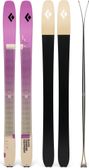
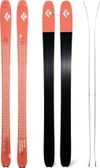
For climbs, use touring skis with compatible bindings and skins. Compare total system weight and boot-binding approval; a light touring ski behaves differently from a heavier alpine ski.
- Total system weight
- Matching skins
- Approved boot-binding pairing


No products match these filters.


