Don't have a SportFits user account yet? Then register now, save on your first order, and enjoy many benefits such as parcel tracking and easy returns.
This website uses cookies, which are necessary for the technical operation of the website and are always set. Other cookies, which increase the comfort when using this website, are used for direct advertising or to facilitate interaction with other websites and social networks, are only set with your consent.
Configuration
Technically required
These cookies are necessary for the basic functions of the shop.
"Allow all cookies" cookie
"Decline all cookies" cookie
Adyen JSESSIONID
Adyen _fbp
Adyen _ga
Adyen _gcl_au
Adyen _gid
Adyen _hjid
Adyen _mkto_trk
Adyen _rp_uid
Adyen _uetsid
Adyen _uetvid
Adyen datadome
Adyen gdpr
Adyen lastUpdatedGdpr
Adyen rl_anonymous_id
Adyen rl_user_id
Amazon Pay
CSRF token
Cookie preferences
Currency change
Customer recognition
Customer-specific caching
Editor functionality
Individual prices
PayPal payments
Selected shop
Session
Comfort functions
These cookies are used to make the shopping experience even more appealing, for example for the recognition of the visitor.
Note
Statistics & Tracking
Affiliate program
Conversion and usertracking via Google Tag Manager
The grip zone of a classic wax ski must hold during the kick and release during the glide. Read the separate temperature ranges for new and transformed snow.
Key points
Apply kick wax only to the designated grip zone of classic wax skis.
Distinguish fresh snow from transformed grains when reading the tin.
Several thin layers are easier to cork smooth than one thick layer.
On an icy track, klister may be the better choice.
Bear in mindRead the temperature range for new snow on the tin.
Transformed snow
ChooseWax with a suitable old-snow range
Bear in mindThe grain surface changes as snow transforms.
Around freezing
ChooseWax for the actual snow type
Bear in mindDamp new snow and icy grains need different treatment.
Long outings
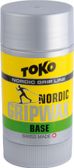
ChooseCompatible base wax underneath
Bear in mindA binder helps the upper layers stay on the ski.
What to look for
Question
In brief
Why
Which temperature?
In briefRead the tin carefully
WhyBrands may distinguish air and snow temperatures as well as new and old snow.
How much wax?
In briefStart thin and cork smooth
WhyExtra thin layers let you adjust grip more precisely than a thick lump.
Where does it go?
In briefWithin the established grip zone
WhyIts length and position depend on the ski and load. Keep the glide surfaces clear of grip wax.
What else is needed?
In briefCork and scraper
WhyYou need suitable tools for smoothing and removal even when buying only a replacement tin.
Common questions
Can I put kick wax on a skin ski?
Use only care products explicitly intended for the skin. Conventional kick wax belongs on the grip zone of a waxable classic ski. Follow your ski's care instructions before applying anything.
Why does my ski slip backwards?
Check that the wax matches the snow and temperature and that the grip zone is correctly established. A ski that is too stiff or an incomplete kick can also reduce grip.
What if snow sticks to the base?
Remove the iced or dirty wax and reassess the snow conditions. Around freezing, even a small change in weather may call for a different wax. Simply adding a softer layer can make sticking worse.
Do I need hard wax or klister?
Hard wax often suits fresh or fine-grained snow. Klister is more commonly used on coarse, wet or icy grains. Follow the specific snow recommendation for the wax rather than relying on its colour.
This website uses cookies, which are necessary for the technical operation of the website and are always set. Other cookies, which increase the usability of this website, serve for direct advertising or simplify interaction with other websites and social networks, will only be used with your consent.
More information