Super deals: At least 50% off
Guide
Running Jackets
For most runs, a thin windproof running jacket with a water-repellent finish is all you need. Go fully waterproof for sustained rain and for mountain races that list it as mandatory kit.
Key points
- For most runs, a thin windproof running jacket is enough.
- Waterproof for sustained rain or when a race requires it.
- In winter, blocking the wind beats adding insulation.
Which type for which use?
| Use | Choose | Reason |
|---|---|---|
| Road and park runs on cool, breezy days | ChooseWindshell | ReasonVery light, blocks wind and drizzle, often stuffs into its own pocket. Wets out quickly in steady rain |
| Sustained rain, mountain and fell races | ChooseWaterproof running jacket | ReasonMembrane, taped seams and a hood keep rain out. Runs warm at speed |
| Brisk runs in cold wind | ChooseHybrid jacket | ReasonWindproof front, vented back. No rain protection on the back |
| Easy runs below freezing | ChooseThermal running jacket | ReasonLight insulation, no thick mid-layer needed. Too warm for tempo runs and mild days |
| Spring and autumn, fast sessions | ChooseRunning gilet | ReasonCovers the core, leaves the arms free. No rain protection, arms get cold |
Types compared
Windshell
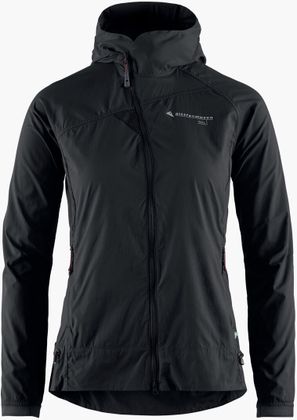
For road and park runs on cool, breezy days.
- Advantage: Very light
- Drawback: Wets out quickly in steady rain
Rain jacket (Waterproof)
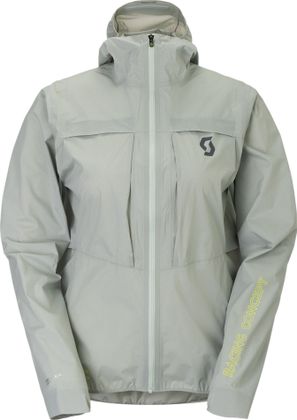
For sustained rain, mountain and fell races.
- Advantage: Membrane and taped seams keep rain out
- Drawback: Runs warm at speed
What to look for when buying
| Question | In brief | Why |
|---|---|---|
| How warm should a running jacket be? | In briefSlightly cool at first | WhyLighter than you think. Your body warms up within minutes of setting off. If you are slightly chilly for the first few minutes, the running jacket is right. |
| When does a running jacket need to be waterproof? | In brief10,000 mm and up | WhyIn sustained rain and in mountain races. The Zugspitz Ultra Trail requires taped seams and at least 10,000 mm hydrostatic head on every course. |
| What does the RET value tell you? | In briefRET under 6 | WhyRET measures how much a fabric resists sweat vapour, so lower is better. The German Alpine Club rates values under 6 as very good breathability. |
Frequently asked questions
What is the difference between a running jacket and a rain jacket?
A running jacket is usually lighter, closer-cut and better vented than a hiking rain jacket. Many running jackets are only water-repellent: the DWR (durable water repellent) finish makes showers bead off, but the seams are not taped.
Running jacket or gilet?
A gilet when only your core needs cover: in cool, dry weather and for fast sessions. A running jacket as soon as there is rain, strong wind or frost.
How should a running jacket fit?
Close to the body without pulling. Raise your arms when you try it on: the hem should stay over your waistband and the cuffs should cover your wrists. Fabric that flaps cools you down.
How do I wash a running jacket?
Follow the care label, use a little liquid detergent and no fabric softener. Gore recommends 40 °C for its fabrics, then a further 20 minutes in the tumble dryer once the jacket is dry. The warmth revives the water-repellent finish.
More from the magazine
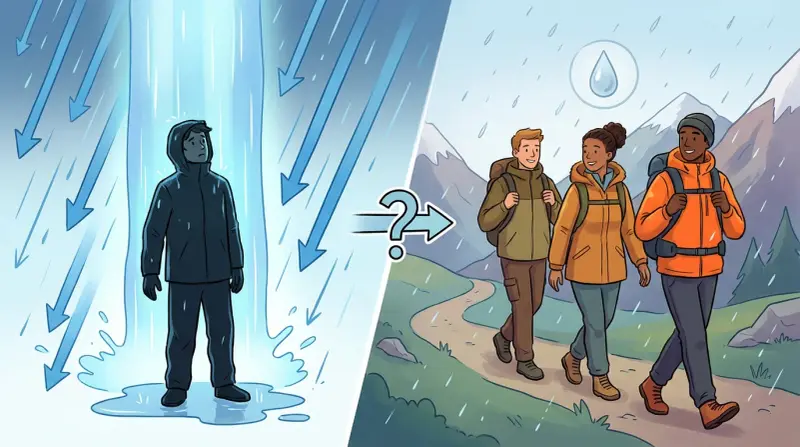 Why 30,000 mm is not always betterHydrostatic head is the most quoted buying criterion for rain jackets and tents, and the most misunderstood. We clear up the most persistent myths.
 Your first half marathon: how to prepareSawe ran 1:59:30 in London, a mark for the history books. Here is how to prepare for your own first half marathon and reach the finish without frustration.
Last updated: October 2026
Road
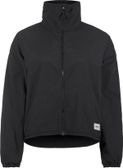
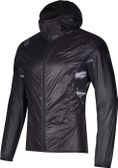
On road and park runs, a thin windproof, water-repellent jacket is enough. After dark, wear a light colour with reflective panels: ADAC puts visibility at up to 140 m, not 25.
- windproof
- water-repellent
- reflective panels
- packs small
Trail
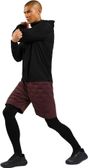
For mountain trails, take a waterproof jacket with a hood and taped seams. The Zugspitz Ultra Trail requires 10,000 mm or more, the Eiger Ultra Trail recommends 20,000 mm.
- 10,000 mm and up
- hood
- taped seams
- fits a race vest
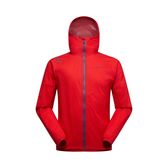
Rain
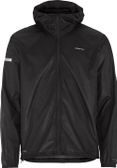
For sustained rain, pick a waterproof jacket with a membrane and taped seams: 10,000 mm is the minimum several trail races set. For a short shower, a windshell vents better.
- waterproof
- taped seams
- hood
- venting
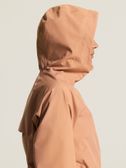
Winter
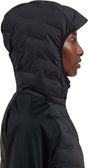
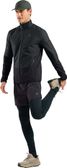
For winter runs, a windproof running jacket matters more than thick padding: at 0 °C with a 20 km/h wind the air feels like −5 °C. Light insulation pays off below freezing at an easy pace.
- windproof
- light insulation
- reflective panels
- high collar


Brands we carry


- adidas
- Alé
- Athlecia
- Bergans
- Berghaus
- Black Diamond
- CEP
- CMP
- Columbia
- Craft
- Crazy
- Daehlie
- Dainese
- Dare2b
- Dynafit
- EA7
- Endura
- Falke
- Ferrino
- Goldbergh
- Haglöfs
- Halti
- Helly Hansen
- Houdini
- Jack Wolfskin
- Kari Traa
- Karpos
- Klättermusen
- La Sportiva
- Löffler
- Maloja
- Martini
- MAUL Sport
- Millet
- Montura
- O'Neill
- Odlo
- Outdoor Research
- Picture
- Puma
- Rab
- Rossignol
- Salewa
- Scott
- SOS
- Sportful
- Super.Natural
- Swix
- Ternua
- The North Face
- Under Armour
- Uyn
- VAUDE
- Whistler
- X-Bionic
No brand found