
Sale: from 50 % off
No products match these filters.




Top brands in Outdoor & Hiking Pants


Show all brands
- 4F
- 8848 Altitude
- adidas
- adidas Terrex
- Almgwand
- Armada
- Athlecia
- Atomic
- Bergans
- Berghaus
- Black Diamond
- Bogner Fire + Ice
- Carhartt
- Carinthia
- Celavi
- Chillaz
- CLWR ColourWear
- CMP
- cmp - collective (of) moving people
- CMP Leisure
- Colmar
- Colmar Originals
- Color Kids
- Columbia
- Cotopaxi
- Craft
- Craghoppers
- Crazy
- Daehlie
- Dare2b
- Devold of Norway
- Didriksons
- DU/ER
- Dynafit
- EA7
- Edelrid
- Elevenate
- Endura
- Falke
- Ferrino
- Finkid
- Fischer
- Fjällräven
- Goldbergh
- Gonso
- Haglöfs
- HAIX
- Halti
- Helly Hansen
- Holebrook
- Horsefeathers
- Houdini
- Icebreaker
- Isbjörn
- J.Lindeberg
- Jack Wolfskin
- Jeanne Baret
- Kari Traa
- Karpos
- killtec
- Klättermusen
- La Sportiva
- LEGO® kidswear
- Liewood
- Lundhags
- Löffler
- Maier Sports
- Maloja
- Mammut
- Mandala
- Marmot
- Martini
- MAUL Sport
- MC2 Saint Barth
- Millet
- Mini a ture
- Minymo
- Mons Royale
- Montura
- Mountain Hardwear
- Napapijri
- Nike ACG
- Nikkie
- Nordisk
- O'Neill
- Oakley
- Ocun
- Odlo
- Orage
- Outdoor Research
- Pajak
- Picture
- Pinewood
- Protective
- Protest
- Puma
- Rab
- Red Chili
- Reima
- RipCurl
- Rossignol
- Royal Robbins
- Salewa
- Salty Crew
- Save the Duck
- Schöffel
- Scott
- SOS
- Sportalm
- Sportful
- Spyder
- Super.Natural
- Swix
- Tatonka
- Tenson
- Ternua
- The North Face
- Timberland
- Trespass
- U-Power
- Under Armour
- Uyn
- Vans
- VAUDE
- Viking
- Wheat
- Whistler
- X-Bionic
- Ziener
No brand found
Guide
Outdoor & Hiking Trousers
Walking trousers should dry fast and let you step up freely. Add softshell trousers for windy, colder days higher up.
Key points
- For most walks: walking trousers plus overtrousers.
- Waterproof only with a membrane or coating and taped seams.
- Overtrousers: as a guide, 15,000 mm hydrostatic head.
Which type for which use?
| Use | Choose | Reason |
|---|---|---|
| Walking from spring to autumn, travel | ChooseTrekking trousers | ReasonLight, quick to dry, airy. Little wind protection, no warmth |
| Mountain days, via ferrata, scrambling, cool and windy weather | ChooseSoftshell trousers | ReasonStretch, wind protection, some warmth. Slower to dry, too warm in the valley in summer |
| Steady rain and wet snow, worn over other trousers | ChooseWaterproof overtrousers | ReasonWaterproof thanks to a membrane. Little stretch, clammy on long climbs |
| Winter walks, snowshoeing, sledging | ChooseInsulated trousers | ReasonWarm without a second layer. Too warm uphill, no substitute for ski trousers |
What to look for when buying
| Question | In brief | Why |
|---|---|---|
| Water-repellent or waterproof? | In briefDWR or membrane | WhyWater-repellent trousers carry a DWR finish that sheds a shower. |
| What hydrostatic head do overtrousers need? | In briefFrom 15,000 mm | WhyMore than for a jacket: kneeling, sitting and a hip belt all raise the pressure on the fabric. |
| When are softshell trousers worth it? | In briefIn wind and cold | WhyAs soon as the wind gets up. Softshell is more tightly woven than trekking fabric, cuts the wind and has plenty of stretch. |
Frequently asked questions
Do I need overtrousers as well?
For persistent rain, yes. A water-repellent finish sheds a shower, but after a while water presses through the fabric. Pack overtrousers with long side zips, which go on over your boots.
Read more in the magazine
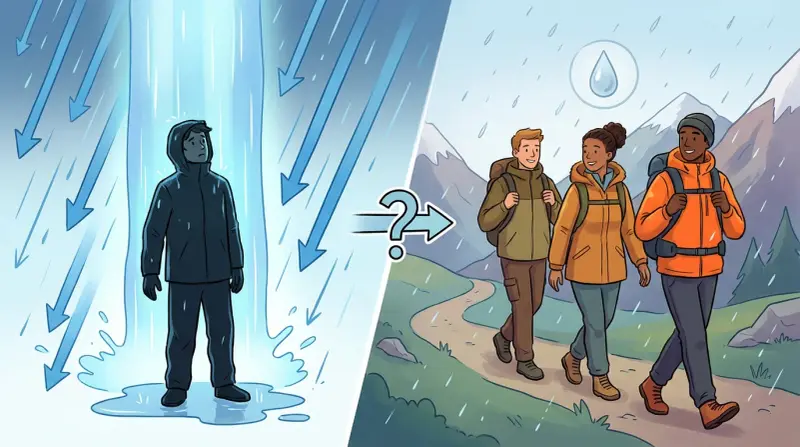 Why 30,000 mm is not always betterHydrostatic head is the most quoted buying criterion for rain jackets and tents, and the most misunderstood. We clear up the most persistent myths.
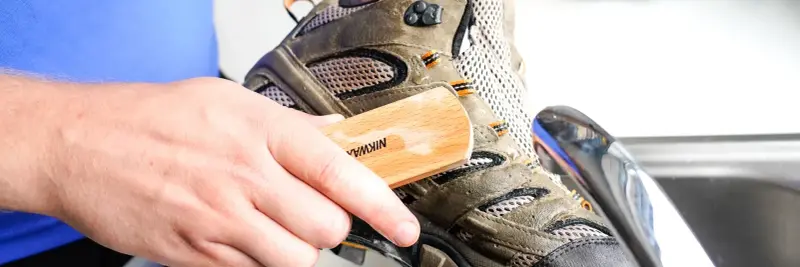 Nikwax: PFAS-free care and waterproofingSince 1977, Nikwax has made water-based care and waterproofing products for outdoor gear. Now available at SportFits.
Last updated: November 2026