
Sale: from 50 % off


Guide
Men’s mountain boots
Flexible mountain-walking footwear differs greatly from stiff alpine boots. Identify route, ice and cold before comparing sole stiffness and crampon fittings.
Key points
- A high ankle does not automatically make a boot suitable for mountaineering.
- The exact boot, crampon and binding combination must be approved.
- On descents, toes need room and heels should remain secure.
What does your route require?
| Use | Choose | Bear in mind |
|---|---|---|
| Mountain walking without ice | ChooseA boot that rolls comfortably | Bear in mindCheck grip and foot hold for the path. |
| Technical alpine route | ChoosePurpose-designed mountain boot | Bear in mindCheck the crampon combination with expertise. |
| Cold alpine objectives | ChooseSuitable insulated boot | Bear in mindRead intended use and insulation details. |
| Rocky mountain paths | ChooseSupportive sole | Bear in mindAvoid unnecessary difficulty when walking. |
Walking or technical climbing?
Mountain walking boot (Long approaches)
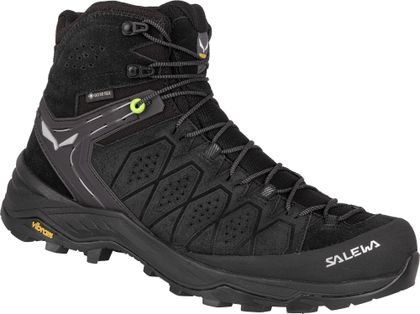
More rolling movement for extended walking sections.
- Advantage: More comfortable on easy paths
- Drawback: No universal crampon approval
Technical mountain boot (Alpine terrain)
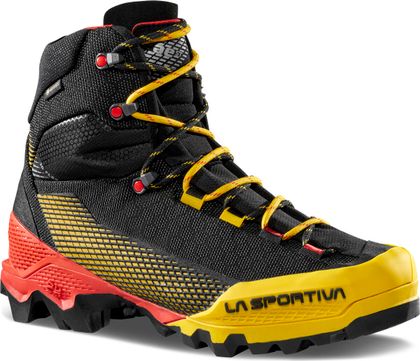
A supportive construction for the stated alpine use.
- Advantage: More support on small footholds
- Drawback: Stiffer on level walking paths
What to look for
| Question | In brief | Why |
|---|---|---|
| Which crampons? | In briefCheck the whole combination | WhyBaskets, heel levers and toe bails impose different requirements. Do not choose solely by visible sole welts. |
| How warm? | In briefMatch objective and duration | WhyA light summer boot is not an insulated winter boot. The manufacturer’s intended-use description is the guide. |
| Which fit? | In briefTry with mountain socks | WhyThe heel should hold on climbs and toes should not hit the front downhill. Tight lacing cannot fix the wrong last. |
Common questions
Can every shoe here take crampons?
No. More flexible walking and approach models also appear. Check the exact manufacturer approval and the crampon binding system.
Does a heel welt fit any crampon?
No. The front attachment, sole shape, stiffness and binding also need to match. Check the complete combination according to instructions.
Do I always need the stiffest boot?
Not for every route. Extra support can help on small footholds but makes rolling through easy approaches less comfortable.
Can I use my usual shoe size?
Only as a starting point. Models and lasts differ. Try with mountain socks and check climbing, descending and toe space.
Last updated: November 2026