Stories
Dynafit: Ski touring boots, mountain systems and trail running gear explained
In partnership withDynafit
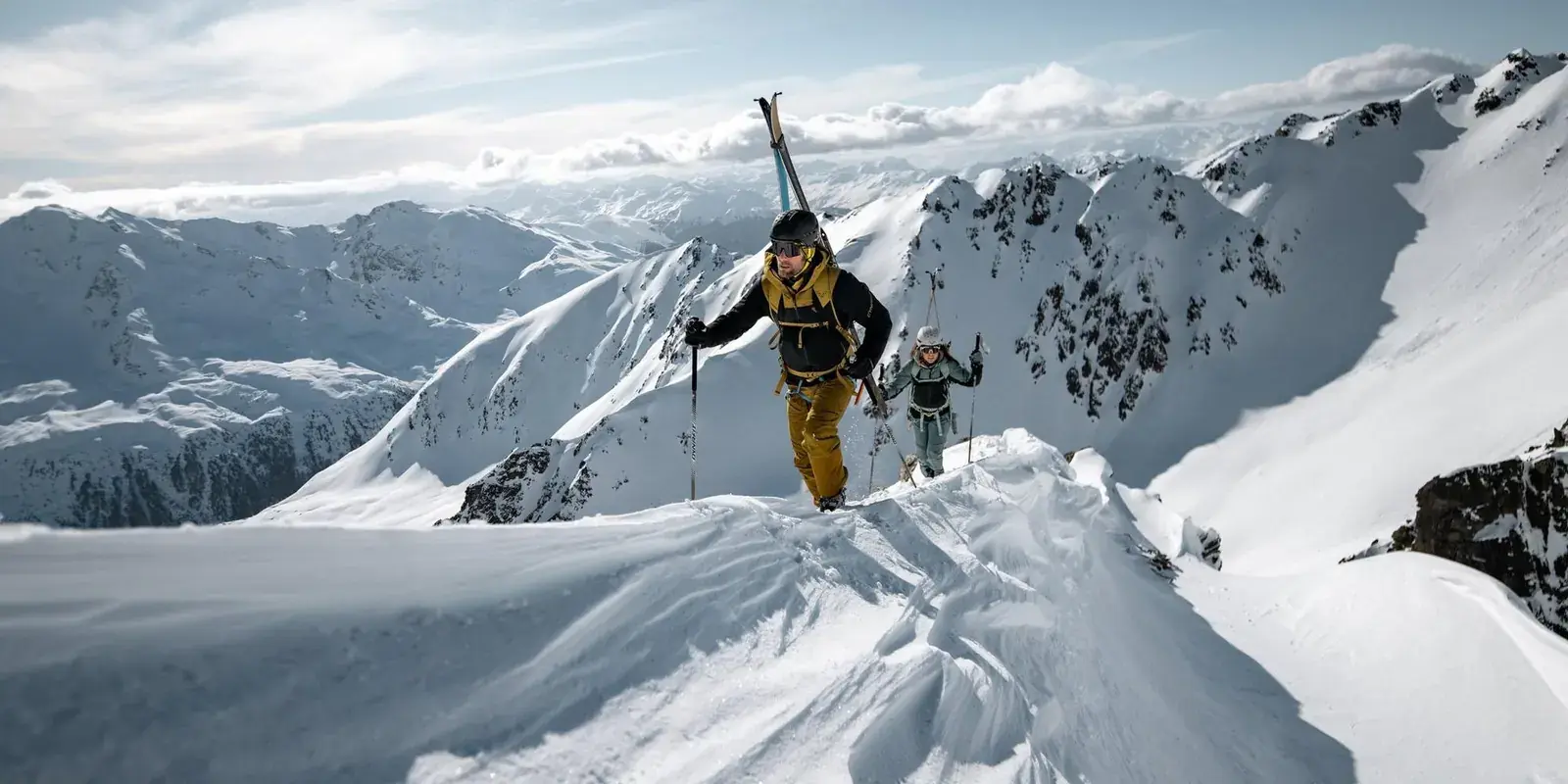
Rooted in Austrian ski boot making since 1950 and transformed by Fritz Barthel's 1984 pin binding, Dynafit builds lightweight mountain systems for winter ascents and summer trails. Here is how TLT, Radical, Ridge, Tigard, Ultra and Transalper compare.
The essentials at a glance
- 01
Dynafit's roots go back to 1950, when Austrian footwear maker Humanic began building ski boots, before incorporating DYNAFIT as its own brand in 1969 and joining South Tyrol's Oberalp Group in 2003.
- 02
In 1984, Austrian inventor Fritz Barthel created the metal-pin Low Tech binding, leading to Dynafit's 1990 Tourlite Tech boot-binding combination that reshaped modern ski mountaineering.
- 03
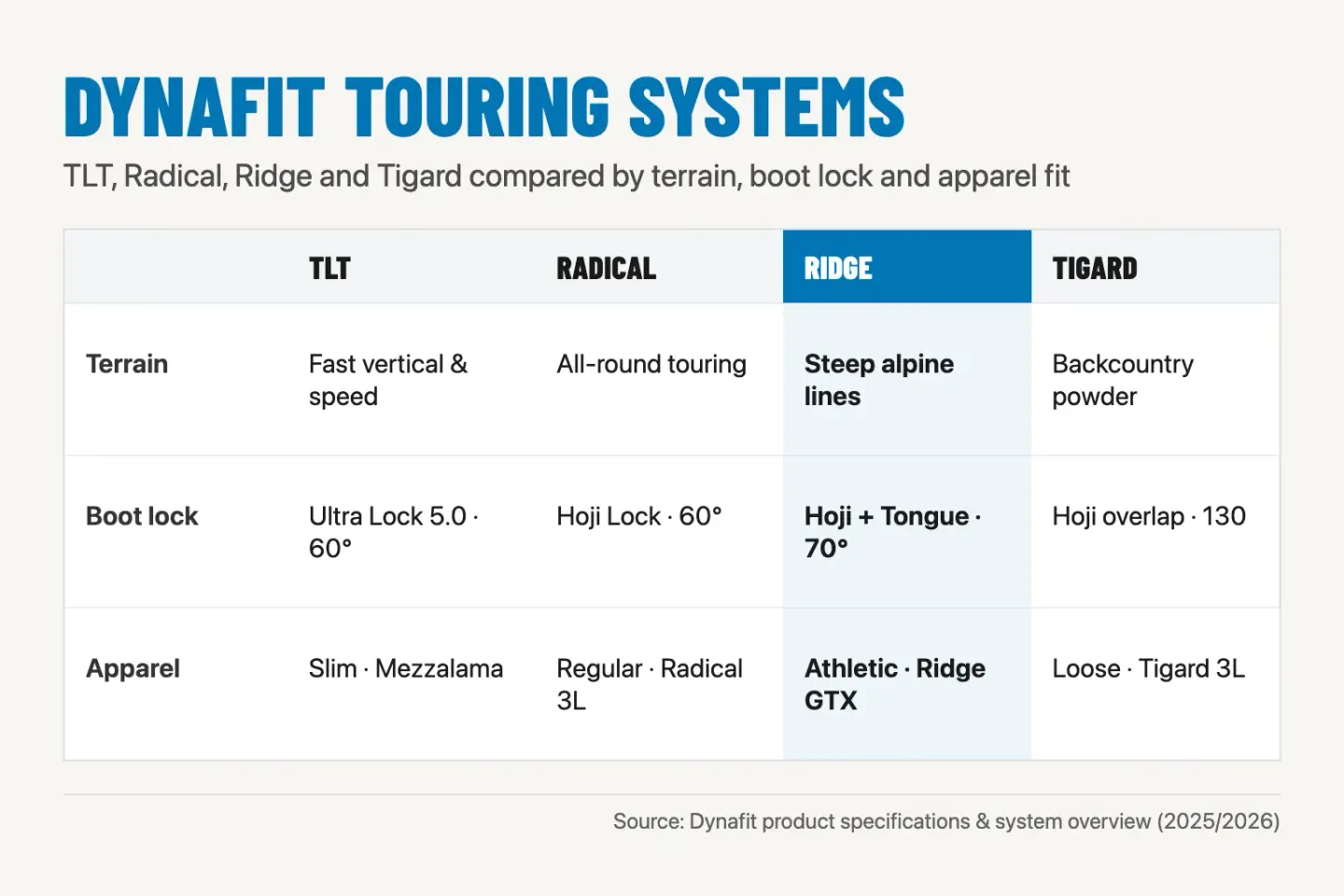
Winter hardware and clothing follow four clear system lines: TLT / Speed for rapid vertical gain, Radical for classic all-round touring, Ridge for steep technical lines (70° cuff rotation) and Tigard for backcountry descents.
- 04
Summer footwear splits cleanly between cushioned Ultra 100 V3 ultra-trail shoes (279 g, 6 mm drop), mud-biting Feline SL GTX models and rock-armoured Traverse 2 and Transalper 2 mountaineering shoes.
Every extra hundred grams on your feet feels five times heavier after a thousand vertical metres on skins. Yet shaving weight blindly ruins the descent if your boot cuff flexes like soft plastic on wind-pressed snow or your shell wets out on an exposed col. Balancing uphill economy against downhill authority is the engineering problem Dynafit has chased for more than seven decades.
Look across the snow-leopard range today and the product names repeat across boots, jackets, trousers and packs: TLT, Mezzalama, Speed, Radical, Ridge, Tigard, Ultra, Alpine, Traverse and Transalper. Dynafit organises its catalogue as head-to-toe mountain systems rather than isolated garments. Once you know what each family prioritises, choosing the right setup becomes straightforward.
Dynafit started on race courses long before ski mountaineering went lightweight. In 1950, Austrian shoe manufacturer Humanic began producing leather and buckled ski boots that soon carried racers to alpine podiums. Nineteen years later, in 1969, DYNAFIT was officially incorporated as an independent brand, equipping downhill icons including Franz Klammer and Leonhard Stock during their World Cup and Olympic victories in the 1970s and 1980s.
Four milestones that built modern ski touring
The decisive pivot away from heavy alpine frame bindings arrived in the mid-1980s:
- 1984 (Fritz Barthel's pin binding): Tired of hauling heavy frame bindings uphill, Austrian engineer Fritz Barthel placed two spring-loaded metal pins onto a minimalist toe piece and milled matching metal inserts straight into the boot toe. The frameless Low Tech pin binding was born.
- 1990 (Tourlite Tech): Dynafit brought Barthel's invention into series production with the Tourlite Tech, the first integrated boot-and-pin-binding combination, slashing foot weight on long alpine climbs.
- 2003 and 2005 (Oberalp Group & snow leopard): Acquired by the Salewa Group within South Tyrol's family-owned Oberalp Group in 2003, Dynafit relaunched in 2005 under the snow leopard emblem, shifting from standalone boots to complete ski touring systems.
- 2012 onwards (365-day mountain brand): Building on winter race fabrics and Vibram/Pomoca outsole partnerships, Dynafit expanded into summer trail running, speed hiking and athletic mountaineering.
A quick service note matters if you are buying hardware now. According to Dynafit, due to updated EU consumer regulations effective 27 September 2026, newly purchased items can no longer be registered online for the former ten-year Lifetime Guarantee. All products registered before 27 September 2026 retain their full guarantee coverage, while newer gear is handled directly through Dynafit's Customer Care product service team with proof of purchase and photos of the issue.
Picking a Dynafit ski touring boot comes down to two numbers and one lever: cuff rotation on the skin track, shell stiffness on the descent and how fast the ski-walk mechanism locks everything down with cold gloves on a windy summit.
TLT X and TLT X PU: Montebelluna speed for big vertical days
Handcrafted in Montebelluna, Italy, the TLT line targets tourers who measure winter days in vertical metres per hour. The Dynafit TLT X Boot weighs 1,030 g (with a dedicated women's last on the Dynafit TLT X W Boot), while the polyurethane-shelled Dynafit TLT X PU Boot sits at 1,140 g for extra damping on firmer snow.
Both models deliver 60 degrees of cuff rotation for an unrestricted stride. Instead of heavy forefoot buckles, a Twistfit dial tensions a steel cable evenly across the instep and heel, paired with the Ultra Lock 5.0 rear lever that flips between walk and ski modes in one motion around a thermoformable Dynafitter 5 liner.
Radical, Ridge and Seven Summits: Hoji Lock power and Floating Tongue agility
Once skis widen past 90 mm or couloirs steepen, cuff rigidity takes priority. Co-developed with freerider Eric "Hoji" Hjorleifson, Dynafit's patented Hoji Lock System links the rear ski-walk lever directly to the upper cuff buckle and power strap via an internal cable. Flip one lever down and the boot locks into ski mode with zero play between cuff and lower shell; flip it up and the upper cuff releases instantly for skinning without unbuckling straps.
- Radical Pro & Radical W: Built for classic all-round touring, the Dynafit Radical Pro Boot combines the full Hoji Lock mechanism with 60° cuff rotation, a flexible Pebax tongue, Driving Spoiler 2.0 and Vibram lugged soles. Women looking for a slightly more forgiving flex and anatomical cuff height can step into the Dynafit Radical W Boot with Hoji Single Lock.
- Ridge & Ridge W: Aimed at steep high-alpine traverses, the Dynafit Ridge Boot and women's Dynafit Ridge W Boot pair glass-fibre-reinforced Grilamid shells and Hoji Lock (110 progressive flex) with a patented Floating Tongue. During the climb, the tongue slides horizontally with your ankle to unlock 70° of cuff rotation without shin bang.
- Seven Summits Boot: Prefer traditional buckle simplicity? The Dynafit Seven Summits Boot combines a PU shell, Irfran cuff, Pomoca sole and a straightforward Speedlock ski-walk lever with a Safety Lock Hook.
- Triple-certified head protection: Above the boots, the 310 g Dynafit TLT Helmet pairs an in-mould polycarbonate shell and EPS core with triple safety certification across alpine skiing (EN 1077 B), climbing and mountaineering (EN 12492) and cycling.
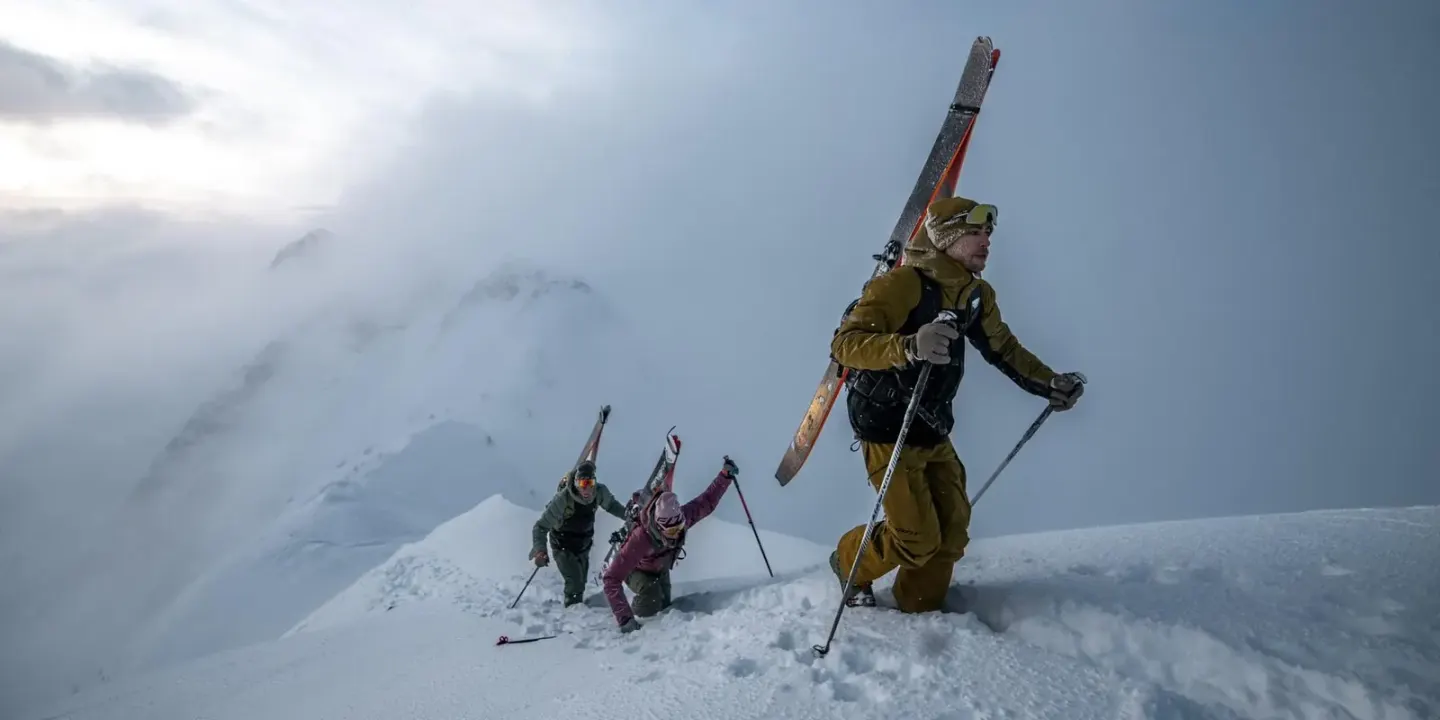
Sweat management makes or breaks winter layering. Skinning uphill generates heat comparable to tempo running; ten minutes later on an icy ridge, wind chill drops fast. Dynafit splits its winter clothing along the exact same system grid as its boots.
Active insulation & softshells for fast climbs (Mezzalama & Mercury)
On dry winter days, a breathable softshell and active synthetic insulation dump far more vapour than a sealed hardshell. The slim-cut Dynafit Mezzalama Polartec Alpha Jacket M and lighter Dynafit Mezzalama Polartec Alpha Vest M place Polartec® Alpha® insulation behind a wind-resistant shell with laser-cut back perforations so excess heat escapes under a pack. Below the waist, the 571 g Dynafit Mercury Dynastretch Pants M use brushed woven Dynastretch (65% polyamide, 26% polyester, 9% elastane) with side vent zips, integrated snow gaiters and edge guards.
Classic touring & alpine summits (Radical & Ridge)
When summit wind or wet snowfall moves in, Radical and Ridge balance packable down with 3-layer storm shells:
- Water-repellent 800 cuin down: Both the Dynafit Radical RDS Down Hood Jacket W and men's Dynafit Radical RDS Down Hood Jacket M pack 800 cuin (95/5) goose down (RDS-certified according to Dynafit) treated against moisture clumping, adding stretch underarm gussets for pole reach. Shaving even more pack volume, the Dynafit Ridge Ultralight Down Jacket M wraps 800 cuin (95/5) water-repellent down inside a 100% recycled polyamide ripstop shell with PFAS-free DWR (according to Dynafit).
- Hybrid midlayers: For cold skinning without clammy sleeves, look to the body-mapped Dynafit Radical INS Hybrid Jacket M in Polartec® Power Stretch Pro® or the 4-way-stretch Dynafit Ridge Thermal Hoody M (93% polyester with 55% recycled content according to Dynafit, 7% elastane).
- 20k/20k & GORE-TEX legwear: The Dynafit Radical 3L Pants M (matched on the women's side by the Dynafit Radical 3L Jacket W) use Dynashell 3L rated at 20,000 mm waterproofness and 20,000 g/m²/24h (MVTR) breathability (86% recycled polyamide, 14% elastane according to Dynafit). For rocky couloirs, the Dynafit Ridge GTX Pants M step up to a GORE-TEX membrane.
Free-touring protection (Tigard)
Cut looser for dynamic powder turns and resort-to-backcountry laps, the Dynafit Tigard 3L Stretch Jacket W uses PFAS-free 4-way-stretch Dynashell 3L (20,000 mm hydrostatic head, 20,000 g/m²/24h breathability; 87% recycled polyamide, 13% elastane according to Dynafit) with a helmet-compatible hood and snow skirt, pairing cleanly with the Dynafit Tigard GTX Pants M. Underneath, the Dynafit Tigard Alpha Direct Jacket M exposes Polartec® Alpha® Direct fibres directly on the inside for rapid moisture transport, while the Dynafit Tigard Down RDS Jacket M delivers 800 cuin (95/5) recycled Re:down warmth (according to Dynafit) for frigid midwinter lifts and ridge waits.
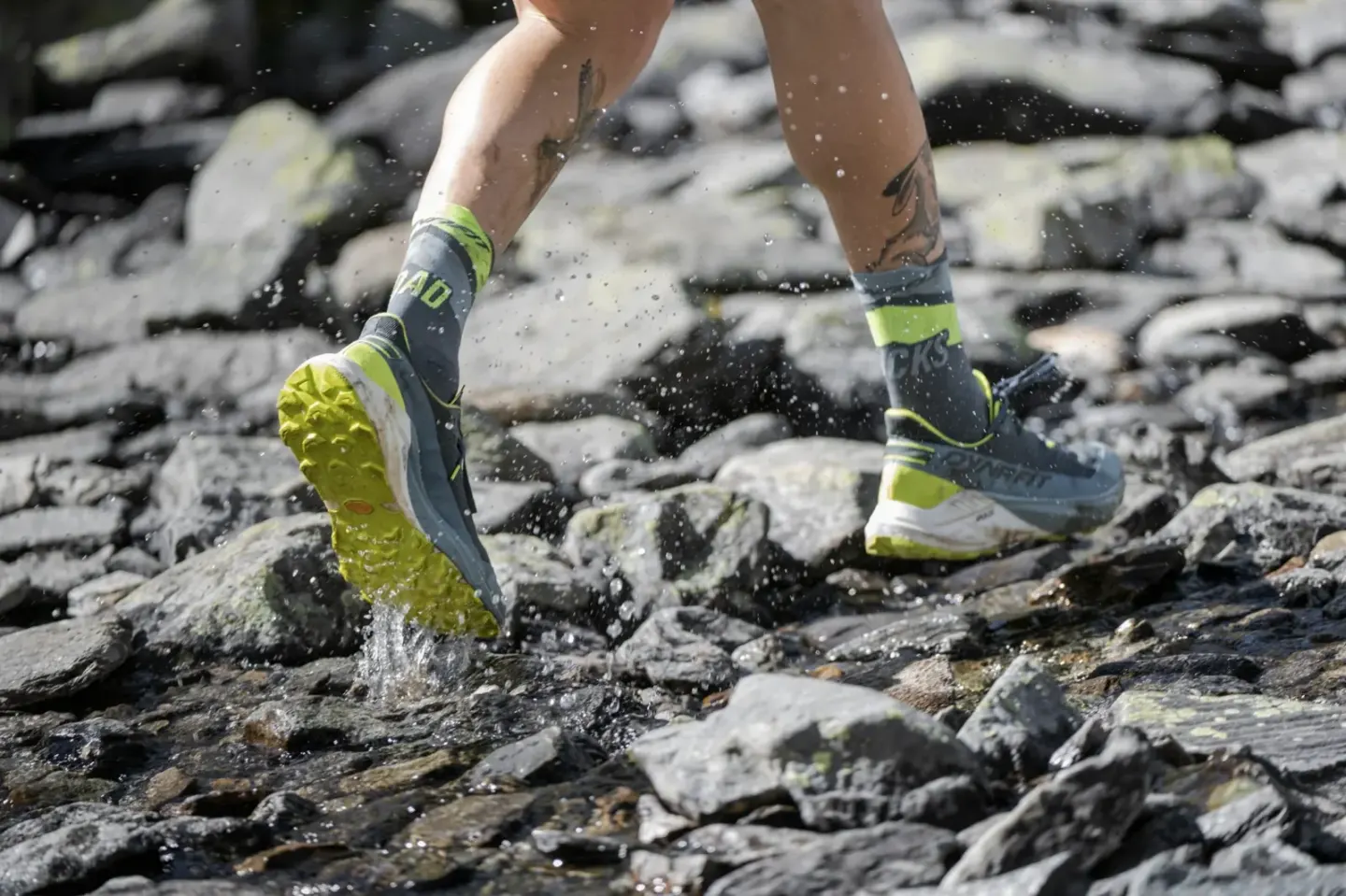
Once snow melts off the passes, Dynafit carries its alpine DNA into trail running and speed hiking. Rather than building soft road-style trainers with tiny lugs, every summer shoe pairs rock protection or lateral guidance with Vibram® or Pomoca® mountain rubber.
Dynafit trail running & speed hiking shoes compared
| Feature | Ultra 100 V3Ultra flagship | Feline SL W GTX | Traverse 2 GTX | Transalper 2 GTX |
|---|---|---|---|---|
Primary discipline | Ultra trails (50 km+) & long runs | Soft mud, snow & middle distances | Speed hiking & fast mountaineering | Alpine trekking & rocky scrambles |
Outsole & lugs | Vibram® Megagrip · 4 mm Traction Lugs | Pomoca® deep mud lugs | Pomoca® · 5.5 mm lugs | Vibram® Megagrip · climbing zone |
Midsole & drop | Supercritical SPEEDFOAM · 6 mm | Responsive EVA · 8 mm | Stabilising midsole + Rockshield | Cushioning + Stability Plate + Rockshield |
Upper & weather | Breathable knit (279 g, non-membrane) | Waterproof GORE-TEX® + Quick Lacing | GORE-TEX® Invisible Fit + Quick Lacing | GORE-TEX® Invisible Fit + flat laces |
- Ultra & Trail running: Built for 50 km+ mountain ultras, the 279 g Dynafit Ultra 100 V3 and women's Dynafit Ultra 100 V3 W combine a Supercritical SPEEDFOAM Cushion midsole (6 mm drop) and lateral stability elements with 4 mm Vibram® Megagrip Traction Lugs and a wider third-generation knit toe box (38.8% recycled upper content according to Dynafit). Wet shoulder-season runs call for the 8 mm drop Dynafit Ultra GTX with GORE-TEX® Invisible Fit, deep mud favours the Dynafit Feline SL W GTX, and door-to-trail gravel miles suit the Dynafit Trail with Vibram® XS Trek rubber.
- Traverse 2 & Transalper 2 (athletic mountaineering): Bridging trail shoes and mountain boots, the Dynafit Traverse 2 GTX (plus the ventilated women's Dynafit Traverse 2 W) integrates a Rockshield underfoot plate and 5.5 mm Pomoca lugs. For rockier scrambles with a daypack, the Dynafit Transalper 2 GTX and Dynafit Transalper 2 GTX W combine GORE-TEX® Invisible Fit, a Heel Stabilizer and Vibram® Megagrip traction, matched with abrasion-resistant 4-way-stretch Dynafit Transalper 2 Light Dynastretch Pants M.
- Alpine running kit & vests: Chafe-free inner mesh liners anchor the Dynafit Alpine Pro 2/1 Shorts M and women's Dynafit Alpine Pro 2/1 Shorts W, while the Dynafit Alpine Hybrid Jacket M shields your chest from ridge wind. To carry mandatory race kit, the 190 g Dynafit Ultra 12 Vest organises 12 litres across 12 pockets (including two 500 ml softflasks), whereas fast vertical sessions fit the compact Dynafit Sky 4 Vest.
Six standout Dynafit picks from our range
From Hoji Lock and TLT X ski touring boots to 800 cuin touring down, Ultra 100 V3 trail shoes and Transalper 2 GTX
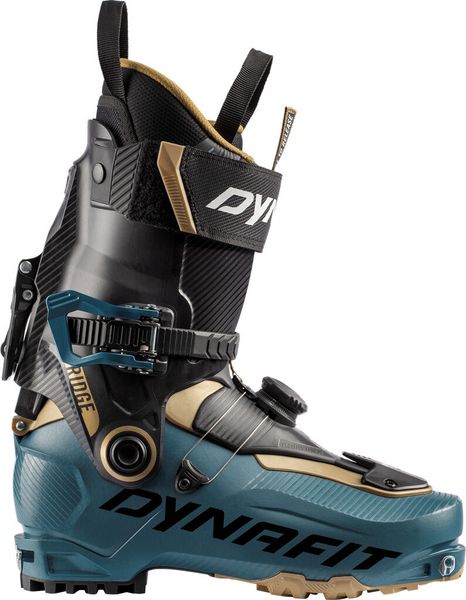 DynafitRidge BootHigh-alpine ski touring boot with Floating Tongue (70° cuff rotation), Hoji Lock and 110 flex.647.45€View product →
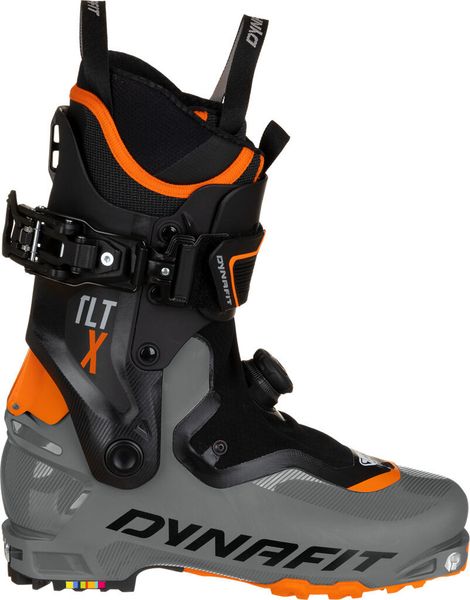 DynafitTLT X PU BootLightweight Montebelluna touring boot (1,140 g) with 60° cuff rotation, Twistfit dial and Ultra Lock 5.0.488.55€View product →
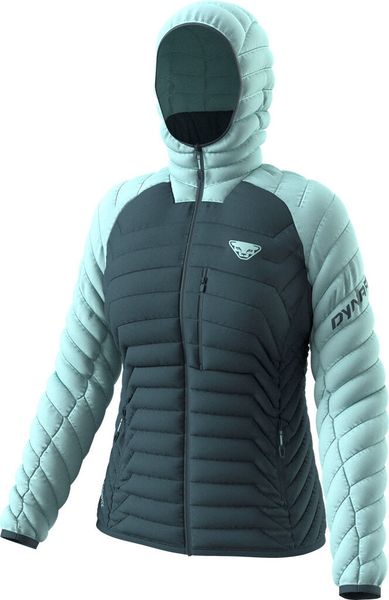 DynafitRadical RDS Down Hood Jacket WWater-repellent 800 cuin (95/5) goose down touring jacket with stretch underarm panels.288.85€View product →
 DynafitMezzalama Polartec® Alpha Jacket MBreathable Polartec Alpha active insulation jacket built for fast winter climbs.199.85€View product →
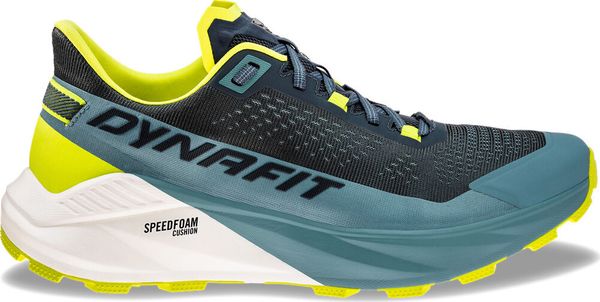 DynafitUltra 100 V3279 g ultra-trail shoe with Supercritical SPEEDFOAM (6 mm drop) and 4 mm Vibram Megagrip lugs.127.85€View product →
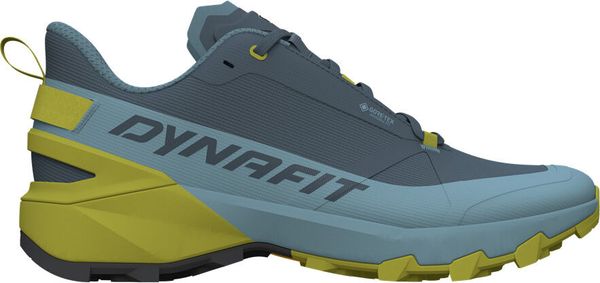 DynafitTransalper 2 GTXWaterproof GORE-TEX Invisible Fit speed-hiking shoe with Rockshield and Vibram Megagrip sole.151.85€View product →
Lightness always trades something away. A 1,030 g TLT X boot flies up 1,800-metre spring ascents, yet pairing it with a heavy 108 mm powder ski in chopped crud overpowers its slim cuff; wide freeride planks belong on a Radical Pro, Ridge or Tigard boot. Similarly, the Ultra 100 V3's high-stack supercritical foam spares tired quads at kilometre 70, though runners chasing sharp ground feel on short, steep skyraces or 6 mm+ mud studs for deep bog will prefer a lower-profile shoe such as the Feline SL GTX.
Matching the right Dynafit setup to your terrain
- 1
If you skin long vertical climbs on sub-90 mm skis
pick TLT X or TLT X PU (1,030 to 1,140 g) with Ultra Lock 5.0.
- 2
If you want one boot for steep couloirs and strong downhill drive
choose Ridge (70° Floating Tongue + Hoji Lock) or Radical Pro.
- 3
If you overheat quickly while climbing on skins
wear Mezzalama Polartec Alpha or Tigard Alpha Direct rather than climbing in down.
- 4
If you run 50 km+ rocky ultras in dry weather
pick Ultra 100 V3; for wet mud, slush and autumn ridges, step into Feline SL GTX or Transalper 2 GTX.
Right for you if …
Ski tourers, mountaineers and trail runners who value low weight, coordinated layering systems and efficient uphill movement
Probably not for you if …
Resort-only alpine skiers who never skin uphill or casual walkers looking for wide, heavy heritage leather boots
Getting Mondo Point, UK footwear and alpine apparel sizing right
Dynafit sizes its ski touring boots in Mondo Point, which equals exact foot length in centimetres: women's touring boots span Mondo 22 to 28.5 (EU 35 to 44, UK 3 to 9.5), while men's boots run Mondo 25 to 31 (EU 39 to 47, UK 6 to 12). Because shell lengths often step in full-centimetre shells, measure your bare foot against a wall in centimetres; thermoformable Dynafitter and Radical liners can be heat-moulded to dial in ankle and forefoot hold.
Trail running and mountaineering shoes follow UK sizing (women UK 3 to 9.5 / EU 35 to 44; men UK 6 to 12 / EU 39 to 47). Allow roughly half a thumb's width of toe room for long descents, noting that the third-generation Ultra 100 V3 features a noticeably roomier forefoot than earlier narrow Dynafit lasts. In clothing, pay close attention to Dynafit's four fit labels: Slim (Mezzalama, Speed) and Athletic (Mercury, Transalper) sit close to the torso with Italian/Alpine tailoring, Regular (Radical) leaves room for a midlayer, and Loose (Tigard) accommodates freeride layering. If you sit between two sizes in Slim pieces, sizing up keeps chest movement unrestricted.
Washing hardshells, Polartec Alpha and treated down
Sweat salts, skin oils and sunscreen clog breathable membranes and mat down clusters far faster than mountain rock does. According to Dynafit's apparel care guidelines, gentle maintenance preserves technical fabrics across many seasons:
Close hardware and rinse the detergent drawer
Zip all main and pit zips, fasten hook-and-loop cuffs, loosen elastic drawcords and clear powder or fabric softener residue from your washing machine dispenser.
Wash Dynashell and GORE-TEX on a cool gentle cycle
Machine-wash 3-layer hardshells and Dynastretch trousers at 30 °C using liquid outdoor detergent. Skip bleach, dry cleaning and fabric softener completely.
Reactivate DWR with gentle warmth
Air-dry your shell, then place the dry jacket in a tumble dryer on a gentle low cycle for roughly 20 minutes (or iron warm without steam using a towel barrier) to reactivate the water-repellent DWR finish.
Wash treated down and merino separately
Clean 800 cuin Radical, Ridge or Tigard down jackets with down-specific wash and tumble-dry slowly at low heat with dryer balls until every baffle lofts fully; wash merino baselayers on a wool cycle with wool detergent.
Explore the full Dynafit collection at SportFits
From TLT, Radical and Ridge ski touring boots to Dynashell 3L outerwear, Polartec Alpha midlayers and Ultra 100 V3 trail shoes.
Shop all Dynafit gearFive practical questions come up regularly when comparing Dynafit ski touring boots, mountain shells and trail running shoes.
Frequently asked questions
Who founded Dynafit and why is the snow leopard its logo?
Austrian shoe manufacturer Humanic began producing ski boots in 1950 and incorporated DYNAFIT as an independent brand in 1969. After Fritz Barthel invented the Low Tech pin binding in 1984 and South Tyrol's Oberalp Group acquired the brand in 2003, Dynafit adopted the snow leopard logo in 2005 to represent quiet, fast movement in steep high-alpine terrain.
How does the Dynafit Hoji Lock System work on ski touring boots?
Co-designed with freerider Eric Hjorleifson, Hoji Lock connects the rear ski-walk lever to the boot's upper buckle and power strap via an internal cable. Flipping one lever locks cuff and shell together without mechanical play for the descent; flipping it up opens 60° to 70° of cuff rotation for skinning without unstrapping individual buckles.
What is the difference between Dynafit TLT X, Radical and Ridge boots?
TLT X (1,030 g) and TLT X PU (1,140 g) prioritise fast climbs with a Twistfit cable dial and Ultra Lock 5.0 lever. Radical Pro and Radical W serve as classic all-rounders with Hoji Lock and 60° rotation. Ridge and Ridge W add a patented Floating Tongue for 70° cuff rotation alongside Hoji Lock and a progressive 110 flex for technical alpine lines.
How does Dynafit's Ultra 100 V3 differ from Transalper 2 GTX and Traverse 2 GTX?
The 279 g Ultra 100 V3 is a non-membrane ultra-running shoe built around high-rebound Supercritical SPEEDFOAM (6 mm drop) and 4 mm Vibram Megagrip lugs for 50 km+ trail distances. Traverse 2 GTX (5.5 mm Pomoca lugs) and Transalper 2 GTX (Vibram Megagrip + Heel Stabilizer) add a waterproof GORE-TEX Invisible Fit membrane and underfoot Rockshield plate for rocky speed hiking and scrambling.
Does Dynafit still offer its Lifetime Guarantee?
According to Dynafit, online registration for the former Lifetime Guarantee ended on 27 September 2026 due to updated EU regulations. Products registered on dynafit.com prior to 27 September 2026 keep their existing coverage, while newly purchased gear is supported directly through Dynafit's Customer Care product service team.
Sources (6)
- DYNAFIT Official: Brand History from 1950 to Today ↗
- DYNAFIT Official: Ski Touring Boots Overview ↗
- DYNAFIT Official: Ridge Ski Touring System ↗
- DYNAFIT Official: Tigard Backcountry & Free Touring System ↗
- DYNAFIT Official: Apparel Washing & Care Tips ↗
- DYNAFIT Official: Lifetime Guarantee Shift to Product Service ↗

SportFits editorial team
Marketing & Sales Manager at SportFitsNiklas is Marketing & Sales Manager at SportFits and studied applied sports science in Regensburg. In the magazine he writes about training science, fitness and longevity, putting trends into scientific context instead of simply celebrating them. He also looks at what really matters in outdoor gear: honest facts instead of empty advertising language.
Author profile →SportFits
outdoors looks good on you