Stories
Finkid: Zip-in jackets, double sizes and kids' outdoor gear explained
In partnership withFinkid
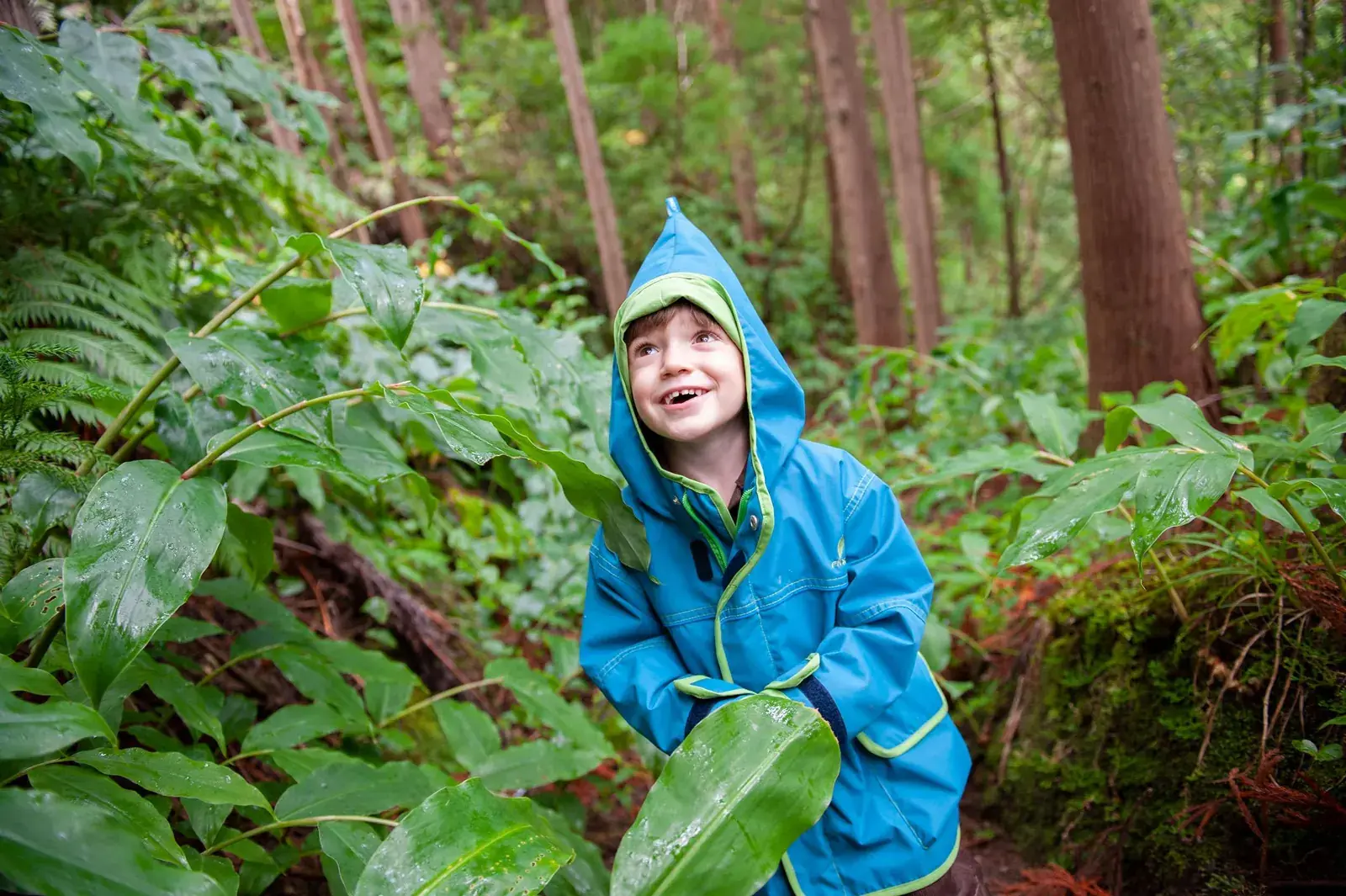
Born from the first weatherproof prototypes sewn by Finnish-heritage designer Annika Rendel in Berlin in 1999, Finkid builds modular outdoor gear for children. Here is how its 3-in-1 Zip-in system, pointed dwarf hoods, warmth grades and double sizes work.
The essentials at a glance
- 01
Berlin-based designer Annika Rendel, drawing on her Finnish roots, sewed her first weatherproof kids' prototypes in 1999; out of those designs grew Finkid, still developed in its own Berlin design studio.
- 02
The 3-in-1 Zip-in principle pairs waterproof outer shells (10,000 mm hydrostatic head, taped seams) with inside-out fleece, quilted or wool-blend inner jackets of the exact same double size.
- 03
Hood shapes adapt as children grow: sizes 80/90 to 110/120 feature the signature pointed dwarf hood, while from size 120/130 upwards the cut switches to a rounded contour hood.
- 04
Apparel runs in 10 cm double sizes (60/70 up to 140/150) with built-in room to grow, backed by warmth grades 1 to 3 and reinforced knee and seat panels on snow trousers and overalls.
A chilly scooter ride to nursery at four degrees, kneeling in damp sandpits before lunch and splashing through slush on the way home: a child's jacket faces tougher abrasion on a random Tuesday than many adult trekking shells see all year. Buying separate coats for drizzle, wind and frost quickly clutters the hallway. Finkid solves that seasonal puzzle through modular layering, defined warmth grades and double sizes built to span more than one winter.
Browse the collection and you encounter Finnish model names such as Tuulikki, Moska Mukka, Taika Snow, Husky Haalari, Luonteva and Kari. Behind those names sits a tidy technical framework. Once you know how Zip-in compatibility, 10,000 mm shell fabrics, reinforced trims and double-size brackets fit together, picking the right setup for forest kindergarten, school runs or ski holidays becomes straightforward.
Finkid began with a practical family need. In 1999, Berlin-based designer Annika Rendel, shaped by her Finnish heritage, started sewing weatherproof, movement-friendly outdoor clothes for her young son during maternity leave. Together with Tobias Voigt, she turned those early prototypes into the Finkid label in Berlin in the early 2000s. Every collection is still designed in the brand's own studio in Berlin.
Two visual details make Finkid unmistakable across European playgrounds: bold colourblocking with contrasting piped trims and the attached pointed dwarf hood. Beyond appearance, the pointed cut hugs a child's head closely without slipping over the eyes when looking left and right. Because older school-age kids usually prefer a cleaner silhouette, Finkid applies a strict size boundary: sizes 80/90 through 110/120 carry the pointed dwarf hood, while from size 120/130 onwards the same models switch to a classic rounded contour hood.
Child safety is engineered into the pattern rather than added as an afterthought. According to Finkid, every garment complies with European cord safety standard DIN EN 14682, avoiding hazardous drawstrings around the hood and neck. In addition, Finkid states that all suppliers meet OEKO-TEX Standard 100, and water- and dirt-repellent finishes rely on PFC-free BIONIC-FINISH ECO treatments.
Modular 3-in-1 jackets sit at the core of Finkid's year-round system. Instead of hanging a heavy winter coat in the wardrobe for nine months, you pair a waterproof outer shell with a warming inner jacket to unlock three distinct wearing options. One rule governs every combination: outer and inner jackets must share the exact same double size so zipper lengths and anchor loops align.
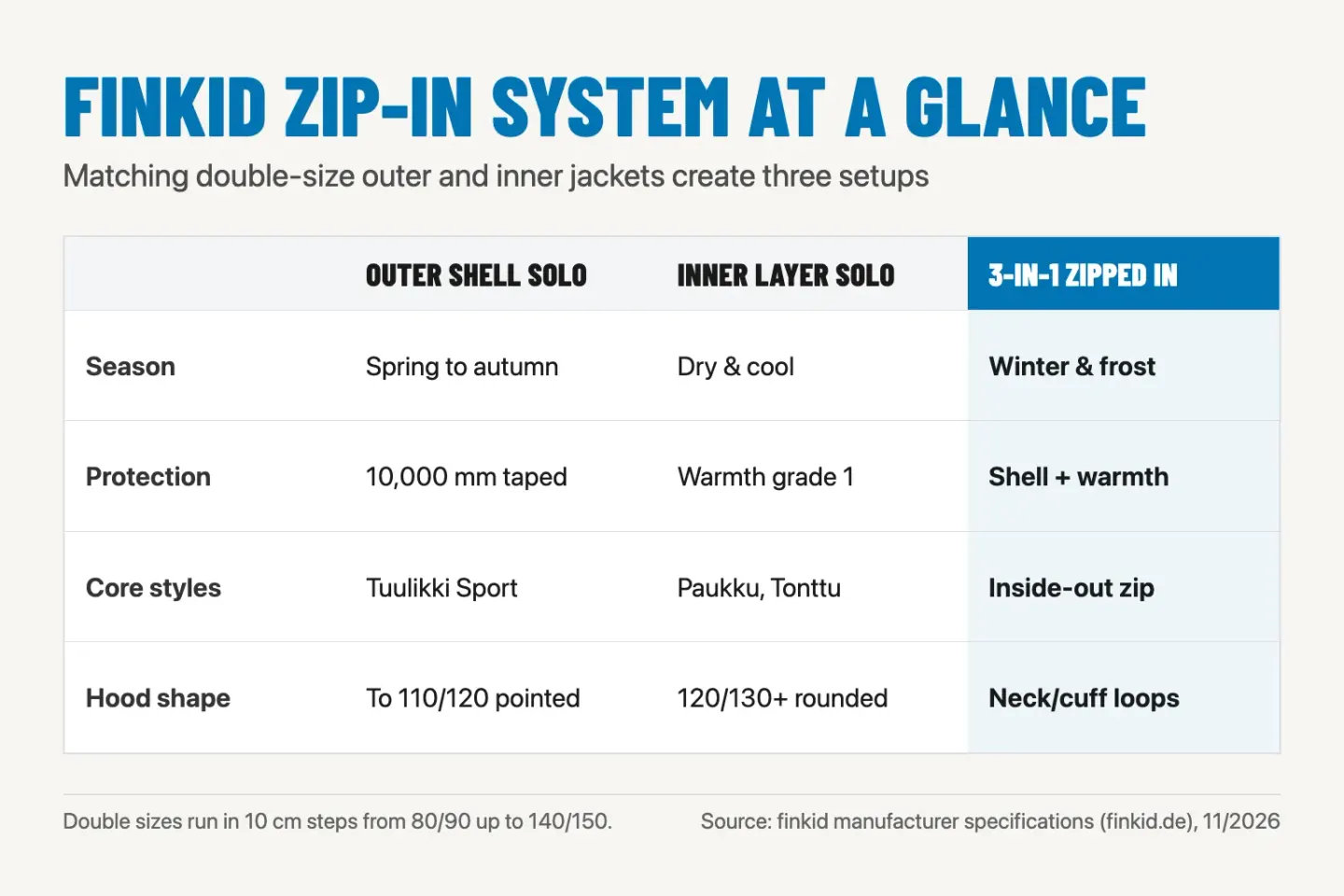
Waterproof outer shells and lightweight rain anoraks
A Zip-in outer shell handles wind and rain from spring through autumn and integrates a second interior zipper along the front placket. A strong example in our range is the Finkid Tuulikki Sport Kids' Casual Jacket: according to Finkid, its laminated 70% cotton / 30% polyamide outer fabric delivers a 10,000 mm water column with taped seams, an extended parka hem and an adjustable waist drawcord. Classic shells such as Tuulis and models from the Pikku family follow the same blueprint using rugged polyamide weaves.
If you simply want a packable waterproof shell for spring showers and summer trips without a secondary Zip-in track, look at standalone rain jackets like the Finkid Kiva Move Kids' Waterproof Jacket. According to Finkid, it pairs a coated 100% recycled polyamide exterior (10,000 mm water column, taped seams) with a soft jersey lining that feels comfortable over short sleeves.
Warmth grade 1 inner jackets: fleece, quilted insulation or wool
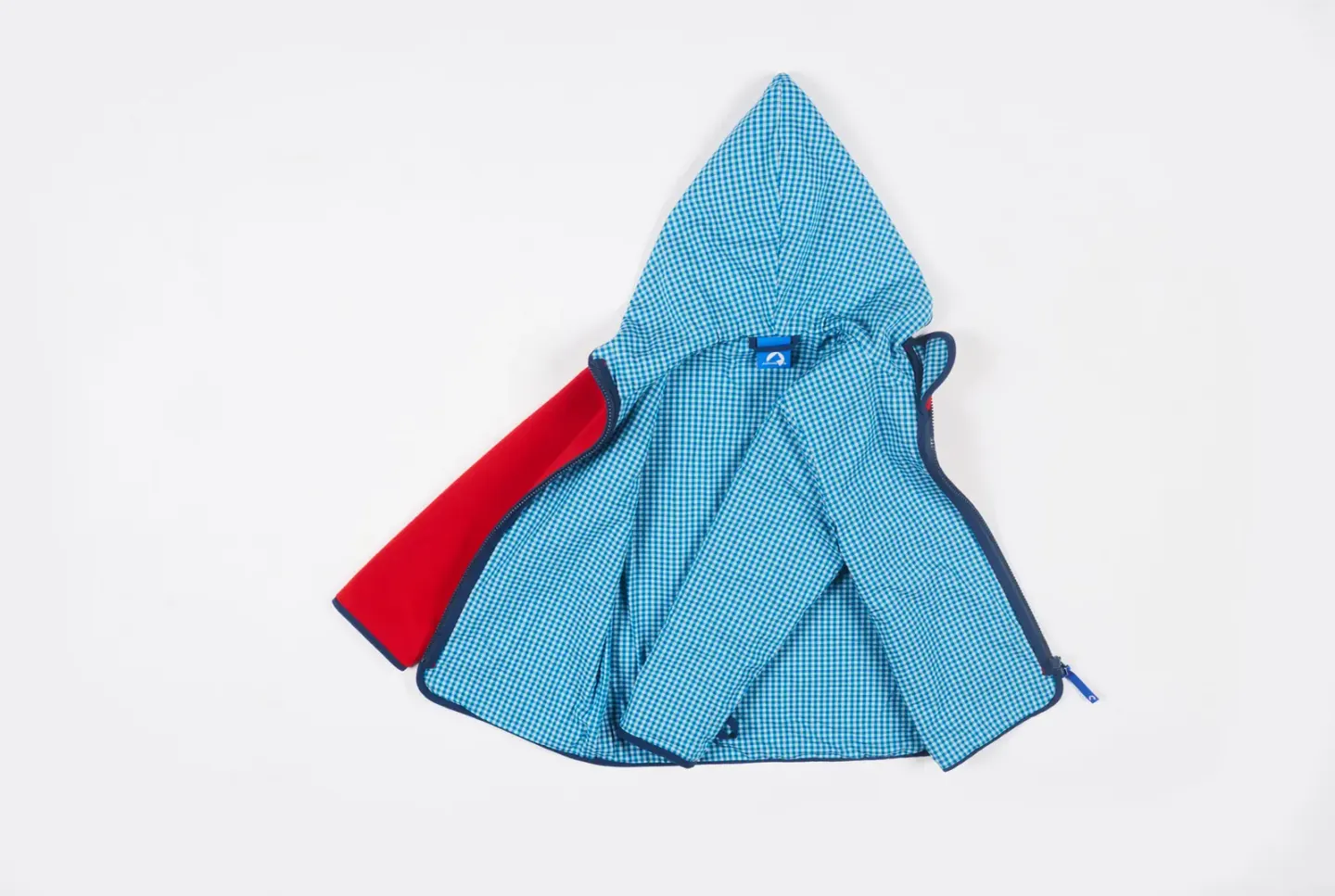
Your choice of inner jacket sets both warmth and breathability. Every Zip-in inner layer also works on its own during dry, crisp mid-season days:
- Classic knit and teddy fleece: The lightweight Finkid Paukku Kids' Fleece Jacket (100% polyester, machine-washable at 40 °C) dries fast after active play. For deeper loft, the high-pile Finkid Tonttu Teddy Kids' Midlayer traps extra warm air, much like long-running Finkid staples such as Tonttu and Paukkupakkanen.
- Lightweight synthetic quilting: The Finkid Tonttu Air Kids' Jacket combines a 100% recycled polyamide shell and lining with light synthetic fill plus waterproof laminated reinforcements across the shoulders and hood. Its smooth sleeve fabric lets children slide their arms through effortlessly.
- Temperature-buffering wool fleece: According to Finkid, the Finkid Luonteva Kids' Jacket blends 80% certified mulesing-free wool with 20% polyester. Wool keeps insulating even when slightly damp and rarely needs washing beyond airing out.
First-time buyers sometimes struggle when zipping the two layers together. Finkid's inside-out trick makes it simple: turn the inner jacket completely inside out first so its inner lining faces outward. Zip it onto the secondary interior zipper of the outer shell, then fasten the snap and button loops at the neck and cuffs so sleeves stay put when pulling the coat off.
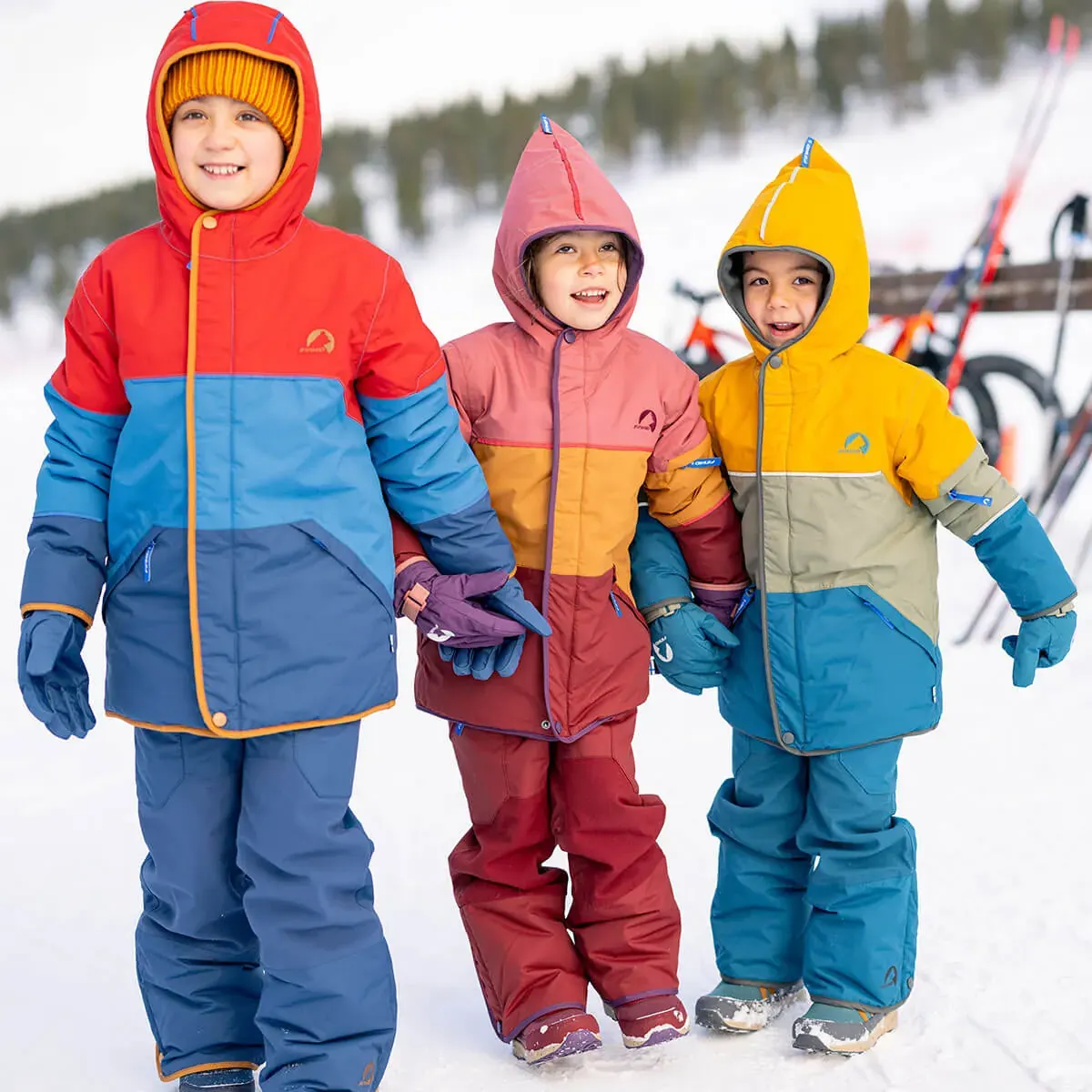
Once sub-zero temperatures, sledging afternoons or alpine ski trips arrive, dedicated insulated winter coats and one-piece snowsuits come into their own. Fixed synthetic insulation eliminates cold spots right up into the hood. Finkid separates winter outerwear into warmth grade 2 (medium insulation for active winter days) and warmth grade 3 (heavy insulation built for freezing temperatures and deep snow).
Finkid winter outerwear lines compared
| Feature | Mukka range | Snow rangePiste & snow | Husky & Parka range |
|---|---|---|---|
Warmth rating | Warmth grade 2 (medium) | Warmth grade 3 (high) | Warmth grade 3 (extra warm) |
Weatherproofing | 10,000 mm water column, taped | 10,000 mm water column, taped | 10,000 mm water column, taped |
Core details | Soft teddy fleece lining, daily cut | Snow gaiters, ski pass pocket, cuffs | Laminated abrasion panels or parka cut |
Core models | Aina Mukka, Moska Mukka, Rento Mukka | Taika Snow, Tobi Snow, Vilkas Snow | Husky Haalari, Talvinen Husky, Tuulikki |
For nursery mornings and everyday winter play, the Finkid Moska Mukka Kids' Winter Jacket and the slightly A-line Finkid Aina Mukka Girls' Winter Jacket lead our winter lineup. According to Finkid, both combine a coated 100% recycled polyamide outer fabric (10,000 mm water column, taped seams) with cosy teddy lining at warmth grade 2. Shoppers looking for extra thigh coverage can step up to the fleece-lined Finkid Milla Coat with adjustable waist elastic and hood visor, or the extra-warm Finkid Tuulikki Kids' Parka (warmth grade 3; 70% cotton, 30% polyamide laminated shell).
Heading to the ski slopes calls for dedicated snow hardware. The warmth-grade-3 Finkid Taika Snow Kids' Jacket integrates an adjustable powder skirt and forearm ski pass pocket. Pair it with the insulated Finkid Tobi Snow Kids' Trousers, which add internal leg gaiters over ski boots and laminated reinforcements (97.5% polyamide, 2.5% elastane), or pick the lightly padded Finkid Rento Mukka Kids' Trousers for milder wet winter days.
For toddlers and forest-kindergarten kids, a one-piece snowsuit blocks snow from creeping in at the waist when rolling or climbing. The classic Finkid Pikku Winter Sport Snowsuit (warmth grade 3, 10,000 mm) pairs soft fleece lining with non-slip leg cuffs and reinforced panels. For rough terrain, the heavy-duty Finkid Husky Haalari Snowsuit armours arms, legs and seat with laminated panels, matched in two-piece form by the Finkid Talvinen Husky Parka. Skiers can opt for the Finkid Vilkas Snow Suit with thumbhole cuffs, ski pass pocket and detachable hood. On dry autumn afternoons, the straight-cut corduroy trousers Finkid Kuulu shield knees with stitched Cordura patches.
Finkid carries its functional mindset down to footwear in EU sizes 23 to 38, splitting the range cleanly between cushioned outdoor soles and thin, zero-drop barefoot shoes.
When slush and frost hit, mid-cut winter boots such as the Finkid Kari, the ankle-high Finkid Lappi EKO and the girls' Finkid Lauma Winter Boots (complete with medial water-resistant zipper and left/right insole markers) rely on a waterproof PU membrane, insulated lining and lugged cushioned soles. Children who thrive in wide toe boxes and natural ground feel can wear waterproof winter barefoot boots instead: the canvas Finkid Nilkka Winter Boots with removable wool insole and the hook-and-loop Finkid Ilves Shoes. Summer sandals follow the same split: the Finkid Salama Kids' Sandals guard toes behind a closed rubber cap in fast-drying synthetics, whereas the Finkid Sukkela Kids' Sandals pair a flexible barefoot sole with leather that Finkid states is chrome-free tanned and Leather Working Group (LWG) certified.
For primary school and day trips, the Buddy pack series grows alongside a child's spine. Both the Finkid Buddy Classic Kids' Backpack (20 litres, approx. 1,190 g without hip belt) and the lighter Finkid Buddy EKO Smart Backpack (approx. 990 g without hip belt, made according to Finkid using production remnant fabrics and recycled fibres) feature an XS-to-XL height-adjustable back panel. That adjustment keeps hip fins centred on the pelvis across several school years, supported by a waterproof hard-shell base with four standing feet, a one-handed Fidlock magnetic snap buckle and an emergency whistle on the sternum strap.
Six proven Finkid picks from our range
From insulated winter staples and 3-in-1 Zip-in layers to reinforced snowsuits and waterproof boots
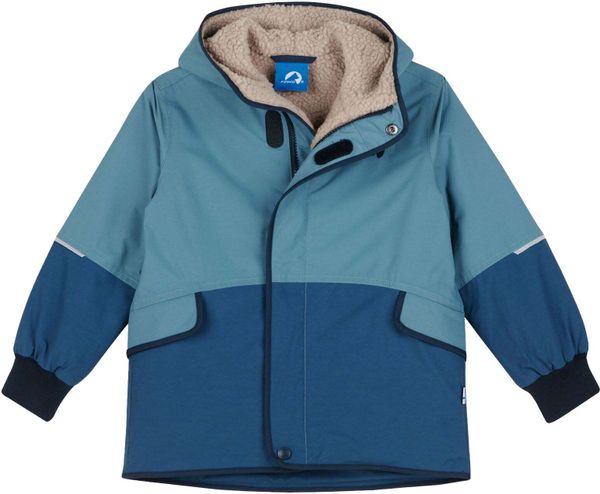 FinkidMoska MukkaWaterproof kids' winter jacket (10,000 mm water column) with cosy teddy fleece lining at warmth grade 2.118.35€View product →
 FinkidTaika SnowHeavily insulated ski and winter jacket (warmth grade 3) with taped seams, powder skirt and pass pocket.108.45€View product →
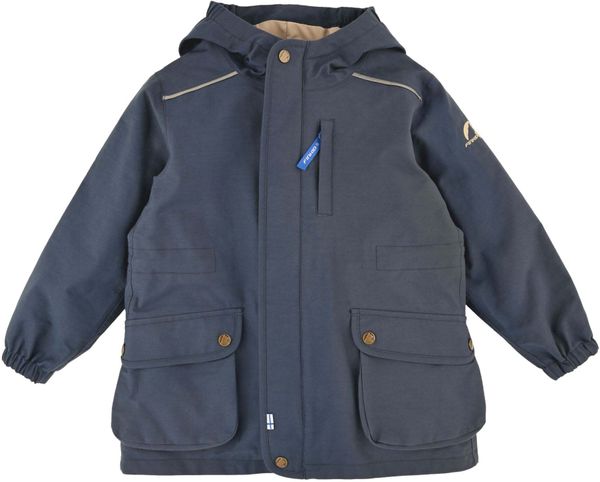 FinkidTuulikki SportParka-cut Zip-in outer shell (10,000 mm water column) compatible with all Finkid inner jackets.113.65€View product →
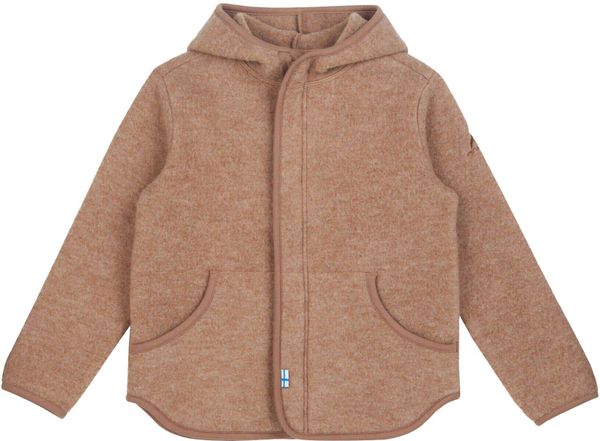 FinkidLuontevaZip-in inner jacket made from 80% mulesing-free wool and 20% polyester for mid-season and winter layering.96.15€View product →
 FinkidHusky Haalari - "Kids's One-Piece Suit "Abrasion-resistant winter snowsuit (warmth grade 3, 10,000 mm) reinforced across arms, legs and seat.117.45€View product →
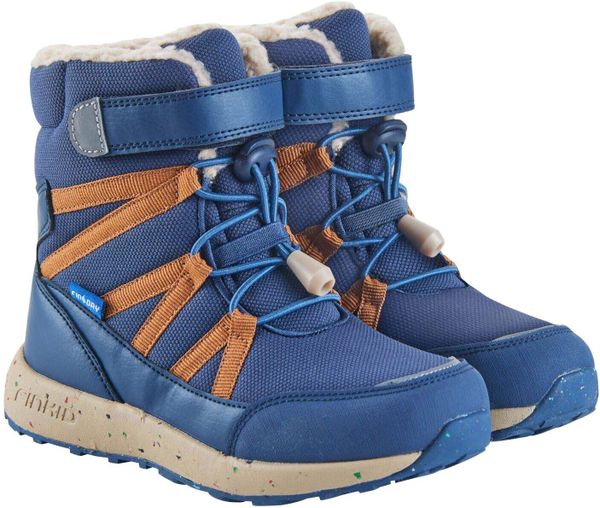 FinkidKariMid-cut waterproof kids' winter boot (EU 23 to 38) with PU membrane and cushioned snow tread.81.35€View product →
While a 3-in-1 Zip-in combo covers four seasons efficiently, busy nursery cloakrooms expose its main compromise. If sleeve anchor loops come undone or impatient toddlers yank hard at the cuffs, a soft fleece inner sleeve can pull inside out. For very young children in deep winter, a one-piece snowsuit like Pikku Winter Sport or a single-piece insulated jacket like Moska Mukka saves time every morning.
Sizing discipline matters just as much. Because Finkid's double sizes already build in generous growth margin, ordering an extra size up "to last longer" leaves cuffs hanging past knuckles, drops the crotch seam during climbing and drags trouser hems across wet pavement.
Matching the right Finkid setup to your child's routine
- 1
If you want one modular coat covering spring, autumn and winter
pair a Zip-in outer shell like Tuulikki Sport with a matching-size inner jacket (Tonttu Air for smooth sleeve entry or Luonteva for wool warmth).
- 2
If your toddler dresses independently at nursery and plays in deep snow daily
pick a one-piece snowsuit such as Husky Haalari or Pikku Winter Sport rather than a two-layer Zip-in jacket.
- 3
If your child gets cold soles standing on frozen pavement
choose cushioned winter boots like Kari or Lappi EKO instead of thin barefoot soles like Nilkka or Ilves.
- 4
If family ski trips are on the calendar
look specifically to the Snow line (Taika Snow, Vilkas Snow, Tobi Snow) for snow gaiters and lift-pass pockets.
Right for you if …
Families looking for weatherproof kids' gear with reinforced wear zones, clear warmth grades and multi-season double sizing
Probably not for you if …
Shoppers seeking ultralight competitive rain shells for youth racing or planning to size up beyond Finkid's built-in growth allowance
Finkid sizes children's apparel in 10 cm double-size brackets matched to body height: 60/70 (62–68 cm), 70/80 (74–80 cm), 80/90 (80–86 cm, approx. 1–2 years), 90/100 (92–98 cm, 2–3 years), 100/110 (104–110 cm, 3–4 years), 110/120 (110–116 cm, 5–6 years), 120/130 (122–128 cm, 7–8 years), 130/140 (134–140 cm, 9–10 years) and 140/150 (140–146 cm, 10–12 years). Only move up to the next bracket if your child already measures right at the upper centimetre limit. Hats and gloves run from XS (62–80 cm height) through S, M and L to XL (140–146 cm), while footwear spans EU 23 (13.3–14.5 cm foot length) up to EU 38 (23.3–24.5 cm).
Proper care keeps 10,000 mm membranes and taped seams watertight across siblings:
- Wipe mud off cuffs and trouser hems with a damp cloth and mild soap first instead of machine-washing after every park visit.
- Empty all pockets of stones, sticks and chestnuts, close zippers, buttons and hook-and-loop tabs, and turn the garment inside out.
- Wash at 30 °C on a gentle cycle using liquid detergent made for membrane outerwear; skip fabric softener, bleach and harsh stain removers, which clog membrane pores.
- Open the garment after washing, reshape gently and air-dry. According to Finkid, refresh the PFC-free water-repellent finish with a suitable proofing spray after roughly four to five washes and before storing gear away at season's end.
- Air wool-fleece layers such as Luonteva outdoors whenever possible; when soiled, wash on a cold wool cycle with wool detergent, roll gently in a towel to press out water and dry flat.
Explore the full Finkid collection
From modular Zip-in outer shells, wool and teddy fleeces to reinforced snowsuits, barefoot boots and grow-along Buddy packs.
Shop all Finkid productsFrequently asked questions
At what size does Finkid switch from the pointed dwarf hood to a round hood?
Finkid equips its jackets and snowsuits with the signature pointed dwarf hood from size 80/90 up to and including size 110/120. Starting at size 120/130 (around 122 to 128 cm body height, early school age), the pattern switches to a rounded contour hood.
How do I zip a Finkid inner jacket into an outer jacket properly?
First make sure both jackets share the exact same double size. Turn the inner jacket completely inside out so its inside faces outward, zip it onto the secondary internal zipper of the outer shell, and fasten the small anchor loops at the neck and sleeve cuffs.
Do Finkid double sizes run large, and should I size up?
Finkid double sizes (such as 90/100 or 110/120) already include generous room to grow along with adjustable cuffs or hems. Order the bracket matching your child's current height in centimetres, and only step up if your child is right at the top edge of a bracket.
What waterproof rating do Finkid rain and winter jackets offer?
According to Finkid, waterproof outer shells, winter parkas, snow trousers and snowsuits such as Moska Mukka, Taika Snow, Tuulikki Sport, Rento Mukka and Husky Haalari feature a 10,000 mm hydrostatic head, taped seams and a PFC-free BIONIC-FINISH ECO water-repellent treatment.
What is the difference between Finkid warmth grades 1, 2 and 3?
Warmth grade 1 covers light mid-season and Zip-in insulation layers such as Paukku fleece, Luonteva wool fleece and quilted Tonttu Air jackets. Warmth grade 2 marks medium-insulated winter jackets like Moska Mukka and Aina Mukka for active cold days, while warmth grade 3 delivers heavy insulation for sub-zero frost and snow (including Taika Snow, Tuulikki and Husky Haalari).
Sources (6)
- finkid About Us: Finnish heritage, dwarf hood & DIN EN 14682 safety ↗
- finkid Zip-in principle: How the 3-in-1 jacket system works ↗
- finkid Functions & Materials overview ↗
- finkid Size Consultation: Double sizes, footwear & Buddy packs ↗
- finkid Care Instructions for outdoor membranes & wool ↗
- finkid Conscious Act: Berlin design studio & supply chain standards ↗

SportFits editorial team
Marketing & Sales Manager at SportFitsNiklas is Marketing & Sales Manager at SportFits and studied applied sports science in Regensburg. In the magazine he writes about training science, fitness and longevity, putting trends into scientific context instead of simply celebrating them. He also looks at what really matters in outdoor gear: honest facts instead of empty advertising language.
Author profile →SportFits
outdoors looks good on you