Stories
Millet: Alpine shells, backpacks, mountain boots and lines explained
In partnership withMillet
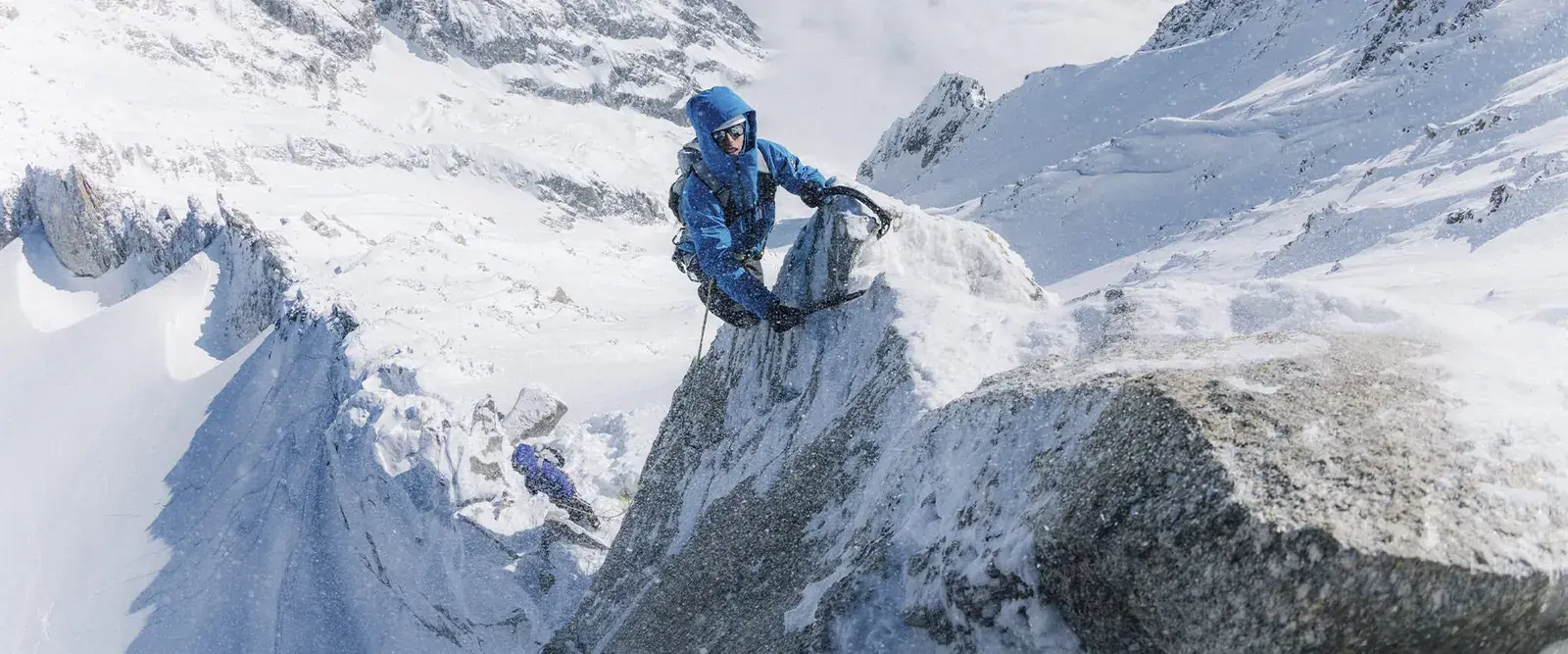
From canvas bags near Lyon in 1921 and the first ascent of Annapurna in 1950 to outfitting the mountain guides of Chamonix, Grindelwald and the Matterhorn: how Trilogy, Kamet, Seneca, Ubic and G Trek fit together.
The essentials at a glance
- 01
Marc and Hermance Millet founded the workshop near Lyon in 1921 and relocated to Annecy in the French Alps in 1929. Bought back in 2021/2022 by grandson Jean-Pierre and great-grandson Romain Millet, the company is once again family-owned.
- 02
On 3 June 1950, Maurice Herzog and Louis Lachenal carried Millet packs onto the summit of Annapurna (8,091 m), the first 8,000-metre peak ever climbed. Today Millet outfits the official mountain guide companies of Chamonix, Grindelwald and Cervinia on the Matterhorn.
- 03
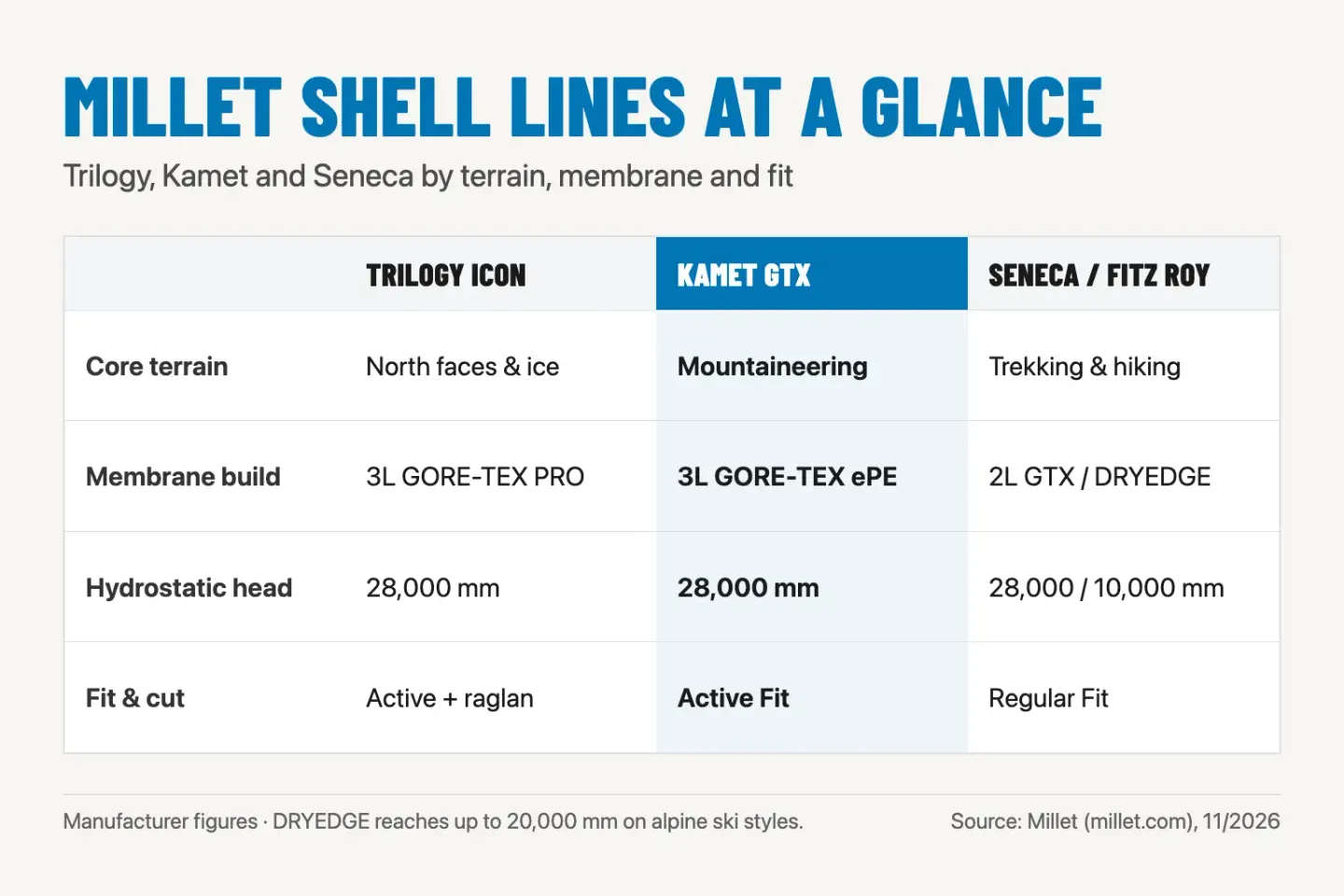
Millet splits weather protection cleanly by terrain: Trilogy targets technical north faces (3L GORE-TEX PRO ePE), Kamet covers year-round mountaineering (3L GORE-TEX ePE) and Seneca plus Fitz Roy serve trekking and hiking (2L GORE-TEX ePE or 2.5L DRYEDGE).
- 04
Backpacks divide between streamlined Peuterey alpine packs and four-season Ubic trekking packs with Variloop straps, while footwear runs from Friction EU and Super Trident approach shoes up to G Trek, Elevation and Trilogy Jorasses boots.
Halfway up a windswept ridge, small tailoring choices become impossible to ignore. If a jacket hem pulls out from your climbing harness when you swing an ice tool, if hipbelt fins block both hand pockets, or if a hood refuses to cinch cleanly over a helmet, you lose warmth and focus fast. Solving those exact vertical details is what Millet has focused on from its base in Annecy.
Browse the catalogue and a dozen French and alpine range names appear side by side: Trilogy, Kamet, Seneca, Cosmic, Pierra Ment, Ubic, Peuterey, Cimaï, Super Trident and G Trek. None of those labels are random styling trims. Each series maps to a distinct mountain discipline, pairing its own membrane tier, sleeve articulation and pocket placement.
Millet started far from high glaciers. In 1921, Marc and Hermance Millet began stitching canvas shopping totes and sturdy storage bags in the back room of their grocery shop in Saint-Fons near Lyon. Marc's poor health prompted the family to move with sons René and Raymond to the crisp mountain air of Annecy in Haute-Savoie in 1929. When Marc died at age 43 in 1937, Hermance, known as "Manet", stepped up with her teenage sons to keep the workshop alive, building a three-storey house on Avenue de Chambéry in 1942 with production on the ground floor and family flats above.
The pivot to high-altitude mountaineering came right after the Second World War. Chamonix guide Louis Lachenal worked alongside René and Raymond Millet to refine technical alpine rucksacks. On 3 June 1950, Maurice Herzog and Lachenal reached the 8,091-metre summit of Annapurna in Nepal carrying Millet's "Annapurna" pack, marking humanity's first ascent of an 8,000-metre peak. Over the following decades, leading alpinists including Walter Bonatti, René Desmaison and Reinhold Messner stayed at the family house in Annecy as technical advisors.
March 1987 added the milestone behind Millet's flagship apparel line: the winter link-up of the three classic Alpine north faces on the Eiger, Matterhorn and Grandes Jorasses. Climbing in Millet's red, white and blue suit, Christophe Profit completed the first solo winter enchainment in 42 hours alongside rival and contemporary Éric Escoffier. That feat gave birth to the Trilogy name.
Today Millet equips the three historic guide associations operating directly beneath those same three peaks:
- Compagnie des Guides de Chamonix on Mont Blanc (founded in 1821, around 270 guides, outfitted by Millet since 2009)
- Grindelwaldsports Mountain Guides beneath the Eiger north face (64 guides, partner since 2015)
- Società Guide del Cervino in Cervinia on the Matterhorn (founded in 1865, around 50 guides)
Ownership came full circle on the company's centenary as well. Sold by the Millet brothers in 1973, the brand returned to family hands in 2021/2022 when grandson Jean-Pierre Millet and great-grandson Romain Millet acquired it from the Calida Group. Design and prototyping remain anchored in Annecy.
Understanding Millet jackets starts with membrane tiers and fabric layers. Across its core mountaineering and trekking shells, Millet uses GORE-TEX ePE and GORE-TEX PRO ePE laminates (expanded polyethylene paired with polyurethane, made without intentionally added PFAS, rated at a 28,000 mm hydrostatic head according to manufacturer figures). Alongside GORE-TEX sits Millet's proprietary DRYEDGE membrane: 2.5-layer hiking shells deliver 10,000 mm waterproofing and 10,000 g/m²/24h breathability (MVTR) according to Millet, while technical ski and alpine DRYEDGE builds step up to 20,000 mm and 20,000 g/m²/24h.
Trilogy and Kamet: Cut for harnesses, helmets and ice tools
Trilogy sits at the top of the alpine pyramid for steep ice, mixed climbing and expeditions. Both the Millet Trilogy Icon GTX Pro Jktm and women's Trilogy Icon GTX Pro Jacket W combine 3-layer GORE-TEX PRO ePE with an integrated RECCO reflector, a two-way front zip for belaying and high Napoleon chest pockets positioned well clear of a harness and pack belt. Raglan sleeve seams eliminate pressure points under heavy straps.
For climbers who want four-season glacier, ridge and via ferrata protection without paying for full expedition specs, Kamet is the workhorse line. The Millet Kamet GTX Jacket M and women's Kamet GTX Jacket W are our top-selling Millet hardshells, pairing 3-layer GORE-TEX ePE with a recycled polyamide face fabric (according to Millet), a helmet-compatible mountaineering hood, underarm pit zips and an athletic Active Fit.
Ski touring and freeride: Cosmic, M White, Brevent and Pierra Ment
On snow, Millet separates stormproof descent shells from breathable uphill layers:
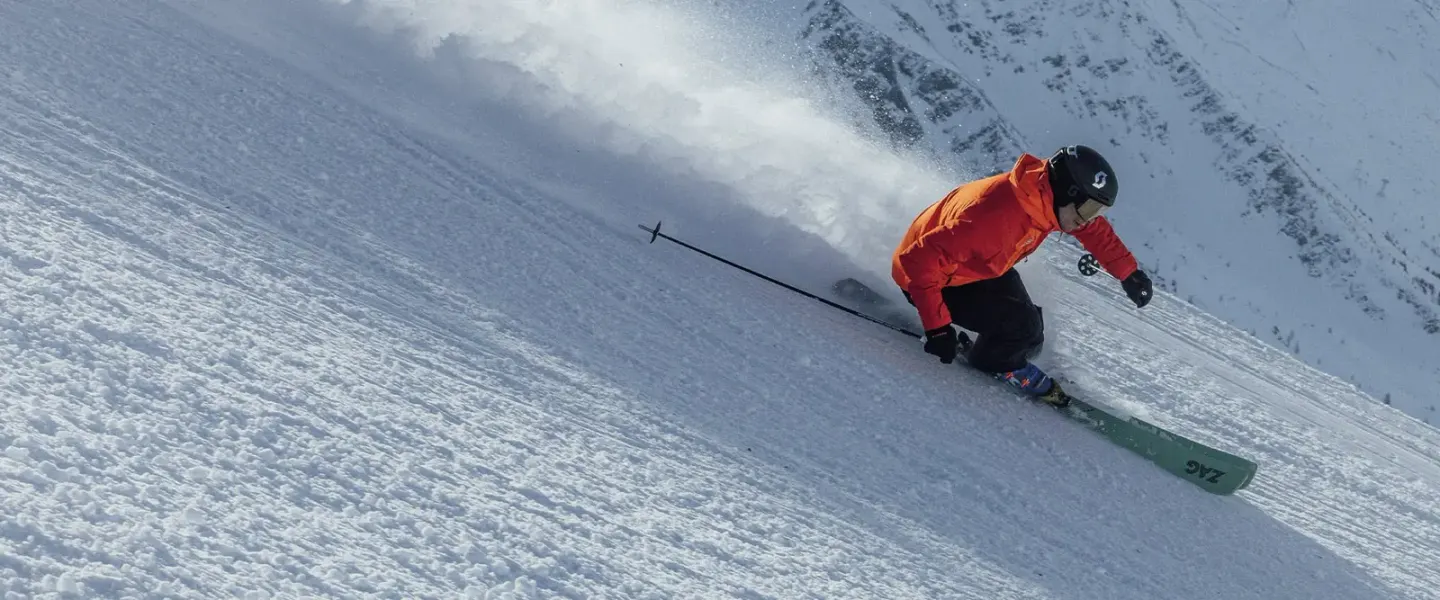
- Cosmic & M White: Built for deep powder and big-mountain touring, 3-layer shells such as the Millet Cosmic GTX 3L Jacket M, Cosmic GTX 3L Pant M and M White 3L Pant M add snow skirts, side ventilation zips and burly kick patches against sharp ski edges. Resort and sidecountry skiers who prefer built-in warmth can step into the insulated Millet Brevent Peak Pant M.
- Pierra Ment: Named after Savoy's legendary Pierra Menta ski mountaineering race, the Millet Pierra Ment Jacket M drops waterproof membranes altogether. Instead, Millet's Dual Tech body-mapping places wind-resistant 4-way stretch fabric across the chest and shoulders while leaving the back panel highly air-permeable for fast skinning climbs.
Seneca, Fitz Roy and midlayers for trekking and everyday cold
Stiff 3-layer alpine shells can feel noisy and restrictive on multi-day hut treks or valley walks. That is where Seneca and Fitz Roy take over with a slightly roomier Regular Fit and low-set hand pockets. The Millet Seneca GTX 2L Jacket M (and women's Seneca GTX 2L Jacket W) pairs a softer 2-layer GORE-TEX ePE recycled polyester outer (according to Millet) with a comfortable mesh lining and pit zips, plus an insulated winter sibling in the Seneca GTX 2L Warm Jacket M. When low pack weight matters more, the 2.5-layer Millet Seneca 2.5L Jacket M and Millet Fitz Roy Jacket M fold down small with taped DRYEDGE 10K/10K membranes.
Underneath, Millet relies heavily on zoned midlayers. The Millet Kamet Primaloft Hoodie M uses damp-tolerant PrimaLoft Silver insulation, while the Trilogy Icon X Loft Jacket M and seamless-shoulder Fusion Grid Hoodie M move freely under a pack. For freezing belays, the hybrid Millet Evole Light 700 HD M combines 700-fill-power down in the core with synthetic panels over moisture-prone zones, complemented by the heritage-cut Chamonix Original Down Jacket for cold valley days.
Because backpacks were Millet's original craft, the same split between clean vertical silhouettes and multi-season trekking carries straight into packs and boots.
Ubic versus Peuterey: Choosing the right pack architecture
One look at the exterior tells the two flagship pack families apart:
- Ubic (Four-season trekking & ski touring): Packs like the Millet Ubic 30 (30 litres, 1.19 kg), the shorter-back women's Ubic 30 W and the high-capacity Millet Ubic 55+15 (up to 70 litres, 1.95 kg, suitcase-style front zip) feature Millet's Variloop System. Reinforced, removable diagonal and side straps carry trekking poles, tents or sleeping mats in summer and skis, snowshoes or ice axes in winter, backed by an integrated rain cover.
- Peuterey (Dedicated mountaineering): The Millet Peuterey 35+10 (35+10 litres, 1.40 kg) strips away snag-prone mesh pockets in favour of a narrow tubular profile, dedicated front crampon pocket, FPP ice-axe holders, under-lid rope strap and a direct side access zip.
Approach, trekking and mountaineering boots compared
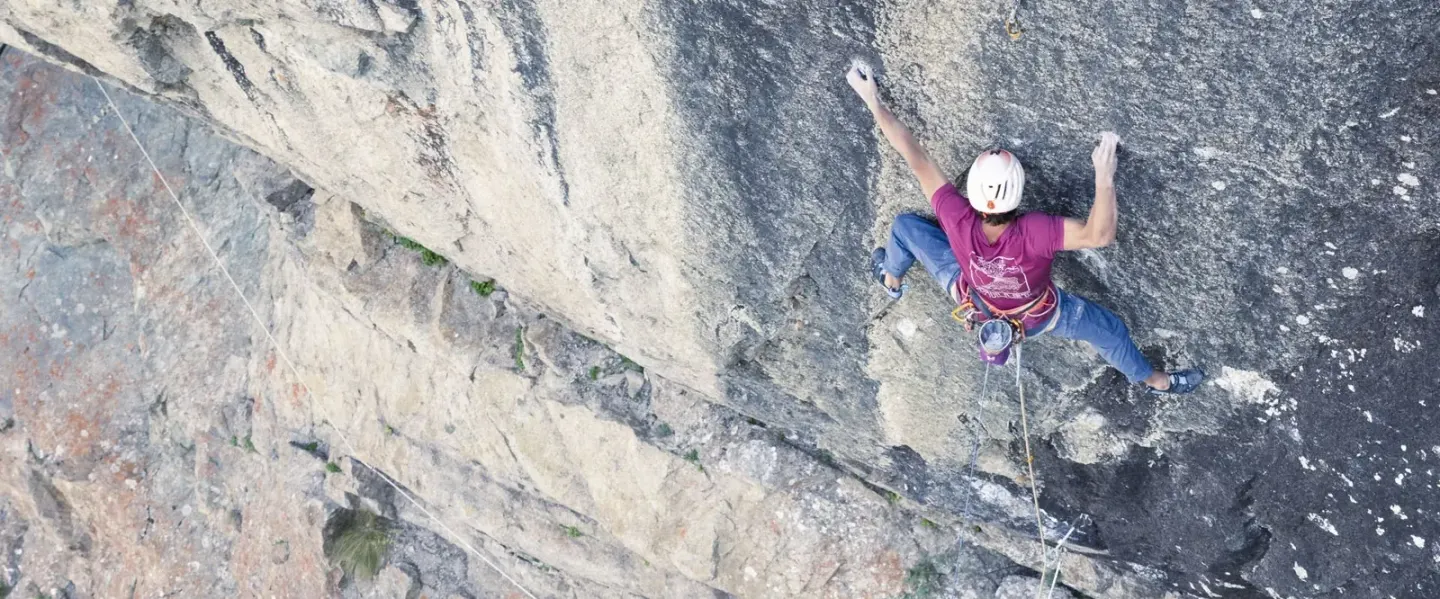
Rock climbers will also spot the Cimaï family across apparel and footwear, including the Cimaï Fleece Jacket M and Cimaï Pro GTX M. Across mountain footwear, Millet spans everything from European-built suede approach shoes to insulated winter climbing boots, alongside French production at the automated ASF 4.0 shoe plant in Ardoix (Ardèche) opened with industry partners in 2021.
Millet approach, trekking and mountaineering boots compared
| Model family | Cuff & upper | Outsole & membraneAll-rounder | Best suited for |
|---|---|---|---|
Friction EU GTX / Super Trident GTX | Low-cut leather (Friction) or mid-cut split leather (Super Trident) | Vibram Mulaz with climbing zone, GORE-TEX (ePE) | Technical approaches, via ferrata, rocky day routes |
G Trek 4E GTX / G Trek 5E GTX | High nubuck leather cuff; G Trek 5E stiffer for scree and strap/semi crampons | Vibram Nanga Litebase, GORE-TEX ePE | Multi-day trekking, alpine traverses, glacier hikes |
Elevation GTX U | Lightweight high cuff reinforced with abrasion-resistant Dyneema/polyamide | Vibram Mulaz, GORE-TEX, semi-automatic crampon welt | Summer mountaineering, ridges, demanding via ferrata |
Trilogy Jorasses 4S GTX | Integrated gaiter high boot with dual BOA Fit System | Vibram, Duratherm GORE-TEX (down to -10 °C per Millet) | Winter alpinism, steep ice, technical north faces |
For rocky scrambles and via ferrata rungs, both the European-made low-cut Millet Friction EU GTX U with toe-to-cuff lacing and the mid-cut Millet Super Trident GTX M place a flat Vibram Mulaz climbing zone right beneath the big toe. Long-distance trekkers can pick between the more supple Millet G Trek 4E GTX M and torsionally stiffer Millet G Trek 5E GTX M, while the Dyneema-reinforced Millet Elevation GTX U trims weight on summer 4,000-metre peaks and the low-cut Millet Hike Up GTX M handles fast valley trails.
Six core Millet picks from our range
From Kamet and Trilogy shells to Seneca trekking jackets, Ubic packs and alpine footwear
 MilletKamet GTX Jacket MFour-season 3-layer mountaineering hardshell with GORE-TEX ePE, helmet hood and pit zips.331.55€View product →
 MilletTrilogy Icon GTX Pro JktmNorth-face and expedition 3L GORE-TEX PRO ePE shell featuring RECCO and harness-high chest pockets.572.15€View product →
 MilletSeneca GTX 2L Jacket MSupple 2-layer GORE-TEX ePE trekking jacket with mesh lining and comfortable Regular Fit.187.85€View product →
 MilletUbic 30Versatile 30-litre four-season pack (1.19 kg) with Variloop carry straps and integrated rain cover.140.05€View product →
 MilletElevation GTX ULightweight high-cut mountaineering boot with Dyneema upper, GORE-TEX and Vibram Mulaz sole.266.65€View product →
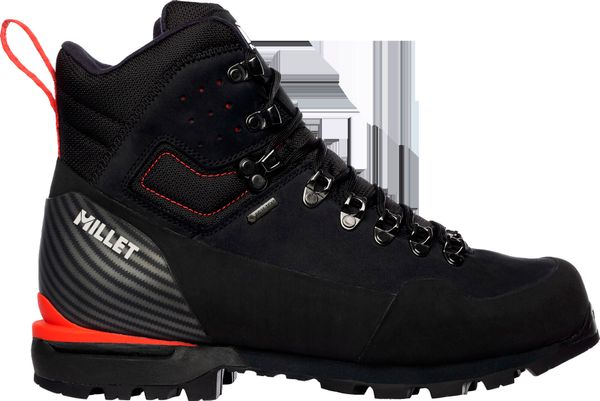 MilletG Trek 5E GTX MSupportive nubuck leather trekking boot with GORE-TEX ePE and Vibram Nanga Litebase outsole.242.35€View product →
Millet's alpine DNA brings deliberate compromises if you rarely clip into a harness. Pure mountaineering shells such as the Trilogy Icon GTX Pro and Kamet GTX omit low hip-level handwarmer pockets because a climbing harness or pack belt would sit straight over them. If you want a rain jacket where you can rest cold hands at your sides in town, a Seneca GTX 2L will serve you far better.
Fit and sole stiffness deserve equal honesty. Millet's French Active Fit is tailored close through the chest and shoulders to prevent flapping fabric in high winds; if you plan to layer a lofty down jacket underneath, your usual size may feel snug. Likewise, rigid mountain soles on the Trilogy Jorasses 4S or G Trek 5E tire feet quickly on flat gravel paths, where a more flexible Hike Up GTX or G Trek 4E rolls much more naturally.
Matching the right Millet line to your route
- 1
If you climb with a harness, rope and helmet
pick Kamet GTX or Trilogy Icon with high chest pockets rather than a hiking shell with low hand pockets.
- 2
If you want a quieter, softer shell for hut-to-hut trekking and daily rain
choose Seneca GTX 2L (or packable 2.5L DRYEDGE) over crisp 3L GORE-TEX PRO.
- 3
If you overheat on steep ski-touring climbs
wear a breathable Dual Tech hybrid like the Pierra Ment Jacket on the skin track and keep your 3L shell packed for the ridge.
- 4
If one backpack needs to cover summer hikes plus winter snowshoe or ski days
go for an Ubic with Variloop straps rather than the stripped-down alpine Peuterey.
Right for you if …
Mountaineers, ski tourers, climbers and serious trekkers who value harness-friendly pockets, helmet hoods and precise edging on rock
Probably not for you if …
Shoppers looking for boxy casual rainwear or planning to walk flat forest tracks in rigid crampon-compatible boots
Two sizing details catch international buyers out with French mountain brands: UK boot numbers and French trouser labels. Millet lists mountain, trekking and approach footwear in UK sizes mapped to fractional EU thirds (for example, UK 8 = EU 42 at 26.6 cm foot length; UK 9 = EU 43 1/3 at 27.5 cm; UK 9.5 = EU 44 at 28.0 cm). On trousers, labels often show French FR sizing alongside XS to XXL/3XL: in women's cuts, FR 38 equals EU 36, FR 40 equals EU 38 and FR 42 equals EU 40. Men's tops span XS (85-91 cm chest, EU 42) to 3XL (121-127 cm chest, EU 60), and women's tops run XS (81-85 cm chest) to XXL (107-113 cm).
When washing GORE-TEX and DRYEDGE shells, Millet's official care guide highlights one detail many hikers get backwards:
- Empty all pockets and close every zip (front zip, chest pockets, pit zips), hook-and-loop cuff tab and snap button.
- According to Millet, do not turn GORE-TEX garments inside out: washing right-side out cleans dirt, sweat and sunscreen directly off the outer face fabric while keeping metal zip sliders away from the inner membrane backing.
- Machine-wash at 30 °C on a gentle synthetics cycle with a small dose of liquid detergent and low spin speed; never use powder detergent, fabric softener, stain remover or bleach.
- Tumble-dry on a low synthetics setting or iron dry on warm heat through a protective cloth (without steam contact) to reactivate the water-repellent DWR finish; reapply DWR spray once water stops beading.
- Clean mountain and approach boots strictly by hand with clean water and a soft brush after removing laces and insoles, then air-dry in the shade away from radiators.
Should crampon spikes, rock edges or years of use eventually damage a zip or panel, Millet runs an in-house after-sales repair workshop (SAV) via its Annecy service hub, offering paid repairs on zippers, seams, buckles and patches beyond its two-year warranty.
Explore the full Millet range
From Trilogy and Kamet alpine shells to Seneca trekking jackets, Ubic backpacks and G Trek or Super Trident mountain footwear.
Shop all Millet productsFrequently asked questions
Where does the name of Millet's Trilogy collection come from?
Trilogy refers to the historic link-up of the three great Alpine north faces: the Eiger, Matterhorn and Grandes Jorasses. In March 1987, Millet alpinist Christophe Profit completed the first solo winter enchainment of all three faces in 42 hours alongside contemporary Éric Escoffier. Today the official guide companies of Chamonix, Grindelwald and Cervinia wear Trilogy gear daily.
What is the difference between GORE-TEX ePE and DRYEDGE at Millet?
GORE-TEX ePE and GORE-TEX PRO ePE (28,000 mm hydrostatic head, made without intentionally added PFAS) deliver maximum long-term storm protection for mountaineering, expeditions and heavy trekking across Trilogy, Kamet and Seneca GTX. DRYEDGE is Millet's in-house waterproof membrane: in 2.5-layer hiking jackets like Seneca 2.5L and Fitz Roy (10,000 mm / 10,000 g/m²/24h per Millet) it keeps weight and price low, while ski versions reach 20,000 mm.
Should I choose a Millet Ubic or Peuterey backpack?
Pick the Ubic (such as Ubic 30 or Ubic 55+15) if you want one four-season pack for trekking, hut tours, snowshoeing and ski touring, complete with a rain cover, stretch pockets and removable Variloop gear straps. Choose the Peuterey 35+10 for technical mountaineering and rock routes, where its narrow profile, front crampon pocket, FPP ice-axe holders and rope strap avoid snagging.
How do Millet sizes run across jackets, trousers and boots?
Active Fit alpine garments (Trilogy, Kamet, Pierra Ment) sit close at the shoulders and chest; size up if you sit between sizes and plan to wear thick midlayers underneath. Watch trouser tags carefully: a French women's FR 38 corresponds to EU 36 (FR 40 = EU 38). Footwear runs in UK sizes with fractional EU thirds, so measuring your foot length in centimetres gives the most reliable fit.
Why does Millet advise against turning GORE-TEX jackets inside out in the wash?
Millet recommends closing every zip and Velcro tab and washing GORE-TEX shells right-side out at 30 °C with liquid detergent on a low spin cycle. Keeping the outer shell facing out cleans oils and trail grime effectively while preventing internal zip sliders and hardware from rubbing directly against the membrane backing and seam tape.
Sources (6)

SportFits editorial team
Marketing & Sales Manager at SportFitsNiklas is Marketing & Sales Manager at SportFits and studied applied sports science in Regensburg. In the magazine he writes about training science, fitness and longevity, putting trends into scientific context instead of simply celebrating them. He also looks at what really matters in outdoor gear: honest facts instead of empty advertising language.
Author profile →SportFits
outdoors looks good on you