Stories
Daehlie: Cross-country ski jackets, pants and base layers explained
In partnership withDaehlie
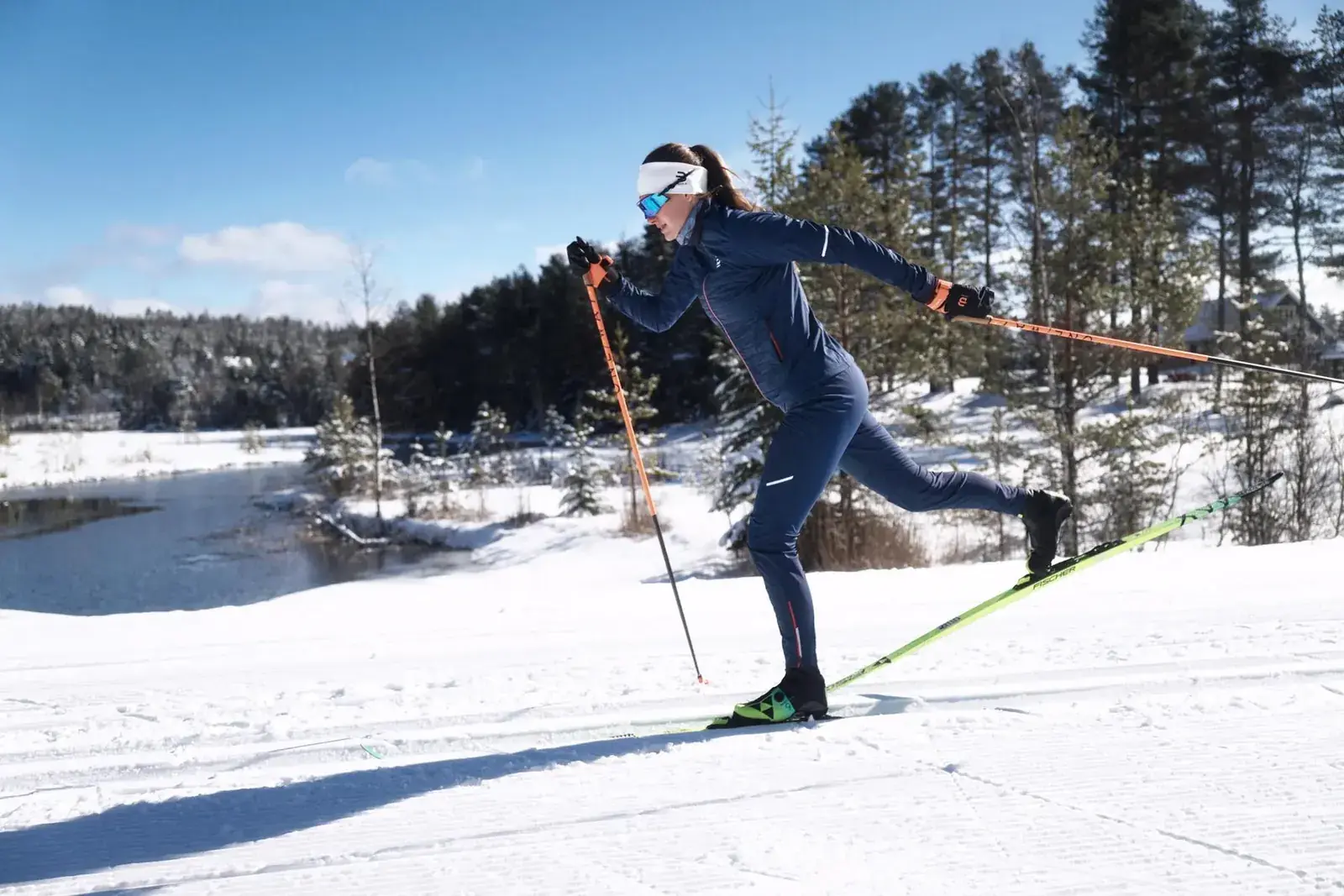
Founded in Norway in 1996 by eight-time Olympic gold medalist Bjørn Dæhlie, Daehlie Sportswear builds zoned endurance gear for Nordic skiing and winter running. Here is how Challenge 3.0, Power, Winner 4.0, Raw 6.0 and Performance Wool compare, plus sizing and care advice.
The essentials at a glance
- 01
Norwegian cross-country ski legend Bjørn Dæhlie (eight Olympic gold medals and nine World Championship titles) launched his brand in 1996 while still competing. Since 2011, Daehlie Sportswear has been part of Oslo-based Active Brands AS.
- 02
Almost every jacket and pant uses a zoned climate layout: a 3-layer softshell membrane on the front (rated at 10,000 to 15,000 mm water column according to Daehlie) blocks icy headwinds, while breathable stretch panels down the back release heat and sweat.
- 03
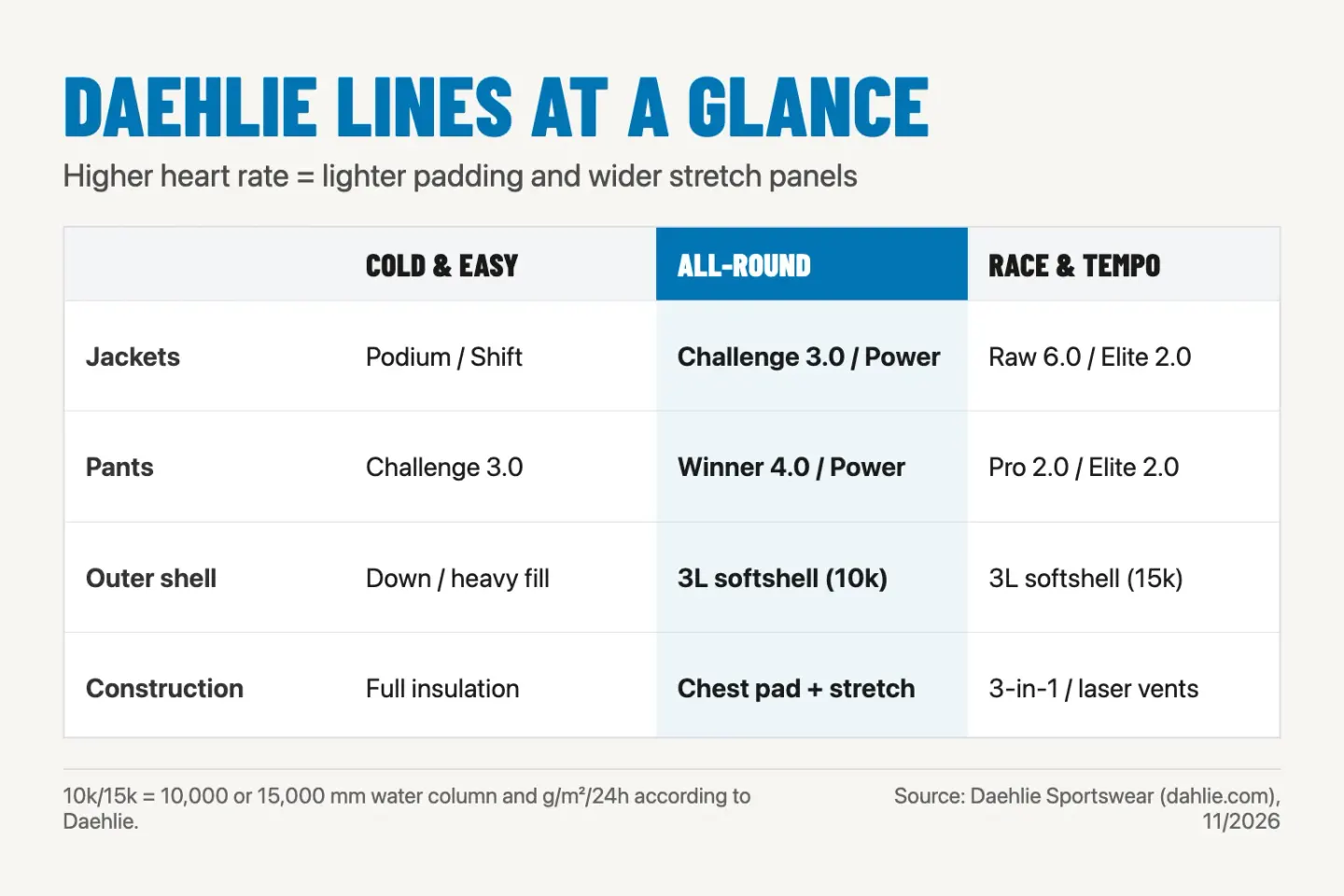
Lines split cleanly by heart rate and temperature: Podium insulates with duck down before and after sessions, Challenge 3.0 and Power handle cold to moderate training, Winner 4.0 offers unpadded versatility, and Raw 6.0, Pro 2.0 plus Elite 2.0 target intervals and racing.
- 04
Underneath sits a four-tier base layer lineup spanning Performance Wool (50% merino wool, 50% Tencel lyocell) through to heavyweight Shield Wool at 240 g/m².
Halfway up a steep Nordic climb, your heart rate nears threshold and sweat builds rapidly beneath a sealed alpine shell. Crest the hill into a shaded descent at thirty kilometres per hour, and freezing headwinds turn that trapped moisture ice-cold against your chest. Cross-country skiing and winter running ask contradictory things from clothing: windproof shielding in front, jersey-like ventilation behind. Solving that exact balance has defined Daehlie for three decades.
Browse the collection and you encounter names such as Challenge 3.0, Power, Winner 4.0, Kikut, Raw 6.0, Pro 2.0, Elite 2.0, Podium, Comfy and Performance Wool. Picking purely by look or price often leaves skiers overdressed on fast skate sessions or under-insulated on sub-zero classic tours. Once you map the ranges to pace and temperature, choosing the right setup becomes straightforward.
Throughout the 1990s, Bjørn Dæhlie set the benchmark in international Nordic skiing, collecting eight Olympic gold medals (twelve Olympic medals overall) and nine World Championship titles between 1991 and 1999. Frustrated by traditional warm-up suits that soaked up wet snow and chilled in headwinds, he founded his own technical apparel brand in 1996 at the peak of his racing career. In 2011, Oslo-based Active Brands AS acquired Daehlie Sportswear, placing it alongside fellow Norwegian outdoor names such as Kari Traa, Sweet Protection and Johaug. Ongoing partnerships with ski clubs, running events and elite squads such as Team Aker Dæhlie feed athlete feedback straight back into pattern cutting.
Rather than sealing the entire torso inside a waterproof hardshell, Daehlie splits almost every Nordic and winter running garment into distinct microclimate zones:
- 3-layer softshell wind front: Across the chest, shoulders, upper sleeves and front thighs, Daehlie laminates a face fabric to a PU or TPU membrane. According to Daehlie, core lines such as Challenge, Power, Pro and Winter Run carry a 10,000 mm water column and 10,000 g/m²/24h breathability (MVTR) rating, stepping up to 15,000 mm and 15,000 g/m²/24h on the flagship Raw 6.0.
- Unrestricted 4-way stretch back: Between the shoulder blades, under the arms and behind the knees, membrane-free stretch knit panels flex with every pole plant and let water vapour escape immediately.
- Surface treatments and targeted padding: According to the manufacturer, many softshell and wool-hybrid fabrics receive a water-repellent Rudolf Bionic Finish® Eco surface treatment to shed sleet and light snow. On cold-weather models, synthetic fills such as Thermore® Ecodown sit strictly over exposed chest or thigh zones rather than wrapping the whole body.
The decisive variable on the snow is rarely the car-park thermometer alone; it is how hard you plan to push. A relaxed classic tour generates a fraction of the body heat produced during an anaerobic skate interval session.
Sub-zero days, steady touring and warm-ups: Challenge 3.0 & Podium
If you ski mainly in deep frost or maintain a steady aerobic pace, an unlined shell can leave your core chilled on long flats. That is where the Challenge line steps in. Both the Daehlie Jacket Challenge 3.0 and women's Daehlie Jacket Challenge 3.0 Wmn combine a wind- and water-repellent 3-layer PU softshell with quilted synthetic chest padding, a fleece-lined collar and breathable stretch back panels. Down below, the Daehlie Pants Challenge 3.0 (and Daehlie Pants Challenge 3.0 Wmn) add moisture-resistant Thermore® Ecodown insulation across the front thighs.
Before the start gun, while waxing skis or on brisk winter walks, even an insulated training jacket falls short when you stand still. The Daehlie Jacket Podium fills that role with a stretch outer fabric (92% polyamide, 8% elastane with TPU membrane) packed with 60% duck down and 40% feathers, cut roomy enough to pull straight over racing layers.
Everyday track training: Power, Winner 4.0 & Kikut
For most regular skiers, Power and Winner hit the practical middle ground. The Daehlie Jacket Power (also available as the Daehlie Jacket Power Wmn) pairs a 3-layer TPU softshell (10,000 mm water column and 10,000 g/m²/24h MVTR according to Daehlie) with 4-way stretch, a fixed hood and light 60 g chest padding. It matches cleanly with the slim-cut Daehlie Pants Power 2.0, which anchors at the waist via an internal silicone grip band and drawcord.
Skiers who prefer a classic Regular Fit over a tight silhouette gravitate toward the Daehlie Pants Winner 4.0 (women's: Daehlie Pants Winner 4.0 Wmn). Built without bulky thermal fill, Winner 4.0 blocks wind up front, articulates smoothly at the knees and adapts from December frost to March slush simply by swapping the base layer underneath. For relaxed weekend tours, the Daehlie Pants Kikut offers an even more forgiving cut.
High-output intervals, skate skiing and racing: Raw 6.0, Elite 2.0 & Pro 2.0
Push into threshold intervals or fast skate skiing, and vapour release matters far more than trapped warmth. Recognised with an ISPO Award, the Daehlie Jacket Raw 6.0 (women's: Daehlie Jacket Raw 6.0 Wmn) tackles changing effort through a modular 3-in-1 system: an insulated protective vest sits over the lightweight 15k/15k softshell jacket rather than underneath it. Warm up with the vest on, peel it off in seconds before intervals without unzipping your shell, and rely on laser-cut vents and rear zip openings when output peaks.
If you want pure low-bulk speed without a modular vest, the lightweight Daehlie Jacket Elite 2.0 focuses on maximum mobility. Pair it with the Daehlie Pants Pro 2.0 (10,000 mm / 10,000 g/m²/24h 3-layer TPU softshell with gusseted crotch and articulated knees) or the Daehlie Pants Elite 2.0 for zero fabric flutter at race pace.
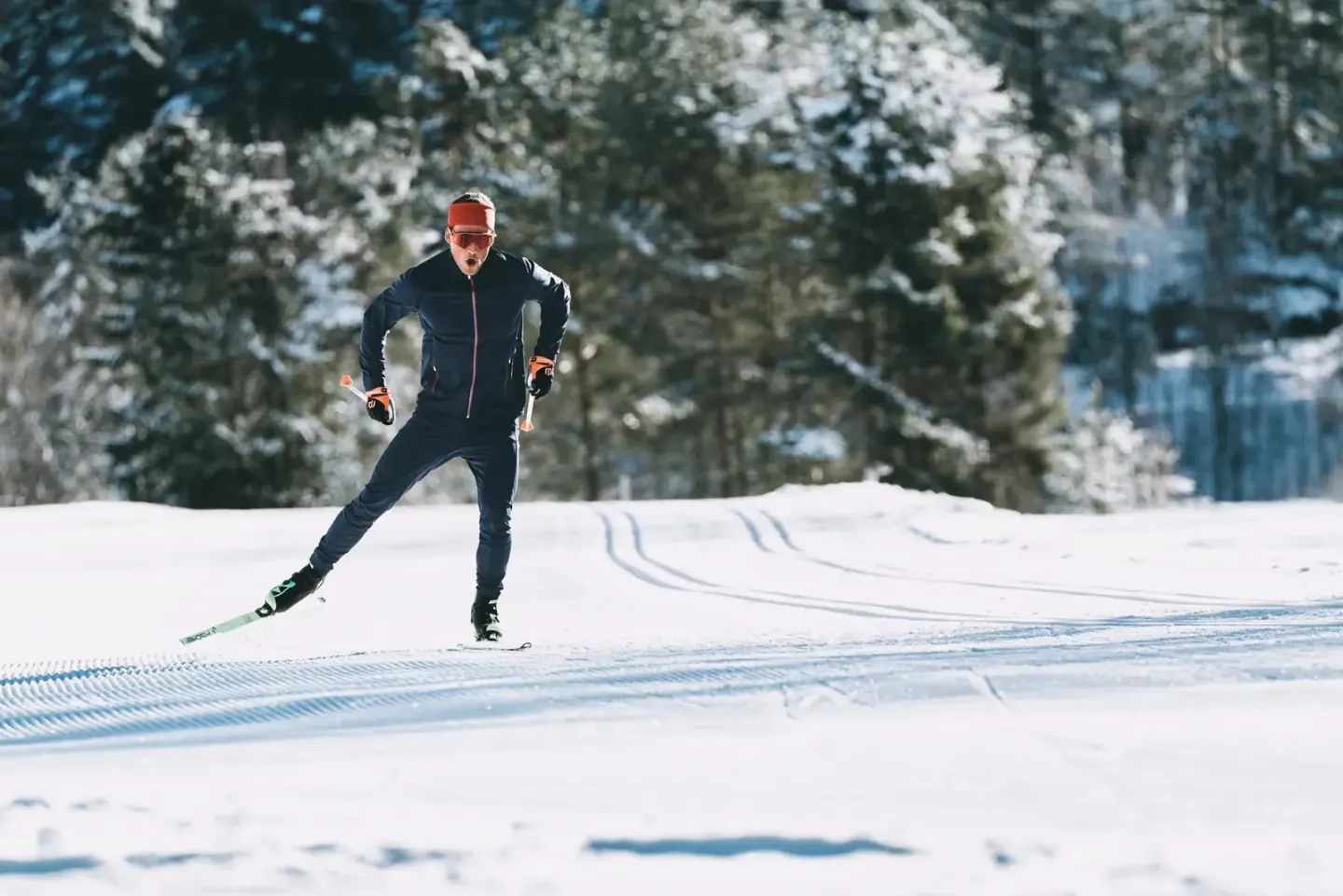
Even a breathable softshell fails if a damp cotton top clings to your skin underneath. According to Daehlie's official base layer guide, its next-to-skin range divides into four distinct fabric concepts tailored to pace and cold.
Daehlie base layer and midlayer concepts compared
| Feature | Performance WoolAll-rounder | Compete Tech & Tech Wool | Shield Wool & Comfy 2.0 |
|---|---|---|---|
Core use case | Year-round endurance training | Races, intervals, tempo runs | Deep frost & easy touring pace |
Typical fibre blend | 50% merino wool, 50% lyocell (Tencel) | Tencel / recycled polyester / merino or 37.5® yarn | 240 g/m² wool blend or knit with wind front |
Fit & structure | Slim fit with breathable mesh zones | Featherweight, flatlock seams, rapid drying | High thermal loft (Comfy: ultrasonic quilted chest) |
Key strength | Balances sweat transfer with stop-start warmth | Prevents clammy buildup at peak heart rate | Retains body heat in biting cold |
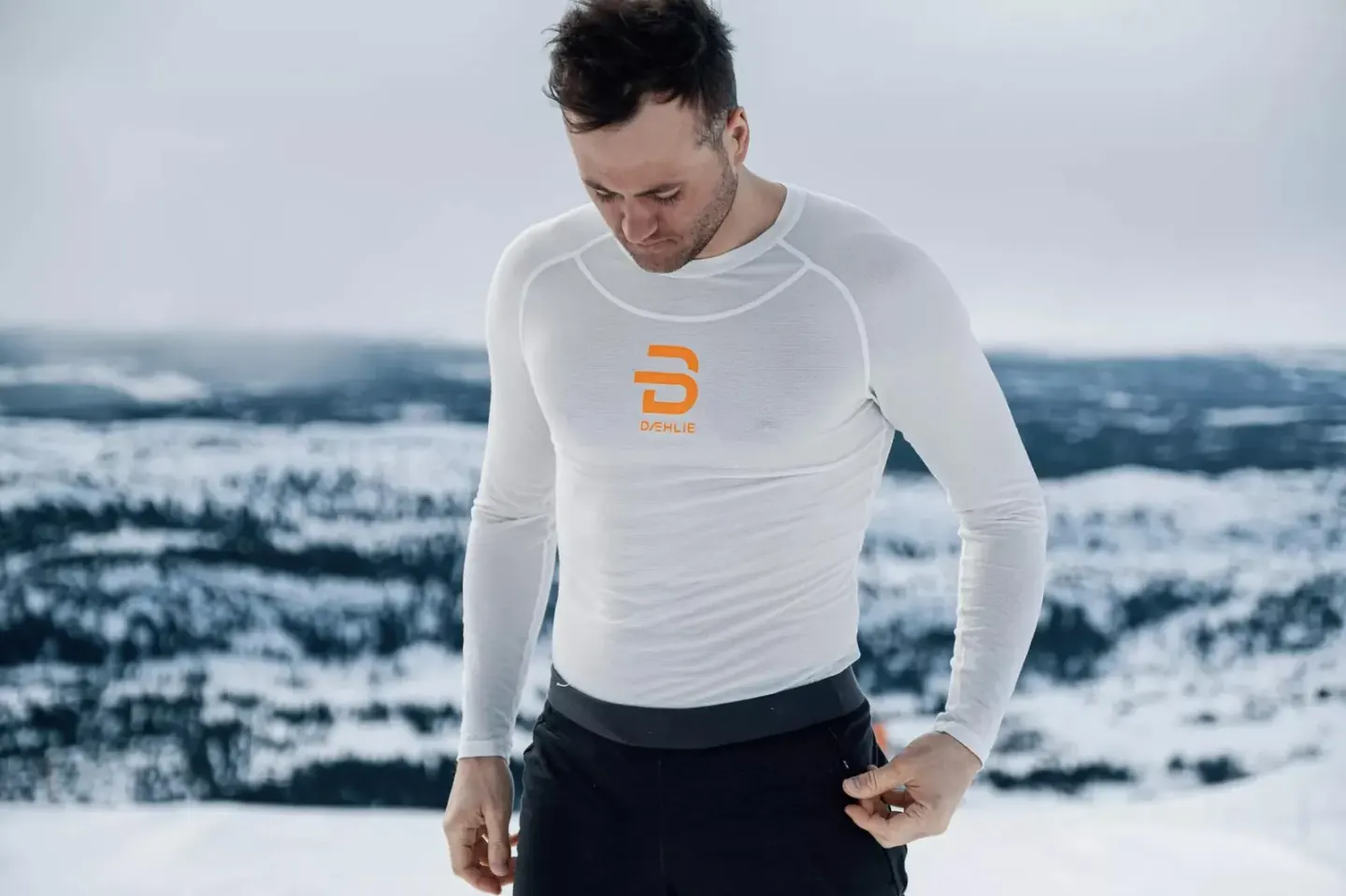
Across varied winter sessions, the 50/50 blend of merino wool and eucalyptus-derived Tencel™ lyocell in the Daehlie Performance Wool Half Zip Wmn and Daehlie Performance Wool Long Sleeve covers a remarkably wide temperature window. Lyocell pulls sweat off the skin faster than pure wool, while merino buffers warmth during brief stops and resists odour. When bitter cold calls for an extra midlayer or cabin pullover, the Daehlie Half Zip Comfy 2.0 (40% acrylic, 30% polyamide, 30% wool) adds seamless ultrasonic quilting across its wind-resistant front panel.
Daehlie applies the exact same body-mapped thinking to winter running and 365-day road or trail sessions. The Daehlie Pants Winter Run (and women's Daehlie Pants Winter Run Wmn) shield shins and quads with a thin 10k/10k TPU softshell while keeping the rear legs open in 4-way stretch. Runners who prefer close-fitting wool-blend tights can step into the Daehlie Tights Winter Wool 2.0, while warm-weather training is covered by pieces such as the Daehlie Shorts Run 365. Finishing accessories seal off heat loss at the extremities: the Daehlie Glove Motion (127 g, shell made from 100% recycled polyester according to Daehlie), the 51 g Daehlie Hat Polyknit 1 Pack (92% polyester, 8% elastane) and merino-blend Daehlie Sock Active Wool.
Six core Daehlie picks from our range
From insulated Challenge 3.0 shells and Winner 4.0 pants to Performance Wool base layers
 DaehlieJacket Challenge 3.0Wind- and water-repellent 3-layer softshell jacket with padded chest panel for cold training days.159.35€View product →
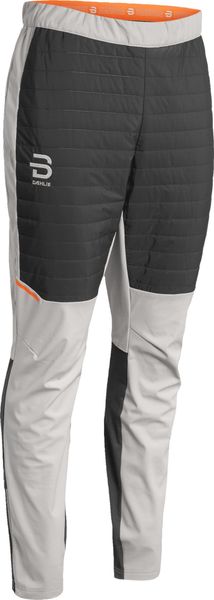 DaehliePants Challenge 3.0Insulated Nordic ski pants pairing a PU softshell front with Thermore Ecodown thigh warmth.109.75€View product →
 DaehlieJacket PowerVersatile all-round cross-country jacket (10,000 mm / 10,000 g/m²/24h according to Daehlie) with fixed hood.122.65€View product →
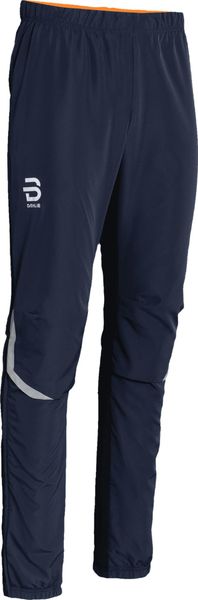 DaehliePants Winner 4.0Classic regular-fit Nordic pants combining a wind-resistant front with 4-way stretch mobility.112.75€View product →
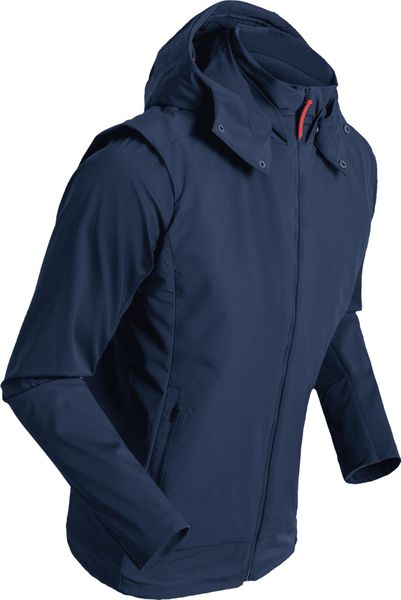 DaehlieJacket Raw 6.0Modular 3-in-1 jacket and outer vest system with 15k/15k membrane and laser-cut ventilation.424.75€View product →
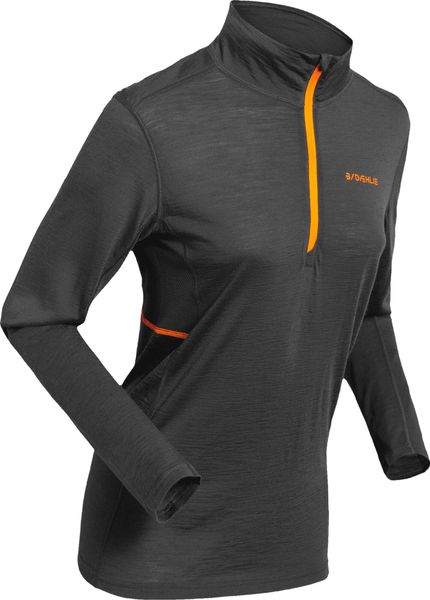 DaehliePerformance Wool Half Zip WmnSlim women's half-zip base layer blending 50% merino wool and 50% Tencel lyocell.77.95€View product →
Designing strictly for high-output movement creates clear boundaries. Although front panels on Power, Challenge or Raw 6.0 carry 10,000 to 15,000 mm waterproof ratings, none of these jackets replace a fully taped rain shell or alpine ski parka. Seams are not taped throughout, and the breathable knit back panel will let heavy rain soak through. Likewise, sitting on windy alpine chairlifts quickly exposes the uninsulated stretch back.
Overdressing is the other classic pitfall. Wearing an insulated Challenge 3.0 jacket over a thick fleece for brisk skate skiing at minus two degrees guarantees overheating ten minutes into the workout. Seasoned Nordic skiers follow a simple rule of thumb: if you feel slightly cool during the first five minutes at the trailhead, your layering will sit right once your heart rate climbs.
Matching the right Daehlie line to your session
- 1
If you ski at an easy pace below minus five degrees or chill quickly
pick Jacket and Pants Challenge 3.0 with front synthetic padding.
- 2
If you want one pair of Nordic pants for almost the entire winter
choose unpadded Pants Winner 4.0 (Regular Fit) or Pants Power 2.0 (Slim Fit) and adjust base layer weight underneath.
- 3
If you run hard intervals, races or fast skate sessions
step into Elite 2.0, Pro 2.0 or the modular Raw 6.0 3-in-1 system rather than heavily padded shells.
- 4
If you wait around race stadiums or want warmth straight after training
pull an insulated down parka such as Jacket Podium over your kit.
Right for you if …
Cross-country skiers, winter runners and roller-skiers seeking wind protection in front with rapid heat release down the back
Probably not for you if …
Resort alpine skiers riding cold chairlifts or hikers needing a fully seam-taped waterproof hardshell for pouring rain
Daehlie sizes adult apparel in international letters from XS to XXL (women typically XS to XL, men S to XXL), while junior styles follow body height in 116, 128, 140, 152 and 164. Pay close attention to cut profiles: race-inspired pieces such as Elite, Raw, Pro and Power 2.0 sit close to the torso and legs to prevent wind drag. If you prefer extra room for a midlayer or a relaxed silhouette, Winner 4.0, Kikut and Podium offer noticeably more volume.
Key body measurements from Daehlie's size chart:
- Women: XS (77-83 cm chest / 61-67 cm waist), S (83-89 cm / 67-73 cm), M (89-95 cm / 73-79 cm), L (95-101 cm / 79-85 cm) and XL (101-107 cm / 85-91 cm).
- Men: S (91-97 cm chest / 79-85 cm waist), M (97-103 cm / 85-91 cm), L (103-109 cm / 91-97 cm), XL (109-115 cm / 97-103 cm) and XXL (115-121 cm / 103-109 cm).
- Gloves: Sized numerically from 6 (XS) through 8 (M) up to 11 (XXL).
To keep softshell membranes, stretch knits and merino fibres performing season after season, follow Daehlie's care guidance:
- Zip up all pockets, fasten hook-and-loop tabs and place delicate garments inside a mesh laundry bag before washing.
- Skip fabric softener completely: it coats technical yarns, slows moisture wicking across stretch panels and degrades membrane breathability.
- On pure synthetic softshells treated with Rudolf Bionic Finish® Eco, Daehlie notes that gentle heat (low tumble-dry heat or a warm iron, provided the garment care label permits it) helps reactivate surface water beading after washing.
- Base layers and midlayers containing merino wool require liquid wool detergent on a gentle wool cycle and must dry flat in the air, never in a tumble dryer. Between workouts, airing wool garments outside is often enough.
Explore the full Daehlie range
From Challenge and Raw cross-country jackets to Winner and Pro pants, merino base layers, winter running gear, beanies and gloves.
Shop all Daehlie productsFrequently asked questions
Who founded Daehlie Sportswear?
Eight-time Olympic gold medalist and nine-time World Champion cross-country skier Bjørn Dæhlie founded the brand in Norway in 1996. Since 2011, Daehlie Sportswear has operated under Oslo-based Active Brands AS, focusing on technical endurance clothing for Nordic skiing, winter running and year-round training.
What is the difference between Daehlie Challenge 3.0, Power and Raw 6.0?
Jacket Challenge 3.0 adds quilted synthetic chest insulation for sub-zero days and steady-state touring. Jacket Power serves as the balanced all-rounder with a 10,000 mm TPU softshell, fixed hood and light 60 g chest padding. Raw 6.0 targets high-output athletes via a 15,000 mm membrane, laser-cut ventilation and a removable outer vest (3-in-1 system).
Which Daehlie ski pants should I pick: Winner 4.0, Power 2.0 or Challenge 3.0?
Pants Winner 4.0 uses an unpadded Regular Fit with a wind-resistant front, covering most of the winter when paired with varying base layers. Pants Power 2.0 delivers similar all-round weather protection in a closer Slim Fit. If your thighs chill easily below minus five degrees, Pants Challenge 3.0 adds Thermore Ecodown front insulation.
Are Daehlie softshell jackets completely waterproof?
No. While the 3-layer softshell front (10,000 to 15,000 mm water column with Rudolf Bionic Finish Eco according to Daehlie) sheds snow, sleet and light drizzle reliably, seams are not fully taped and the membrane-free stretch back panel lets heavy rain penetrate.
How should I wash Daehlie softshell and merino wool clothing?
Close all zippers and never use fabric softener. Wash synthetic softshells on a gentle cycle with liquid technical detergent. Garments containing merino wool, such as Performance Wool or Half Zip Comfy 2.0, must be washed on a wool cycle with liquid wool detergent and dried flat in the air rather than tumble-dried.
Sources (6)
- Daehlie Sportswear: About us & athlete collaborations ↗
- Daehlie Sportswear: 30 years of cross-country skiing heritage since 1996 ↗
- Daehlie guide: Choosing the right cross-country ski jacket ↗
- Daehlie guide: Choosing the right cross-country ski pants ↗
- Daehlie guide: How to choose the right base layer ↗
- Active Brands AS Oslo: Company profile ↗

SportFits editorial team
Marketing & Sales Manager at SportFitsNiklas is Marketing & Sales Manager at SportFits and studied applied sports science in Regensburg. In the magazine he writes about training science, fitness and longevity, putting trends into scientific context instead of simply celebrating them. He also looks at what really matters in outdoor gear: honest facts instead of empty advertising language.
Author profile →SportFits
outdoors looks good on you