Super deals: At least 50% off
Guide
Bike Helmets
The right bike helmet depends on your bike. A road helmet is light and well ventilated; an MTB helmet has a visor and reaches further down the back of the head; a city helmet often comes with a light.
Key points
- Size by head circumference in cm, not by S, M or L.
- Level, two fingers' width above your eyebrows.
- Replace after every crash, even with no visible damage.
Which type for which use?
| Use | Choose | Reason |
|---|---|---|
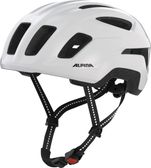
| Road bike, gravel, long rides | ChooseRoad helmet | ReasonLight, lots of air at the head. No visor. Usually cut shorter at the back |
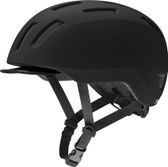
| Tours, trails, off-road | ChooseMTB half-shell | ReasonVisor, lower coverage at the back of the head and temples. Warmer than a road helmet on long climbs |
| Bike park, downhill, enduro | ChooseFull-face helmet | ReasonChin bar for face and jaw. Too warm and heavy for tours with lots of climbing |
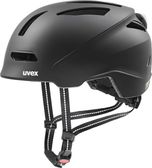
| Commuting, shopping, e-bikes up to 25 km/h | ChooseCity helmet | ReasonRear light, reflectors, closed shape. Little ventilation for sporty summer rides |
| Balance bike, play streets, the school run | ChooseKids' helmet | ReasonSmall sizes, easy to adjust. Only fits while the head size is within the range |
Types compared
Road helmet (Road and gravel)
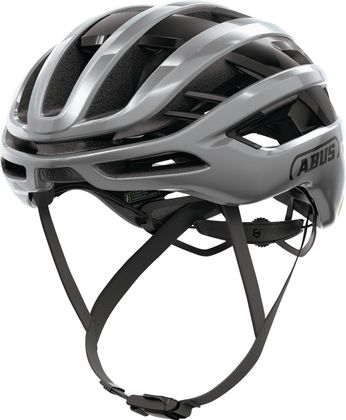
For long rides on tarmac and gravel.
- Advantage: Light
- Drawback: No visor against sun and branches
MTB half-shell (Trail and tour)
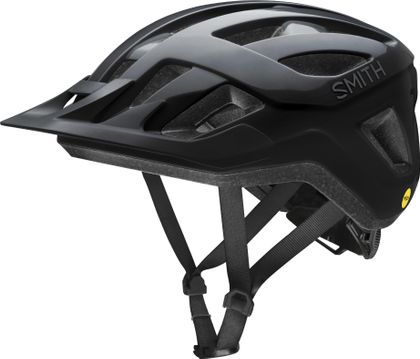
For tours and trails off-road.
- Advantage: Visor
- Drawback: A little warmer on climbs
What to look for when buying
| Question | In brief | Why |
|---|---|---|
| Which standard must a bike helmet meet? | In briefEN 1078 | WhyThe European standard EN 1078 covers bicycle helmets: construction and field of vision, shock absorption, straps and buckle. It sets minimum requirements, not a ranking of models. |
| What size do I need? | In briefHead size in cm | WhyPlace the tape measure just above your eyebrows and run it round the widest point at the back of your head. Compare the figure with the helmet's size chart, not with S, M or L. |
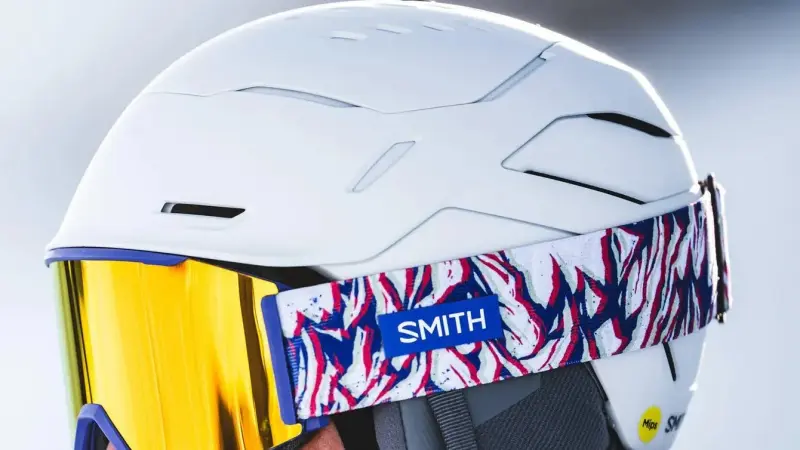
| What does MIPS do? | In briefLow-friction liner | WhyMIPS is a low-friction layer between padding and shell. In angled impacts, the helmet can move slightly relative to the head. |
Frequently asked questions
Do I need a special helmet for an e-bike?
Not for a pedelec up to 25 km/h: a helmet to EN 1078 is fine. Rules for S-pedelecs up to 45 km/h differ by country, so check the local rules. Helmets to the Dutch standard NTA 8776 are made for these speeds.
Do I need a full-face helmet for mountain biking?
On tours and trails, a half-shell with a visor and low coverage at the back will do. In bike parks, on downhill tracks and in enduro races, a full-face helmet also protects chin and face. Uphill it is heavier and warmer.
How do I clean a bike helmet?
According to Abus, wipe the shell with mild soapy water and a soft cloth. Hand-wash the pads in lukewarm water with a mild detergent and let them air-dry, not on a radiator.
Is MIPS required?
No. EN 1078 does not require a system against rotational motion. MIPS and similar systems are an extra. More important than any feature is a helmet that fits and sits correctly.
Last updated: October 2026
Road bike
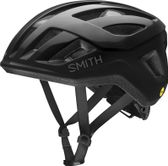
Choose a light helmet with large vents and no visor. It sits level, about 2 fingers' width above your eyebrows, and carries the EN 1078 standard.
- Plenty of ventilation
- No visor
- EN 1078
Mountain bike
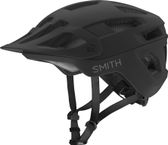
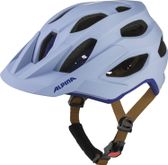
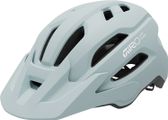
On trails, choose a half-shell with a visor that reaches lower over the back of the head and temples. In bike parks, a full-face helmet with chin bar also protects your face.
- Visor
- Low at the back
- Full-face for bike parks
City, e-bike
A city helmet with rear light and reflectors suits commuting and e-bikes up to 25 km/h. For S-pedelecs up to 45 km/h, rules differ by country: check the local ones.
- Rear light
- Reflectors
- S-pedelec: check local rules
Kids
Measure the head circumference and buy a helmet that fits now, not one to grow into. It must not wobble, and the chin strap leaves about 1.5 cm of space at the chin.
- By head size
- Not to grow into
- 1.5 cm at the chin