Buying Guides
Mips in helmets: what the slip layer can and can't do
A thin layer inside the helmet that slides in angled falls. What research says Mips does, where its limits are and how to tell whether a helmet has it.
Key points
- 01
Mips is a low-friction layer inside the helmet. According to the company, it allows 10 to 15 mm of movement in angled impacts.
- 02
It is meant to reduce the rotation that passes to the head in an angled impact. Straight impacts are still absorbed by shell and foam.
- 03
In the lab, some Mips helmets cut rotational acceleration clearly. How much depends on the model and on where the impact lands.
- 04
A Mips helmet meets the same standard as one without. Testing for rotation is not yet mandatory.
- 05
Fit comes first. If your model comes with Mips and fits just as well, take that version.
When you fall, your head rarely lands straight on. More often it hits at an angle: a hard piste, tarmac, a rock on the trail. The ground brakes the helmet and turns it, and part of that rotation passes to your head. That is the situation Mips is built for.
According to Mips, rotation in angled impacts is a common cause of concussion. What the slip layer can do about it has been studied well. The results are more mixed than the yellow logo suggests.
Mips stands for Multi-directional Impact Protection System. Behind it is a Swedish company. Neurosurgeon Hans von Holst and engineer Peter Halldin of KTH in Stockholm started working on the idea in 1996, and the first system came to market in 2007.
Mips doesn't make helmets itself. The company supplies a component that brands such as Smith, Giro, Sweet Protection, Alpina or uvex build into their models. By its own count, more than 150 brands use it.
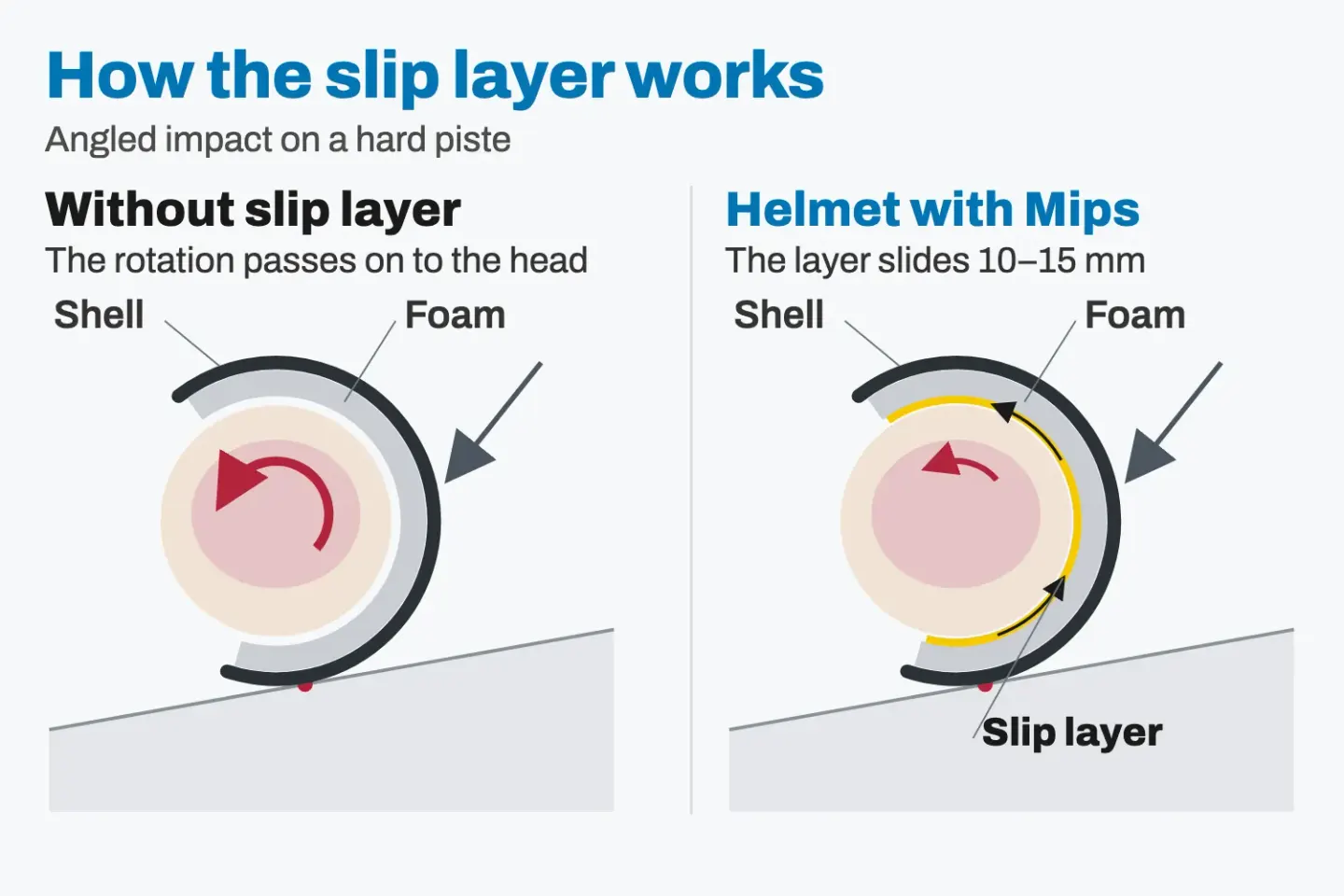
A thin, low-friction layer sits between your head and the foam. In an angled impact, Mips says it can shift 10 to 15 mm in any direction relative to the helmet. Your head then turns a little independently of the shell. The aim is for less rotation to reach the head.
How the layer is built in varies from model to model. In many helmets you can see it as a yellow inner liner. In others it is worked into the padding or the foam and is hard to spot.
In the lab, Mips often helps in angled impacts. How much depends on the helmet.
A team from Imperial College London and the Swedish insurer Folksam examined 27 bike helmets, 15 of them with Mips. The helmets hit an angled surface at three points on the head. Depending on the point, between a third and just over half of the Mips helmets cut rotational acceleration clearly, by roughly 22 to 52 per cent compared with conventional helmets. The rest were in the range of helmets without a slip layer. A few Mips helmets even did worse on single measurements.
The researchers name the limits themselves. Their headform had no neck, and its plastic skin slides less easily than a real scalp. How many injuries Mips prevents in everyday riding and skiing can't be read directly from experiments like these.
For ski helmets there is a rating you can use yourself. The Virginia Tech Helmet Lab in the US drops each helmet twelve times, at three points and at two angles, and measures the acceleration and rotational speed of the head. It then awards stars. What counts there is how well a model does overall, with or without Mips.
Helmet with and without Mips
| Helmet without Mips | Helmet with Mips | |
|---|---|---|
Standard | EN 1077 (ski) or EN 1078 (bike) | the same standard, no stricter one |
Straight impact | shell and foam absorb it | shell and foam absorb it |
Angled impact | shell and foam | plus the slip layer, meant to reduce rotation at the head |
Inside | padding directly on the foam | thin layer between head and foam |
How to spot it | no mark | yellow Mips dot, usually "Mips" in the model name |
Mips doesn't turn a badly fitting helmet into a good one. No helmet and no protection system prevents every injury, as Mips states in its own notices.
The standards don't require it either. The tests for ski and bike helmets drop the helmet straight on and don't measure rotation. Since 2024, EN 17950 has set out a European test method that does. It is not yet mandatory for ski or bike helmets.
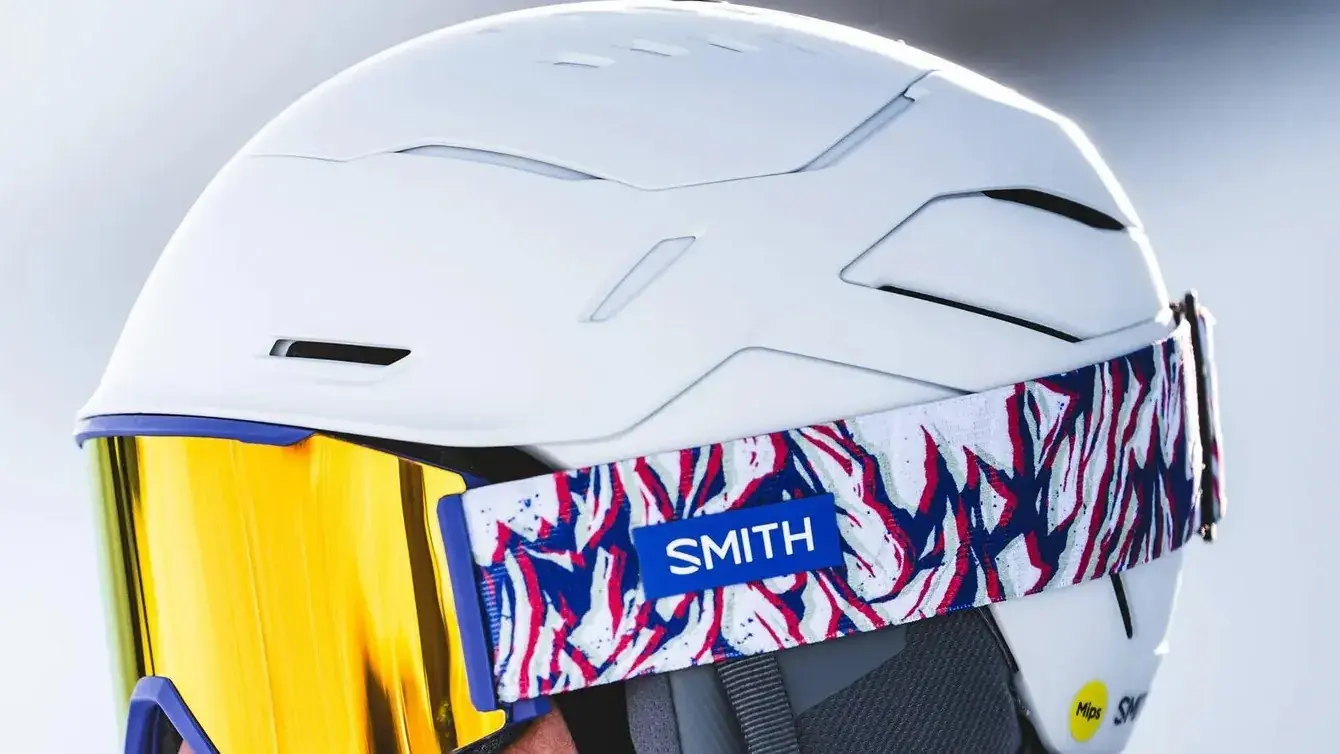
At the back or on the side of the helmet you'll find a yellow dot with the word Mips, easy to see in the cover photo. "Mips" usually appears in the model name too, as with the Smith Vantage 2 Mips or the Giro Neo Mips. The packaging should name the system as well.
Mips can't be retrofitted. If a model comes with and without it, they are two different helmets. Don't take the layer out or move it either: Mips advises against wearing a helmet with a damaged or displaced system.
The slip layer only helps if the helmet fits. Put the tape measure just above your eyebrows and ears and compare the figure with the size chart for the model. A helmet that fits doesn't wobble when you shake your head with the chin strap open, and it doesn't press anywhere. Your goggles should meet the helmet without a gap at the forehead.
Our advice: choose size and shape first, then the Mips version if it fits just as well. How to read standards, class A or B and ventilation is covered in Ski helmets explained. To find the helmet that suits your ski day, use the ski helmet finder.
After a hard fall, replace the helmet, even if you can't see any damage on the outside. Some brands offer a discount on a replacement, for example Smith and Sweet Protection.
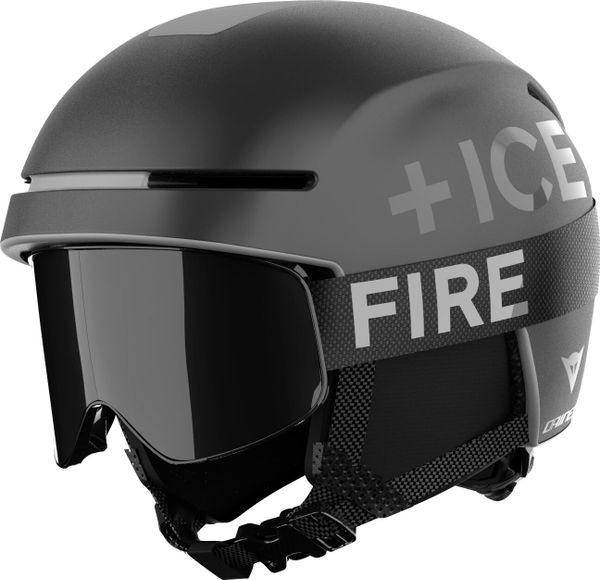

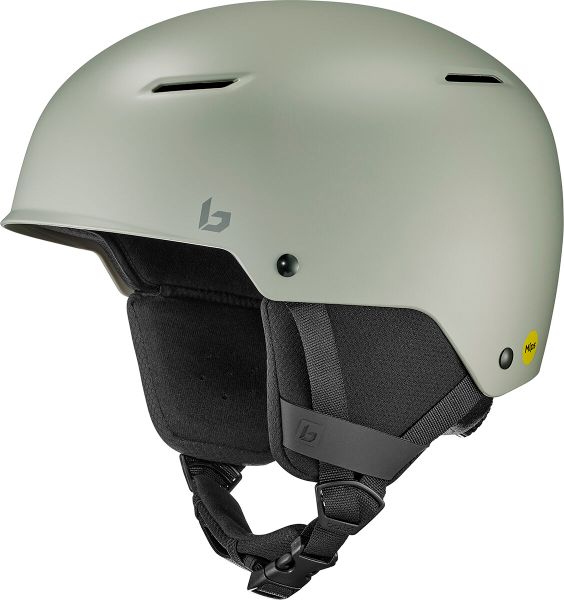

All ski helmets with Mips
Piste, freeride or racing: all ski helmets with Mips in our shop.
View ski helmets with Mips


Frequently asked questions
Is a helmet with Mips safer?
Often in angled falls: in the lab, some Mips helmets cut rotational acceleration clearly. It isn't guaranteed, it depends on the model and on where the impact lands. A helmet that doesn't fit protects less either way.
Does a ski helmet need Mips?
No. What is required is EN 1077, and a helmet meets it with or without Mips. Mips is an addition for angled falls.
How can I tell whether a helmet has Mips?
By the yellow Mips dot at the back or on the side, and usually by "Mips" in the model name. The packaging should name the system as well.
Can I add Mips to my helmet?
No. Mips is built in by the manufacturer. According to Mips you can't add it yourself, and you shouldn't remove or move the layer either.
Is Mips available for children?
Yes, plenty of children's helmets come with Mips, for example the Sweet Protection Winder Mips Junior. The same applies to children: size and fit first, then the Mips version.
Are there other systems against rotation?
Yes. The 2021 study also included helmets with POC's SPIN pads and Trek's WaveCel, both also meant to reduce rotation at the head. By its own account, Mips is used by nine of the ten major ski and bike helmet brands.
Sources (6)
- Mips: How Mips works ↗
- Mips: FAQ ↗
- Mips: Company history ↗
- Abayazid et al. (2021): A New Assessment of Bicycle Helmets, Annals of Biomedical Engineering ↗
- Virginia Tech Helmet Lab: Snow Sport Helmet Ratings ↗
- DIN EN 17950:2024-09, Protective helmets: shock absorption including measuring rotational kinematics ↗
SportFits
outdoors looks good on you