Super deals: At least 50% off
Guide
Approach & Via Ferrata Shoes
Approach shoes combine walking comfort with a sole intended for rock. Choose for the length and ground of the whole trip, not just the short climbing section.
Key points
- DAV contrasts support on small edges with friction from softer soles.
- Walking comfort and tread matter on long approaches.
- A high shaft and a membrane serve different purposes.
- Shoes do not replace suitable via ferrata equipment.
Which option suits your use?
| Use | Choose | Why |
|---|---|---|
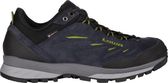
| Dry rock | ChooseFriction and precision | WhyA purposeful toe zone can help precise stepping, but heel hold must still be right. |
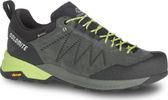
| Wet approaches | ChooseTread and weather protection | WhyTreat waterproof uppers and a suitable outsole as separate requirements. |
| Scree | ChooseSupportive higher shoe | WhyA higher shaft changes hold and mobility. Decide according to the actual route. |
| Longer paths | ChooseWalking comfort and rock grip | WhyThe shoe should not create pressure or rub the heel on the approach. |
Types compared
Low approach shoe
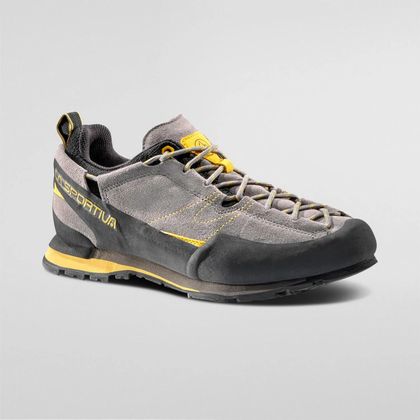
A low cuff and pronounced toe-rubber area define an approach shoe. It suits rocky paths requiring precise foot placement.
- Advantage: Direct sole contact on rocky steps
- Drawback: An exposed ankle has little shielding from scree
Waterproof approach
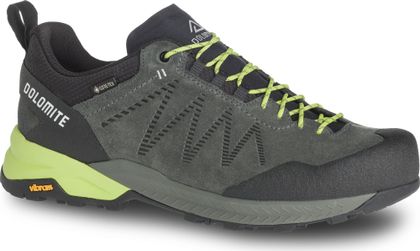
A leather upper with a membrane supplements the rock-oriented sole. It suits approaches with damp paths and grass.
- Advantage: Less direct moisture contact through the upper
- Drawback: A membrane cannot block water entering the collar
Higher approach shoe
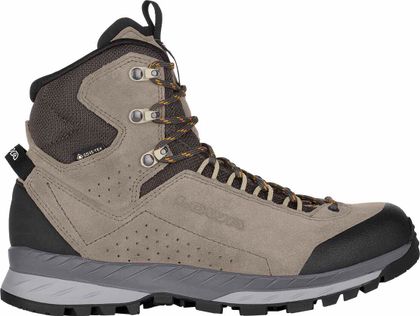
A mid-height cuff extends above the ankle. It suits approaches involving loose material and a need for more coverage.
- Advantage: Less direct stone contact at the sides of the ankle
- Drawback: Extra cuff material can hinder deep steps
What to look for when buying
| Question | In brief | Why |
|---|---|---|
| Which sole? | In briefEdging or smearing | WhyDAV describes edging advantages with firmer soles and smearing advantages with softer constructions. |
| Which shaft? | In briefBalance hold and mobility | WhyA high shaft can give more hold while also limiting mobility. |
| Which lacing? | In briefAdjust the forefoot | WhyLacing extending towards the toes permits forefoot adjustment without constriction. |
| How much water? | In briefChoose a membrane deliberately | WhyWater can enter over the cuff. Tread and toe protection remain separate criteria. |
Frequently asked questions
How do I check the fit?
Try with your walking socks and walk downhill. Toes must not hit the front and the heel should stay held. Loading a small edge reveals uncomfortable forefoot flex or pressure.
Which figures describe sole construction?
La Sportiva lists a 2 mm EVA insert for the Boulder X. This does not establish a via ferrata difficulty rating.
Can I rely on my usual size?
Use the chart for the exact model. Size labels can differ between brands and lasts. Compare both feet and check the product’s width and fit notes before ordering.
How do I care for it?
Remove dirt from the tread and follow material-specific care. Dry wet shoes as directed. Check laces, sole edges and uppers before the next outing.
Last updated: October 2026
Dry rock
On dry rock slabs, examine the broad contact area around the toe.
- Friction and precision
- Edging or smearing
- Adjust the forefoot
Wet approaches
On damp approaches, upper and outsole should each suit their separate tasks.
- Tread and weather protection
- Edging or smearing
- Adjust the forefoot
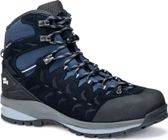
Scree
In scree, the shoe should control the foot without pressing at the ankle during a long step.
- Supportive higher shoe
- Edging or smearing
- Adjust the forefoot
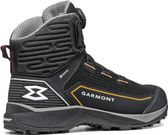
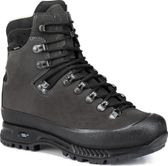
Longer paths
For a long approach, try walking and descending rather than only standing on an edge.
- Walking comfort and rock grip
- Edging or smearing
- Adjust the forefoot