Super deals: At least 50% off
Guide
Ski Touring & Freeski Clothing
Ski touring combines high effort, wind and stops. Combine weather protection, insulation and a flexible midlayer so you can adjust on the move.
Key points
- Ascents and quiet periods need different warmth.
- Weather protection and insulation serve separate functions.
- Ventilation should stay usable with a pack and gloves.
- Try waistbands, boot shafts and sleeves as a combination.
Which option suits your use?
| Use | Choose | Why |
|---|---|---|
| Weather protection | ChooseSuitable outer layer: Ski Touring Jackets · Backcountry Ski Jackets | WhyCheck hood, ventilation and closures with your other equipment. A membrane name alone says little about fit. |
| Stops and descents | ChooseAdditional insulation: Insulated Jackets for Ski Touring & Freeride | WhyChoose for expected cold and whether the layer fits above or below your weatherproof jacket. |
| Mobile midlayer | ChooseFleece or performance midlayer: Mid Layers | WhyFabric should not ride up at the back or create pressure beneath pack straps when bending. |
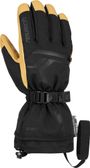
| Hands and head | ChooseAdditional cold protection: Gloves · Beanies & Headbands | WhyCheck each model for wind and water protection. A warm glove is not automatically waterproof. |
What to look for when buying
| Question | In brief | Why |
|---|---|---|
| Which phase? | In briefSeparate ascent and stops | WhyHeat generated while moving is absent when standing. Addable layers allow adjustment without replacing the whole outfit. |
| Which outer layer? | In briefWeather and ventilation | WhyAn enclosed weather layer can trap moisture. Check that ventilation remains accessible with your pack. |
| How much room? | In briefCheck layers together | WhyTight sleeves and shoulders limit movement; excess fabric can bunch beneath straps. |
| Which openings? | In briefInclude boots and gloves | WhyCuffs, trouser legs and glove gauntlets should work together. Poor overlaps can create pressure. |
Frequently asked questions
How do I check the fit?
Try with your pack and intended layers. Raise your arms as when using poles, bend your knees and fasten the cuffs. Check access to hood and zips and that your back stays covered.
What does a jacket’s hydrostatic-head figure tell me?
Scott lists a 15,000 mm hydrostatic head for the Explorair 3L. This model specification does not describe its insulation.
How do I compare different designs?
Compare pieces intended for the same activity. Fabric weight, fibre content, cut and weather protection describe different properties. A higher figure is not automatically the better choice.
How do I care for it?
Care for each material according to its label. Down fill, fleece and a weatherproof membrane do not automatically need the same treatment. Store fully dry and check zips before the next outing.
Last updated: October 2026
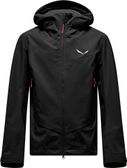
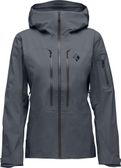
Weather protection
A touring shell should remain easy to open and close while wearing a rucksack.
- Suitable outer layer
- Separate ascent and stops
- Check layers together
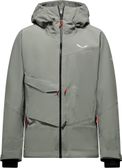
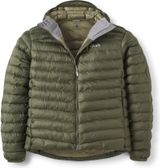
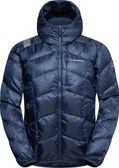
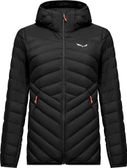
Stops and descents
For the descent, the insulating layer should be easy to put on without repacking awkwardly.
- Additional insulation
- Separate ascent and stops
- Check layers together
Mobile midlayer
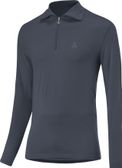
The midlayer sits between base layer and jacket without restricting their movement.
- Fleece or performance midlayer
- Separate ascent and stops
- Check layers together
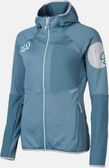
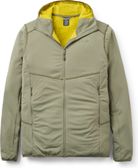
Hands and head
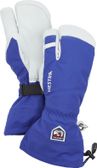
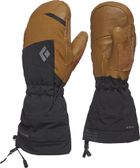
Keep gloves and headwear accessible after the ascent before you cool down.
- Additional cold protection
- Separate ascent and stops
- Check layers together


Brands we carry


- 4F
- 8848 Altitude
- adidas
- adidas Terrex
- Anon
- Armada
- Atomic
- Barts
- Bauerfeind
- Bergans
- Berghaus
- Black Diamond
- Bogner
- Bogner Fire + Ice
- C.A.M.P.
- Celavi
- CEP
- Chillaz
- CLWR ColourWear
- CMP
- cmp - collective (of) moving people
- Columbia
- Cotopaxi
- Craft
- Crazy
- Daehlie
- Dainese
- Dare2b
- Devold of Norway
- Didriksons
- Dolomite
- Dynafit
- EA7
- Eisbär
- Elevenate
- EVOC
- Falke
- Ferrino
- Finkid
- Fischer
- Fjällräven
- Goldbergh
- Gonso
- Grüezi Bag
- Haglöfs
- HAIX
- Halti
- Helly Hansen
- Hestra
- Horsefeathers
- Houdini
- Hunter
- Icebreaker
- ION
- Isbjörn
- J.Lindeberg
- Jack Wolfskin
- Jeanne Baret
- Kari Traa
- Karpos
- killtec
- KinetiXx
- Klättermusen
- Komperdell
- Krimson Klover
- La Sportiva
- LEKI
- Lenz
- Level
- Liewood
- Lundhags
- Löffler
- Maier Sports
- Maloja
- Mammut
- Marmot
- Martini
- MAUL Sport
- Millet
- Mini a ture
- Mons Royale
- Montura
- Mountain Hardwear
- Napapijri
- O'Neill
- Oakley
- Odlo
- Orage
- Outdoor Research
- Pajak
- Picture
- Pinewood
- POC
- Protest
- Puma
- Pyua
- Rab
- Reima
- Reusch
- Roeckl Sports
- Rossignol
- Salewa
- Schöffel
- Scott
- Shred
- Sidas
- Slope
- SOS
- Sportful
- Spyder
- Super.Natural
- Sweet Protection
- Swix
- Tenson
- Ternua
- The North Face
- Therm-Ic
- Timberland
- Trespass
- Uyn
- Vans
- VAUDE
- Victoria
- Wheat
- Whistler
- X-Bionic
- X-Socks
- Zanier
- Ziener
- ZNR by Ziener
No brand found