Super deals: At least 50% off
Guide
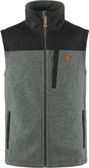
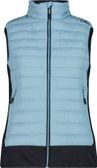
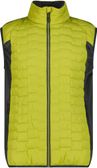
Insulated Touring Gilets
An insulated gilet warms your torso while leaving your arms free. Climbing needs breathability, breaks need warmth; another layer must protect your arms against wind and wet weather.
Key points
- Choose breathable rather than thick insulation for sweaty ascents.
- The gilet must fit beneath a shell without compressing its insulation.
- Synthetic fill handles damp better; down needs more careful moisture protection.
- A gilet leaves the arms exposed, so your other layers still matter.
Which gilet for your tour?
| Use | Choose | Bear in mind |
|---|---|---|
| Active ascent in cold weather | ChooseLight breathable insulation | Bear in mindKeep warmth controlled. Stretch and breathable panels help movement and moisture release. |
| Beneath a weatherproof jacket | ChooseSlim light gilet | Bear in mindLeave enough room inside the shell; compressed insulation loses its trapped air space. |
| Break in dry cold | ChooseWarmer down or synthetic gilet | Bear in mindPlan warmth for the arms too. A gilet alone cannot replace a warm jacket for every break. |
| Gentle cool-weather tour | ChooseFleece or lightly insulated gilet | Bear in mindCheck fabric and wind protection separately. Fleece warms but admits more wind without an outer shell. |
Synthetic fill or down?
Synthetic gilet (For damp spells)
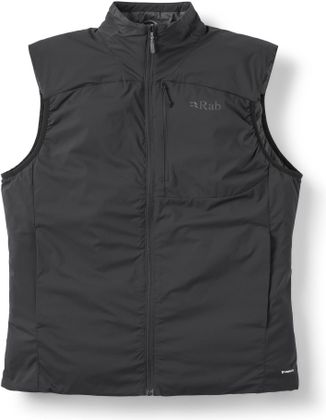
Synthetic insulation is more straightforward around sweat and damp conditions.
- Advantage: Retains warmth better when slightly damp
- Drawback: Usually bulkier than comparable down
Down gilet (For dry cold)
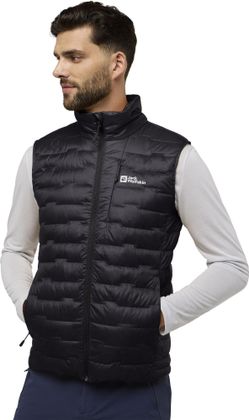
Down packs small and insulates during low activity. Protect it from wet conditions.
- Advantage: Good warmth for its packed size
- Drawback: Wet filling needs careful drying
What to look for
| Question | In brief | Why |
|---|---|---|
| Fits beneath your shell? | In briefTry all layers together | WhyChest and shoulders should move freely. The outer must not strongly compress the gilet's insulation. |
| How wide are the armholes? | In briefMimic touring movements | WhyTight edges press during poling; very wide openings let more air reach the torso. |
| Which pockets? | In briefCheck with your rucksack | WhyHip belt and shoulder straps can cover pockets. Choose positions according to what you need to reach on the move. |
Common questions
Can I take a gilet instead of an insulated jacket?
If your other layers keep the arms warm enough and the weather suits it. Missing sleeve protection can matter during long cold breaks. Plan the complete outfit rather than the gilet alone.
Is down always unsuitable for climbing?
Not necessarily. Breathable synthetic insulation is often more practical when sweating heavily. Down tends to suit dry conditions and low activity; fill amount and construction also matter.
Does an insulated gilet keep rain out?
Not automatically. Water-repellent outer fabric is not full rain protection and the arms remain exposed. Wet weather needs a suitable outer layer.
How should I store an insulated gilet?
Completely dry and loosely stored. Follow care instructions for both filling and outer fabric when washing and drying. Do not leave it tightly compressed in its stuff sack permanently.
Last updated: November 2026
When do you add warmth?
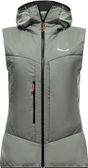
Active climbing
If a thin layer is insufficient, a light insulated gilet can help. Heavy sweating needs heat release rather than thick fill.
- Breathable construction
- Low bulk
- Free pole movements
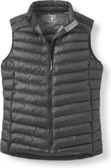
Beneath a shell
A light gilet adds warmth beneath a weather jacket. Try both together to avoid strongly compressing the insulation.
- Try layers together
- Free chest movement
- Comfortable armholes
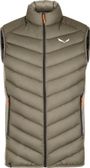
Dry cold break
Quiet spells can need a warmer gilet. Your remaining layers must still keep the arms adequately protected.
- Warmer insulation
- Plan for your arms
- Protect against wet
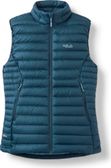
Gentle cool-weather tour
Warmer fabrics suit lower effort. Check wind protection separately; not every soft gilet blocks wind.
- Fabric feel
- Read wind protection
- Warmth for your activity
No products match these filters.


Brands we carry


Show all brands
- Bergans
- Berghaus
- Black Diamond
- CMP
- Columbia
- Dainese
- Devold of Norway
- Dolomite
- Dynafit
- Elevenate
- Falke
- Fjällräven
- Grüezi Bag
- Helly Hansen
- Houdini
- Icebreaker
- Jack Wolfskin
- Karpos
- Komperdell
- La Sportiva
- Lenz
- Löffler
- Maloja
- Mammut
- Martini
- MAUL Sport
- Millet
- Montura
- Pajak
- Rab
- Salewa
- Scott
- Swix
- Therm-Ic
- Uyn
- VAUDE
- X-Bionic
- Ziener
No brand found
