Super deals: At least 50% off
Guide
Ski Helmets
Look for EN 1077 first; Class B is enough on piste. Then decide on visor or goggles, rotational protection such as MIPS and adjustable vents.
Key points
- Your helmet must meet EN 1077; Class B is enough on piste.
- Size is your head circumference in cm; most models are unisex.
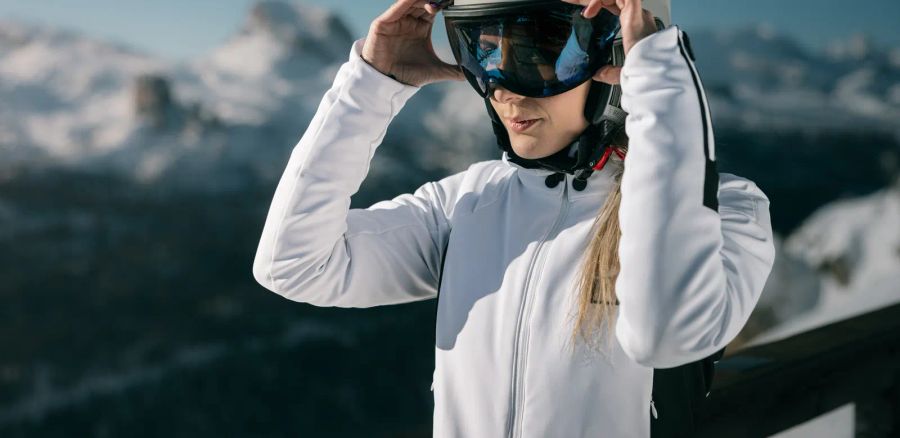
- Wear prescription glasses? A visor helmet fits over them.
- Replace your helmet after any hard fall, even without visible damage.
Buying advice
Which ski helmet fits you?
Compare use, fit and features step by step.
Which ski helmet for which use?
| Use | What matters | Your helmet |
|---|---|---|
| Piste | What mattersOne helmet for everything, free choice of goggles | Your helmetGoggle-compatible helmet, Class B |
| Piste with glasses | What mattersThe visor sits in front of your glasses and flips up on the lift | Your helmetVisor helmet |
| Ski touring | What mattersLow weight, plenty of ventilation on the climb | Your helmetTouring helmet to EN 1077 and EN 12492 |
| Kids | What mattersRe-measure head circumference every season | Your helmetKids' ski helmet with a dial |
What to check before you buy
| Question | In short | Why |
|---|---|---|
| Which standard should a ski helmet meet? | In shortEN 1077 | WhyEN 1077. In the impact test the helmet hits an anvil at 5.42 m/s, roughly 20 km/h, also at −25 °C. The headform may register no more than 250 times the acceleration of gravity. |
| Class A or Class B? | In shortB is fine on piste | WhyClass B is enough for piste days and lets in more air and sound. Class A covers more of the head and has to withstand a pointed striker dropped from 750 mm, Class B from 375 mm. |
| Is MIPS worth having in a ski helmet? | In short10–15 mm of slip | WhyYes, if the helmet fits just as well with it. The low-friction layer lets your head slide 10–15 mm inside the helmet in an angled impact, to cut rotational motion. Added weight per Mips: 20–45 g. |
| Visor helmet or goggles? | In shortGlasses? Go visor | WhyIf you wear prescription glasses, pick a visor helmet: the visor sits in front of them and flips up on the lift. Goggles keep you flexible. Swap the lens or the whole goggle and keep the helmet. |
Frequently asked questions
When should I replace my ski helmet?
After any hard fall or blow, even if you can see no damage. EN 1077 says so. Otherwise follow the manufacturer's guidance: Uvex gives three to five years from first use and no more than eight years from the date of manufacture.
Can I ski in a cycling helmet?
No. A cycling helmet is certified to EN 1078, the cycling standard. The ski helmet standard EN 1077 tests impact absorption at −25 °C and penetration by a pointed striker, standing in for a pole tip or branch. On Italian pistes an EN 1077 helmet is mandatory.
Can I wear a hat under my ski helmet?
A thin balaclava, yes. A thick woolly hat, no. The helmet should grip your head or it will shift. If you feel the cold, close the vents first and pull a neck tube over your chin.
How do I find the right size?
Run a tape measure around your head one to two fingers above your eyebrows and above your ears. That figure in centimetres is your size. The dial at the back only fine-tunes the fit. With the chin strap undone, the helmet should not move when you shake your head.
Do I have to wear a helmet?
It depends on where you ski. Italy has required a certified helmet for everyone on the piste since 1 November 2025. Poland requires one up to the age of 16, Slovenia up to 14, and seven of Austria’s nine provinces for under-15s. Germany, France and Switzerland have no such law.
Read more in the magazine
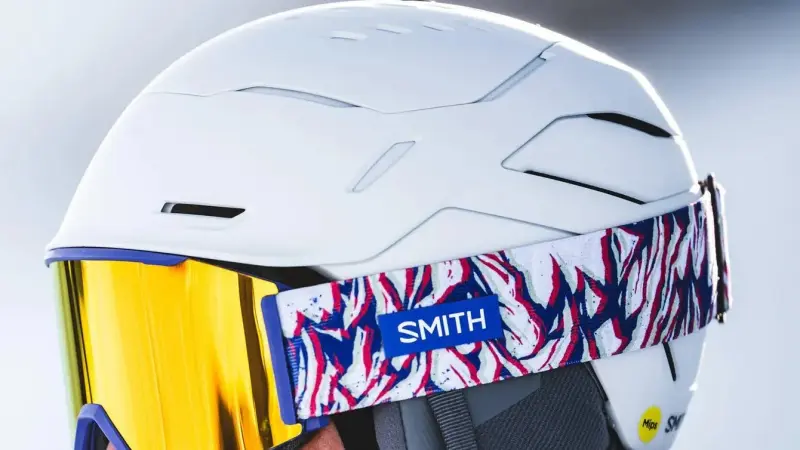 MIPS: how the helmet technology worksA thin layer inside the helmet that slides in angled falls. What research says Mips does, where its limits are and how to tell whether a helmet has it.
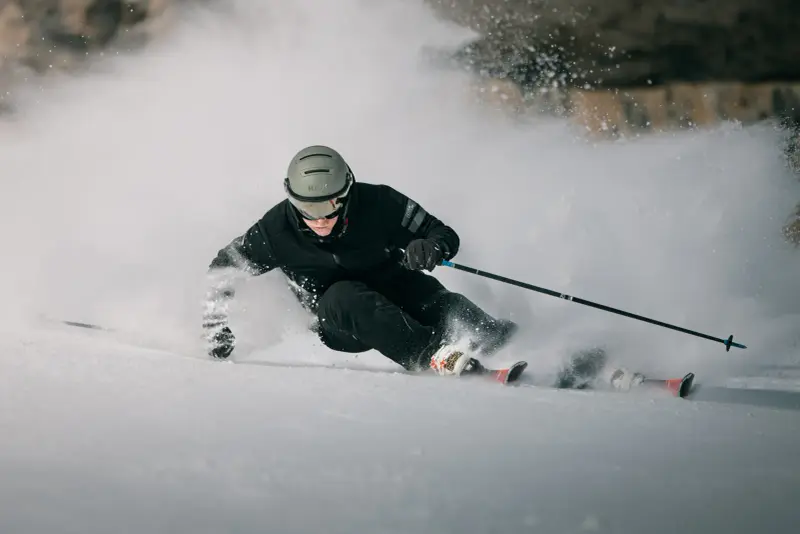 KASK: Italian ski helmets with racing DNAKASK helmets have helped riders win the Tour de France and are now also worn in the Alpine Skiing World Cup. The brand from Bergamo is now available at SportFits.
Last updated: November 2026
What for?
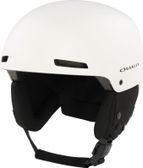
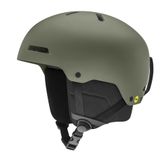
Piste
For piste days, a ski helmet to EN 1077, Class B, is enough if it doesn't wobble when you shake your head with the strap undone. If a MIPS version fits as well, take that.
- EN 1077, Class B
- no wobble
- adjustable vents
- MIPS as a plus
Freeride
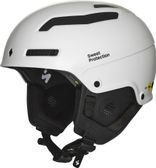
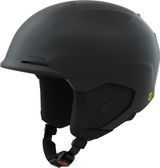
For freeriding, choose an EN 1077 helmet with rotational protection such as MIPS: 10–15 mm of slip in an angled impact. Wear goggles, not a visor: they seal and keep spindrift out.
- EN 1077
- rotational protection
- worn with goggles
- closable vents
Ski touring
A ski touring helmet carries two standards: EN 1077 for falls on skis and EN 12492 for rockfall from above. Light models weigh around 300 g and have large vents so heat can escape on the way up.
Kids
Choose a kids' ski helmet by head circumference; small sizes start at about 46 cm. Buy it to fit now and measure each season: with the strap undone it must not slip.
No products match these filters.


51 / 55cm
55 / 59cm
59 / 63cm
63-67cm




S
M


