
Sale: from 50 % off
Long, dry ascent
In dry weather, stretchy trousers that release heat are comfortable. Thick filling is usually too warm for longer climbs.
- Stretch through crotch
- Little built-in insulation
- Plan a weather reserve
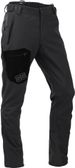
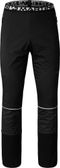
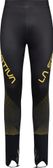
Snow and wet conditions
Wet snow calls for waterproof construction. Accessible vents help release excess heat.
- Waterproof shell
- Sealed seams
- Usable ventilation
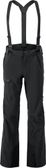
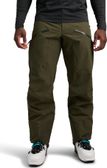
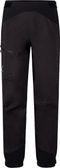
Weatherproof outer layer
Robust outer trousers must fit over your layers. Check movement in touring boots and operate the fastenings with gloves.
- Space for a base layer
- Suitable hem
- Accessible fastenings
Deep-snow descent
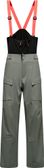
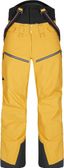
Bibs close the gap to your jacket when bending. For the ascent, low insulation and usable vents still matter.
- Covered back
- Comfortable braces
- Check ventilation
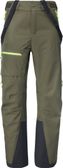


Top brands in Men's


- adidas Terrex
- Bergans
- Black Diamond
- CMP
- Crazy
- Dare2b
- Devold of Norway
- Didriksons
- Dynafit
- Elevenate
- Fischer
- Fjällräven
- Halti
- Helly Hansen
- Houdini
- Jack Wolfskin
- Karpos
- killtec
- Klättermusen
- La Sportiva
- Löffler
- Maier Sports
- Maloja
- Mammut
- Martini
- MAUL Sport
- Millet
- Montura
- Mountain Hardwear
- O'Neill
- Oakley
- Orage
- Ortovox
- Picture
- Rab
- Rossignol
- Salewa
- Schöffel
- Scott
- Swix
- Ternua
- The North Face
- Uyn
- VAUDE
- Ziener
No brand found
Guide
Men's Ski Touring Trousers
Touring trousers need to allow long uphill strides and fit over your boots for the descent. Choose between more breathable softshell for dry days and waterproof hardshell for snow and wet conditions.
Key points
- Keep built-in insulation low for long ascents.
- Softshell is flexible, but not automatically waterproof.
- Hem and gaiter must work with your boot in both walk and ski modes.
- Vents only help if you can reach and operate them on the move.
Which trousers for your tour?
| Use | Choose | Bear in mind |
|---|---|---|
| Long, dry ascent | ChooseStretch softshell trousers | Bear in mindMovement and heat release matter more than thick filling. Plan extra protection for weather changes. |
| Snowfall and wet weather | ChooseWaterproof hardshell trousers | Bear in mindLook for sealed seams and usable vents; a waterproof shell releases heat less readily. |
| Deep-snow descent | ChooseHardshell bibs or high back | Bear in mindAvoid a wide gap to your jacket when bending. Braces must remain comfortable under the rucksack. |
Softshell or hardshell?
Softshell (Dry ascents)
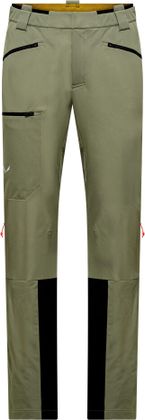
Stretchier, more breathable fabric for tours in predominantly dry weather.
- Advantage: Moves easily during the ascent
- Drawback: No reliable persistent-rain protection
Hardshell (Snow and wet)
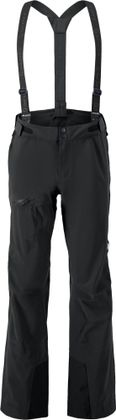
A membrane and sealed seams protect against snow and wet weather.
- Advantage: Waterproof outer shell
- Drawback: Heat needs to escape through vents
What to look for
| Question | In brief | Why |
|---|---|---|
| Room for kick turns? | In briefTake a long stride | WhyCrotch and knees should not pull. Wear the base layer you will use on the tour. |
| Does the hem fit? | In briefCheck with your own boot | WhyThe hem must fit over the boot without blocking walk mode. Gaiter and buckles need to work together too. |
| How does it vent? | In briefKeep openings accessible | WhyYou should be able to use ventilation zips with gloves. Rucksack straps and pockets must not cover them. |
Common questions
Can I use insulated piste trousers?
Possibly for a short, gentle ascent. Built-in insulation often becomes too warm on longer tours. Check movement, vents and the fit over your touring boot too.
Is softshell waterproof?
Not automatically. Water-repellent fabric handles brief moisture but cannot replace waterproof construction. For snow and sustained wet conditions, membrane and seams matter.
Does every ankle zip expose walk mode?
No. Some zips only widen the hem. Check with your own boot whether you can reach the mechanism and move the boot freely.
What goes underneath in the cold?
A synthetic or merino base layer suited to your effort. Very cold descents can call for extra insulation, but it should not add unnecessary warmth during the ascent.
Last updated: November 2026