Stories
Berghaus: 60 years of British mountain gear and buying guide
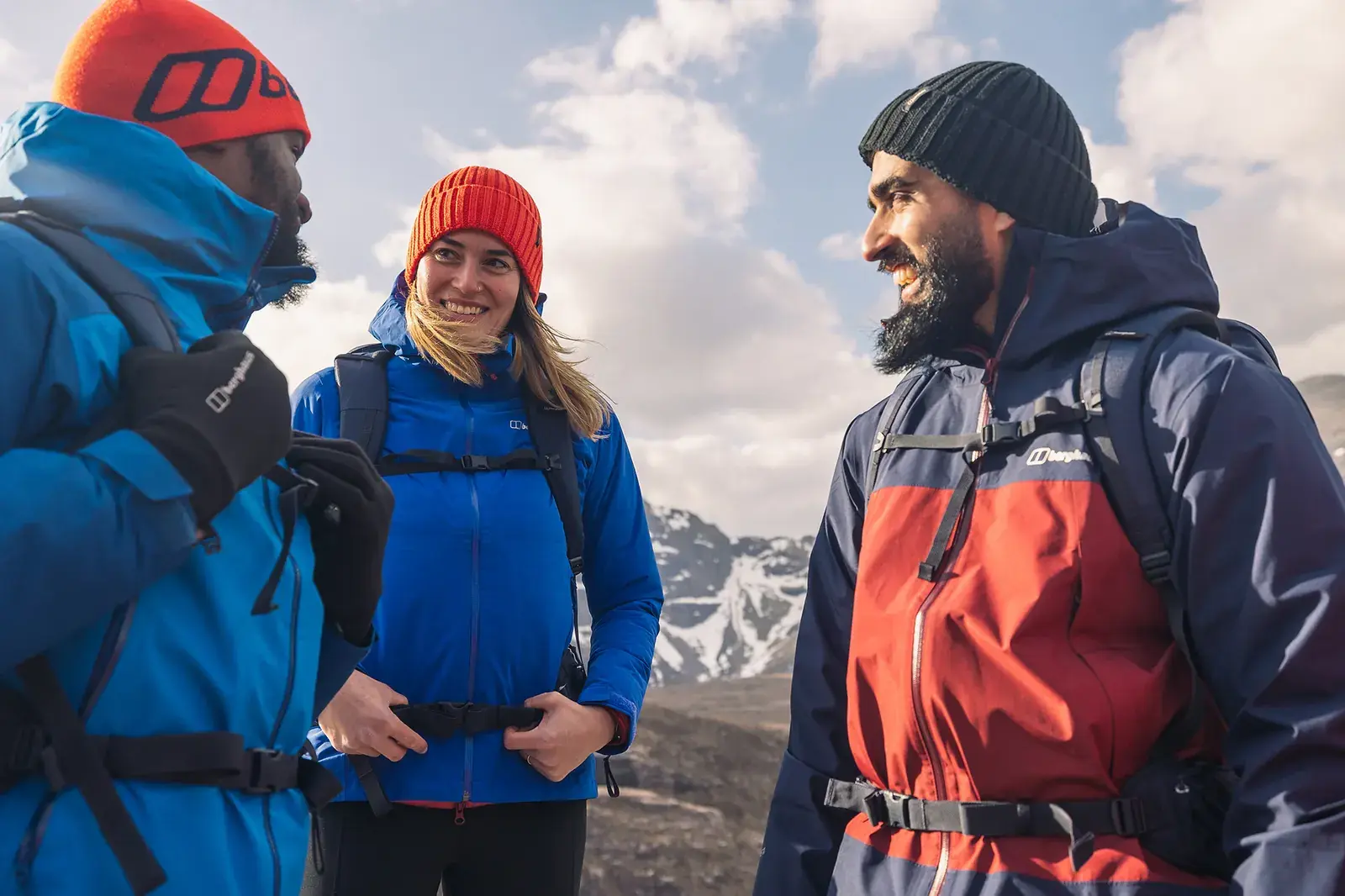
Founded in Newcastle upon Tyne in 1966, Berghaus pioneered the internal-frame Cyclops rucksack and Europe's first GORE-TEX outdoor shells. Here is how Hydroshell, Hydrodown, InterActive fleeces and Freeflow packs compare.
The essentials at a glance
- 01
Climbers Peter Lockey and Gordon Davison founded Berghaus in Newcastle upon Tyne in 1966, celebrating 60 years of British outdoor gear in 2026.
- 02
Two early breakthroughs reshaped European trekking: the Cyclops in 1972 (the world's first internal-frame rucksack) and Europe's first GORE-TEX outdoor apparel in 1977.
- 03
Waterproof shells split into three tiers: proprietary 2-layer Hydroshell® for everyday downpours, 2-layer GORE-TEX InterActive with zip-in fleece compatibility, and 3-layer GORE-TEX ePE / Pro in the alpine Extrem line.
- 04
According to Berghaus, the company became a certified B Corporation in March 2023 and operates its Repairhaus workshop in North East England for free functional repairs across its kit.
Horizontal Pennine rain exposes weak seams within twenty minutes. Wet boggy approaches soak untreated down before you reach the ridge, and a rigid pack frame punishes your lower back on every stile. Those exact British hill conditions shaped Berghaus from day one.
Browse the current lineup and you meet names spanning four decades of mountain design: Cornice, Hillwalker, Deluge, Trango, Extrem Vanguard, Prism InterActive, Nula, Vaskye and Freeflow. Behind those model names sits a clear technical grid built around membrane structure, zip-in layering, damp-weather insulation and ventilated pack frames.
Berghaus began above a specialist shop in North East England. In 1966, mountaineers Peter Lockey and Gordon Davison opened the LD Mountain Centre in Newcastle upon Tyne. Dissatisfied with the heavy, leaky kit available to British climbers at the time, they began designing and importing their own gear. Looking for a name that translated "mountain centre" into German for European credibility, they landed on Berghaus, literally "mountain house".
Key engineering milestones since 1970
Within six years, the Newcastle shop turned into an equipment pioneer:
- 1970 and 1972 (Cyclops): After launching the external-frame Berg 172 and Berg 272 packs in 1970, Berghaus introduced the Cyclops in 1972. Placing alloy stays inside the pack body pulled heavy loads close to the spine so the pack moved naturally with the climber's hips.
- 1977 (GORE-TEX pioneer): Berghaus became the first European outdoor brand to integrate expanded PTFE GORE-TEX membranes into technical rainwear, blocking wind-driven rain while letting sweat vapour escape.
- 1986 (Extrem, Trango and Gemini): Working alongside mountaineers such as Sir Chris Bonington, Berghaus launched its alpine Extrem range, the Yeti boot gaiter and the colour-blocked Trango jacket, plus the Gemini zip-in system that evolved into today's InterActive (IA) standard.
- 1993 to 2015 (Pentland and MtnHaus): Acquired by Pentland Group in 1993 while staying rooted in North East England, Berghaus founded its MtnHaus® research lab in 2011, creating Hydrodown® (2011), body-mapped baffles (2012), Hydroloft® and Hydroshell® (2015).
According to Pentland Brands, Berghaus achieved B Corporation certification in March 2023 following B Lab's audit across governance, workers, community and environmental practices. Alongside that certification sits Repairhaus: according to Berghaus, its specialist repair team in North East England mends torn seams, broken zips, damaged baffles and snapped buckles on Berghaus garments and packs free of charge, with owners covering only outbound postage.
Choosing the right Berghaus waterproof comes down to three questions: how long you stay out in continuous rain, whether you carry a heavy pack, and whether you want to zip a fleece directly into your shell.
Hydroshell 2L and Pertex Shield 2.5L: light rainwear and packable overtrousers
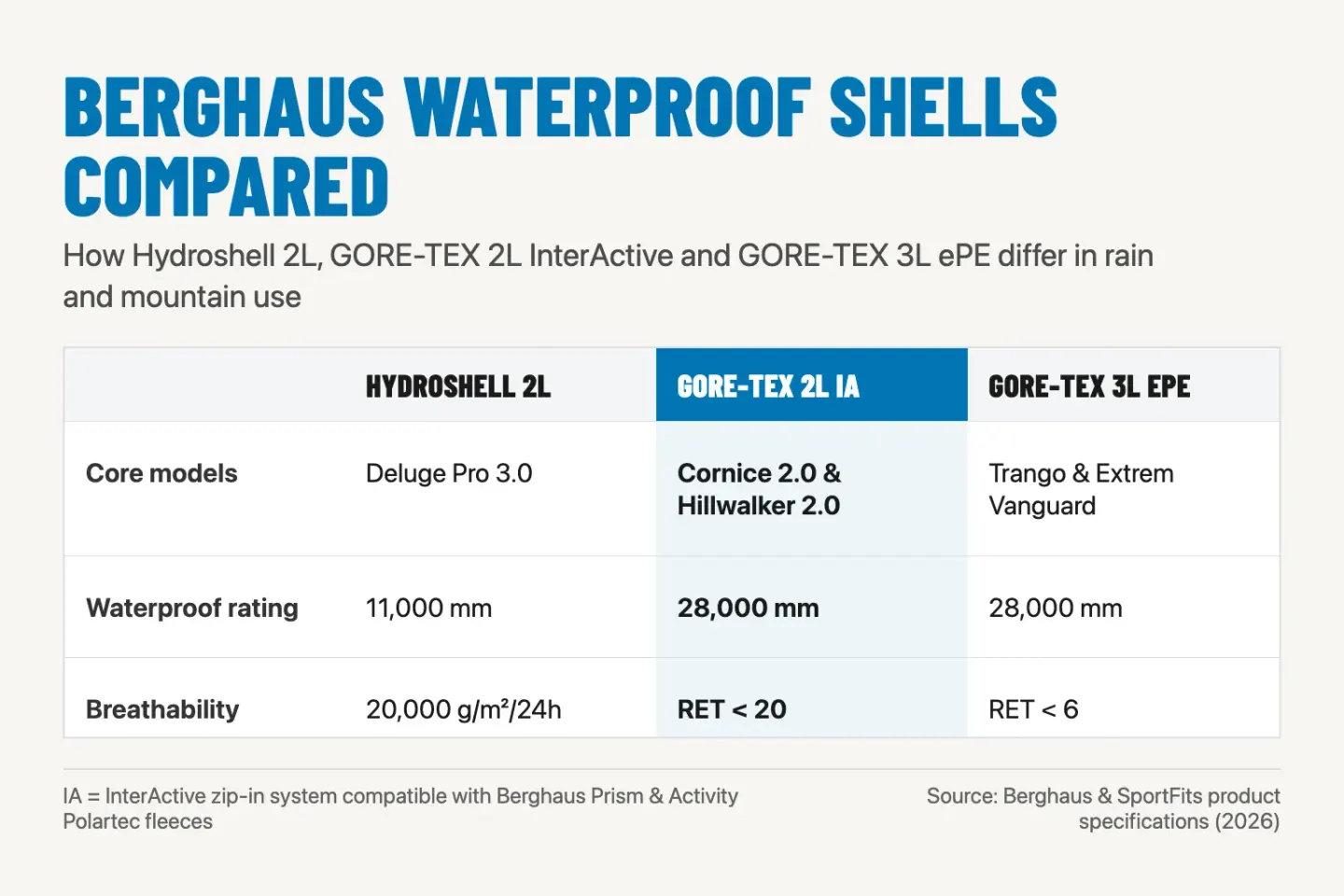
Not every walk requires an alpine hardshell. Developed in-house, 2-layer Hydroshell® uses a softer face fabric than stiff mountaineering laminates while keeping wind and rain out. The Berghaus M Deluge Pro 3.0 Jacket pairs a 11,000 mm hydrostatic head with 20,000 g/m²/24h (MVTR) breathability at 340 g (size M, 79 cm back length). For frosty commutes or winter dog walks, the Berghaus M Deluge Pro 3.0 Insulated Jacket adds synthetic Hydroloft® fill under the same waterproof outer.
For wet lower legs, Berghaus splits its waterproof trousers by weight and pack volume. The classic Berghaus M Deluge 2.0 Pant adds three-quarter side zips for pulling over muddy boots without sitting down. If low pack weight matters more, much like minimalist Paclite rain shells, look to the Berghaus Pacsmart 2.5L Pant AM for men and Berghaus Pacsmart 2.5L Pant AF for women: built from Pertex® Shield Pro 2.5L polyamide, they deliver a 30,000 mm waterproof rating and 13,000 g/m²/24h breathability at just 237 g.
GORE-TEX 2L InterActive and Gemini 3-in-1: four-season hillwalking icons
Long-running British walking jackets such as the Cornice, Maitland and Hillwalker earned their reputation on wet moorland and Lakeland fells. They use a 2-layer GORE-TEX outer fabric (28,000 mm hydrostatic head, RET < 20) with a soft hanging mesh or taffeta drop liner, a roll-away hood and double storm flaps over the centre zip so driving rain cannot push through the teeth.
- InterActive shells: Both the longer-cut Berghaus M Cornice 2.0 InterActive Jacket AM and the Berghaus Hillwalker 2.0 InterActive Jacket AM carry a secondary internal zip plus collar and cuff loops. Zip in a Berghaus M Prism Polartec Jacket InterActive or lighter Berghaus M Prism Micro Polartec Jacket InterActive and both garments go on and off as one coat.
- Women's GORE-TEX 2L: The Berghaus W Ashberry GTX Jacket brings 2-layer GORE-TEX weather protection into a clean, hip-covering silhouette for valley and hill walks.
- Ready-made 3-in-1 bundles: Prefer buying shell and inner insulation together? The Berghaus M Hillwalker 2.0 Gemini HL 3IN pairs a 2-layer GORE-TEX shell with a zip-out synthetic Hydroloft® inner jacket, while the Berghaus M RG Alpha 2.0 Gemini 3IN1 Jacket combines a Hydroshell® outer with a removable fleece.
GORE-TEX 3L ePE and Extrem: alpine ridges and winter climbing
Once you strap on a 45-litre pack, scramble over granite or climb winter gullies, a 3-layer laminate outperforms a 2-layer drop-liner jacket. Bonding face fabric, expanded polyethylene (ePE) GORE-TEX membrane and backer scrim into one single sheet eliminates wet-out weight between layers and boosts breathability sharply.
The unisex Berghaus Trango Mountain Jacket AU updates the 1986 expedition classic with 3-layer GORE-TEX ePE (28,000 mm waterproof rating, RET < 6). For fast mountain days with a helmet, the Berghaus M Ridge-seeker GTX Jacket adds a helmet-compatible hood and 3-layer GORE-TEX ePE construction. At the top of the mountain tier sits the Berghaus Extrem Vanguard GTX Jacket AM alongside the matching Berghaus Extrem Vanguard GTX Pant AM, built from abrasion-resistant 3-layer GORE-TEX Pro ePE for ice climbing, ski mountaineering and winter Munros.
Cold air in maritime mountains rarely arrives bone-dry. Untreated duck or goose down absorbs sweat vapour and sleet, clumping inside its baffles and losing warmth fast. Berghaus counters that failure mode with two distinct insulation families.
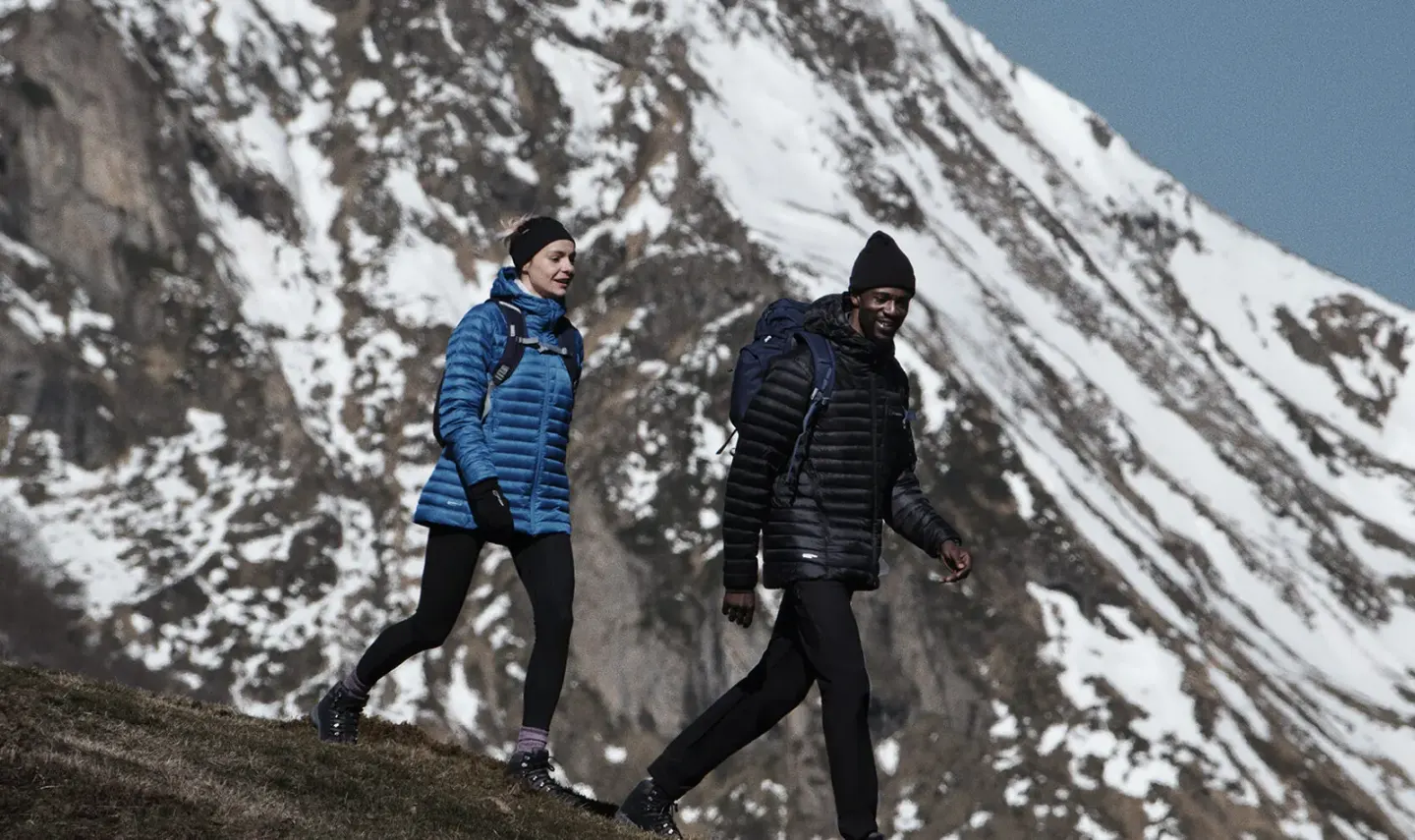
Hydrodown® treats natural down clusters with a hydrophobic finish so they repel moisture, dry faster and hold their loft in damp conditions. On several winter styles such as Tephra Stretch Reflect, Berghaus pairs Hydrodown with an ultra-light internal Reflect mesh scrim across the core to bounce radiant body heat back inward without adding bulk.
Hydroloft® (including synthetic micro-baffle Polyball constructions) uses superfine polyester fibres that trap warm air pockets while absorbing virtually no water. Even if soaked through during a sleet shower, Hydroloft continues insulating and dries overnight in a mountain hut.
Berghaus insulation technologies compared
| Feature | Hydrodown® (Treated Down)Best warmth-to-weight | Hydroloft® / Polyball (Synthetic) | Polartec® InterActive (Fleece) |
|---|---|---|---|
Core models | Explorer Down, Theralite, Fernly GTX Parka | W Nula Micro Long, M Vaskye, M Ewden | M Prism IA, Prism Micro IA, Activity IA |
Primary strength | High loft & compact pack size for weight | Insulates when wet & washes easily | High breathability during steep climbs |
Damp-weather behaviour | Hydrophobic-treated clusters resist clumping | Non-absorbent polyester fibres dry fast | Permeable knit moves sweat outward |
Best role in a system | Cold belays, frosty ridge walks, winter parkas | Mixed rain/sleet hikes, daily winter wear | Active midlayer alone or zipped into IA shell |
For crisp winter hikes and travel, the Berghaus Explorer Down Jacket AM and women's Berghaus Explorer Down Jacket AF use 650 cuin (80/20) down in a slim, layer-friendly cut, while the Berghaus Fernly GTX Down Parka AM seals Hydrodown® completely inside a waterproof 2-layer GORE-TEX outer shell. If you want carefree synthetic warmth that shrugs off drizzle, the Berghaus W Nula Micro Jacket Long, men's Berghaus M Vaskye Jacket and Berghaus M Ewden Jacket are proven cold-weather staples.
Half a century after the 1972 Cyclops changed load carrying, Berghaus splits its pack lineup cleanly between ventilated hiking frames and close-contact alpine harnesses. That structural choice matters more on the trail than pocket count.
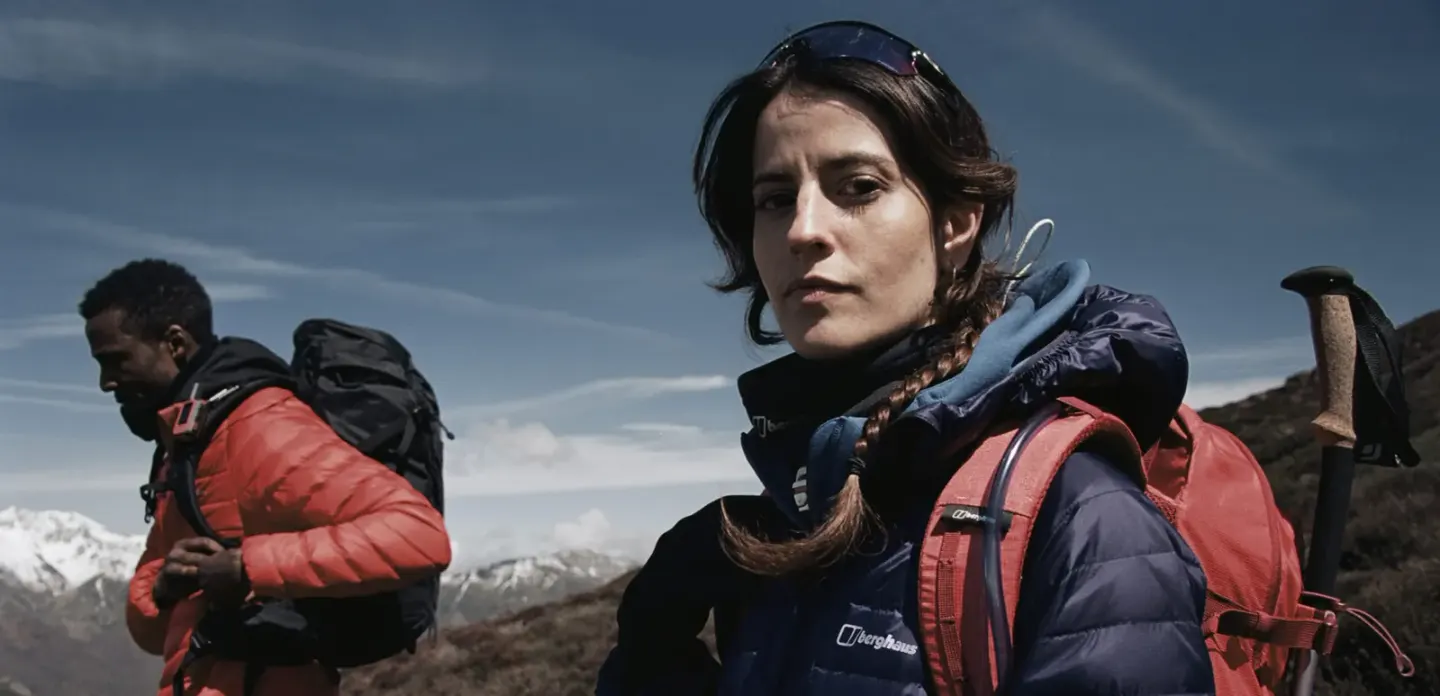
- Freeflow and 3D Freeflow (ventilated hiking): Sweaty backs chill fast the moment you stop on a windy col. The Berghaus Freeflow 30L (1,438 g, 53% nylon / 47% polyester) holds the pack body slightly off your shirt via a tensioned Air-Frame gap so air circulates across your spine. Stepping up for longer day hikes or hut nights, the Berghaus 3D Freeflow 30+5L (35 L total volume, 1,408 g) adds a 3D-printed open-lattice lumbar pad that cushions and transfers hip load without trapping sweat.
- MTN Guide (alpine & scrambling): On narrow ridges or ski-mountaineering ascents, a curved ventilation gap pushes the centre of gravity slightly outward. Here the Berghaus MTN Guide M45+ AM (45 L, 1,680 g) sits snug against your back in abrasion-resistant, water-repellent fabric so heavy rope, crampon and bivvy loads stay balanced.
- 24/7 365 daypacks: For light half-day walks and daily commuting, the streamlined Berghaus 24/7 365 U28 strips away heavy framing for low everyday weight.
Six standout Berghaus picks from our shop
From 3-layer GORE-TEX ePE shells and InterActive classics to Hydroloft insulation and 3D Freeflow packs
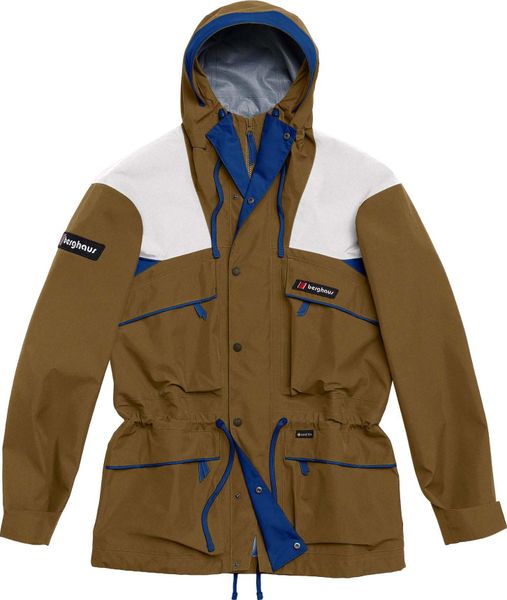 BerghausTrango Mountain Jacket AUHeritage-inspired alpine shell in 3-layer GORE-TEX ePE (28,000 mm, RET < 6).344.45€View product →
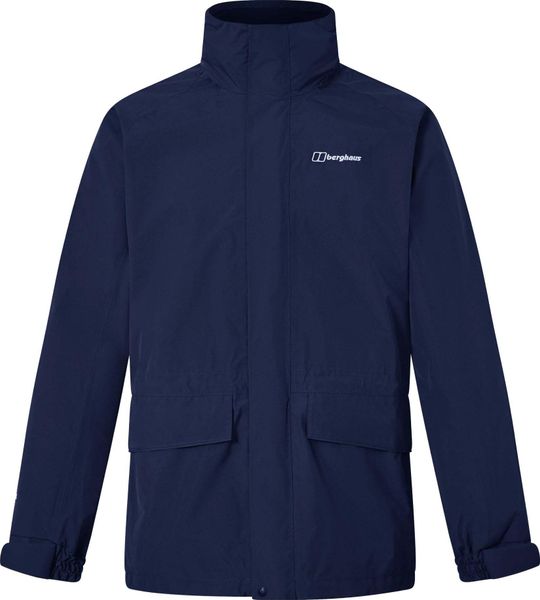 BerghausM Cornice 2.0 InterActive Jacket AMClassic 2-layer GORE-TEX walking jacket (28,000 mm) with InterActive zip-in compatibility.255.25€View product →
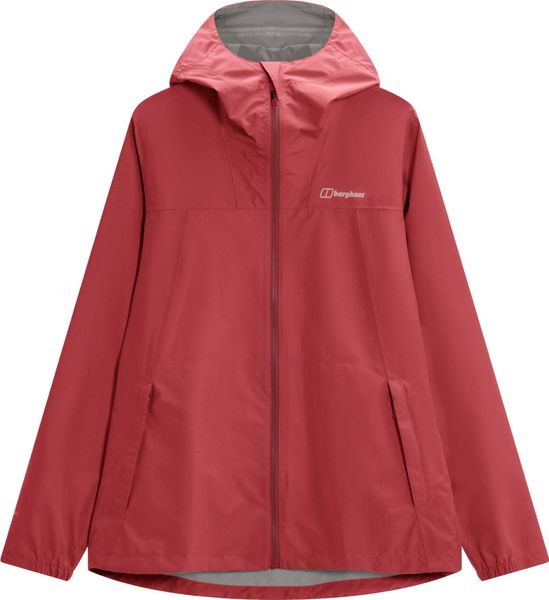 BerghausM Deluge Pro 3.0 JacketLightweight 2-layer Hydroshell rain jacket (11,000 mm, 340 g in size M) for valley and hill walks.139.90€View product →
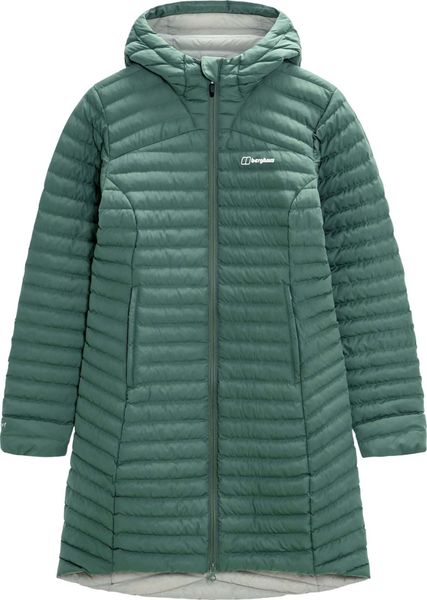 BerghausW Nula Micro Jacket LongLong-cut women's synthetic insulated coat with damp-resistant micro-baffle warmth.142.45€View product →
 BerghausM Prism Polartec Jacket InterActivePolartec Classic fleece midlayer that wears solo or zips straight into InterActive shells.58.95€View product →
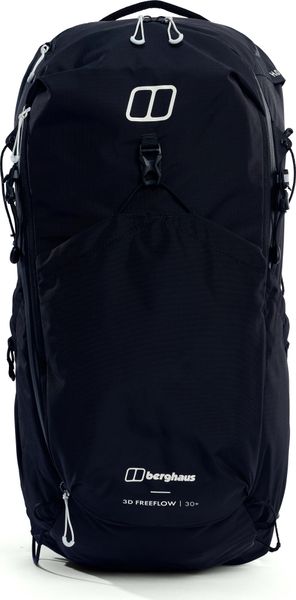 Berghaus3D Freeflow 30+5L35-litre ventilated hiking pack (1,408 g) with Air-Frame airflow and 3D-printed lumbar pad.209.90€View product →
No single piece covers every mountain day. Classic 2-layer InterActive jackets like the Cornice 2.0 feel softer and quieter than crinkly alpine hardshells, yet their hanging liner adds bulk in a rucksack compared to a 3-layer shell like the Ridge-Seeker or Extrem Vanguard. Conversely, a curved Freeflow pack keeps your shirt dry on warm July climbs, though its arched internal wall makes sliding a rigid laptop or boxy cookset inside slightly trickier than in a straight-backed MTN Guide pack.
Choosing the right Berghaus setup for your outing
- 1
If you walk year-round on windy hills and want modular warmth
pair a 2L GORE-TEX Cornice 2.0 or Hillwalker 2.0 with a zip-in Prism Polartec InterActive fleece.
- 2
If you climb steep winter ridges or carry a heavy pack
step up to 3-layer GORE-TEX ePE (Trango, Ridge-Seeker or Extrem Vanguard) for RET < 6 breathability.
- 3
If you hike in persistent sleet or drizzle where kit rarely dries
choose synthetic Hydroloft (Nula, Vaskye, Ewden) over natural down.
- 4
If your back sweats heavily on summer ascents
pick Freeflow 30L or 3D Freeflow 30+5L; for technical scrambling, pick the close-fitting MTN Guide M45+.
Right for you if …
Hikers, scramblers and commuters facing frequent rain, damp cold and changeable four-season mountain weather
Probably not for you if …
Gram-counting ultralight runners looking for sub-150 g emergency windshells with zero pockets or storm flaps
Getting Berghaus UK sizing and leg lengths right
Because Berghaus patterns its clothing in Britain, women's apparel frequently appears in UK dress sizes: UK 8 (XS / EU 34, chest 81 cm), UK 10 (S / EU 36, 86 cm), UK 12 (M / EU 38, 91 cm), UK 14 (L / EU 40, 96 cm), UK 16 (XL / EU 42, 101 cm), UK 18 (XXL / EU 44, 106 cm) and UK 20 (3XL / EU 46, 112 cm). Men's tops run from XS (chest 84 to 89 cm) through M (99 to 104 cm) and XL (114 to 120 cm) up to 3XL and 4XL (up to 142 cm).
One standout advantage in Berghaus legwear is three dedicated leg lengths. Women's trousers combine UK waist sizes 8 to 20 with 29-inch (Short), 31-inch (Regular) or 33-inch (Long) inside legs, while men's walking and waterproof overtrousers (including Deluge 2.0 and Pacsmart 2.5L) come in Short, Regular and Long. Picking the accurate leg length prevents muddy, dragging cuffs that wick water up your socks. Footwear follows UK sizing: women UK 3.5 to 9 (EU 36 to 43) and men UK 6 to 13 (EU 39 to 48.5).
Washing GORE-TEX, Hydroshell and Hydrodown properly
Sweat salts and trail grime clog membrane pores and flatten water-repellent finishes faster than abrasion does. According to Berghaus's care guidelines, washing technical gear restores breathability rather than harming it:
Prep zips and detergent drawer
Brush off dried mud, close all main zips and hook-and-loop storm flaps, and rinse leftover powder or softener out of your washing machine drawer.
Wash shells at 30 °C with technical cleaner
Run GORE-TEX and Hydroshell jackets on a gentle 30 °C cycle using a non-biological liquid technical cleaner. Never add fabric softener or bleach.
Reactivate DWR with low heat
Add an extra spin, then tumble dry on low heat so warmth reactivates the outer durable water-repellent (DWR) finish. When water stops beading on shoulders and cuffs, apply a wash-in or spray-on reproofer before drying.
Dry Hydrodown slowly with dryer balls
Wash Hydrodown garments one at a time on a gentle cycle with a down-specific cleaner, spin gently, and tumble dry on low heat with clean dryer balls until every baffle is completely lofty before storing uncompressed.
Consistent washing and reproofing keeps membranes breathing through years of wet hill seasons; if a zip slider fails or a baffle snags on rock later on, Berghaus's Repairhaus workshop is built to put that garment back into service.
Explore the Berghaus range at SportFits
From GORE-TEX and Hydroshell waterproofs to Polartec InterActive fleeces, Hydrodown insulation and Freeflow hiking packs for women and men.
Shop all Berghaus gearFive practical questions come up most often when comparing Berghaus jackets, fleeces and packs.
Frequently asked questions
Where was Berghaus founded and what does the name mean?
Mountaineers Peter Lockey and Gordon Davison founded Berghaus in Newcastle upon Tyne in North East England in 1966, starting from their specialist LD Mountain Centre shop. The name comes from the German word for "mountain house".
What is the difference between Berghaus Hydroshell and GORE-TEX?
Hydroshell® is Berghaus's proprietary 2-layer waterproof-breathable fabric (rated at 11,000 mm and 20,000 g/m²/24h MVTR on the Deluge Pro 3.0), offering a soft, lightweight feel for valley walks and daily rain. GORE-TEX® shells (28,000 mm hydrostatic head) step up storm durability for exposed hills, ranging from 2-layer InterActive trekking jackets to 3-layer GORE-TEX Pro ePE alpine shells.
How does the Berghaus InterActive (IA) zip-in system work?
Jackets carrying "InterActive" or "IA" in the model name feature a dedicated internal front zip plus attachment loops at the neck and cuffs. Any Berghaus InterActive fleece (such as the Prism, Prism Micro or Activity Polartec IA) zips directly into any InterActive waterproof shell (such as the Cornice 2.0 or Hillwalker 2.0) of the same gender and size.
What is the difference between Hydrodown and Hydroloft?
Hydrodown® is natural down treated with a water-repellent finish so clusters resist clumping and keep lofting in damp cold, delivering maximum warmth for low weight and pack size. Hydroloft® is a breathable synthetic microfibre insulation that absorbs almost no water, keeps insulating even when wet and dries rapidly after machine washing.
What does Berghaus Repairhaus cover?
According to Berghaus, its Repairhaus service in North East England provides free functional repairs on Berghaus clothing, packs and equipment (such as broken zips, torn baffles, seams or buckles) regardless of product age, with customers paying only outbound shipping to the workshop.
Sources (7)
- Berghaus Official: About Us & Outdoor Heritage since 1966 ↗
- Pentland Brands: Berghaus B Corp Certification (March 2023) & Heritage ↗
- Berghaus Technology: Hydroshell Waterproof Protection ↗
- Berghaus Technology: Hydrodown Water-Repellent Down ↗
- Berghaus Technology: Hydroloft Synthetic Insulation ↗
- Berghaus Care Guide: How to Wash and Reproof Waterproof Jackets ↗
- Berghaus Official: Repairhaus Free Repair Service ↗
SportFits editorial team
Marketing & Sales Manager at SportFitsNiklas is Marketing & Sales Manager at SportFits and studied applied sports science in Regensburg. In the magazine he writes about training science, fitness and longevity, putting trends into scientific context instead of simply celebrating them. He also looks at what really matters in outdoor gear: honest facts instead of empty advertising language.
Author profile →SportFits
outdoors looks good on you