Super deals: At least 50% off
Guide
Kids' Hiking Boots
Match the sole to the terrain and the fit to your feet. Then choose the cuff and membrane to suit the route, weather and pack.
Key points
- Heel hold and toe room matter more than a familiar model name.
- A higher cuff does not automatically make a soft sole suitable for mountains.
- Consider a membrane for wet routes and non-membrane shoes for warm, dry paths.
- Measure children’s feet regularly and let them operate the fastening.
Buying advice
Which hiking boot suits your trail?
Compare your route’s requirements and narrow down suitable footwear with further questions. Then check the model’s size chart.
Which construction for your use?
| Use | Look for | Why |
|---|---|---|
| Easy paths | Look forFlexible construction | WhyA rolling sole is comfortable where the route does not demand strong edging support. |
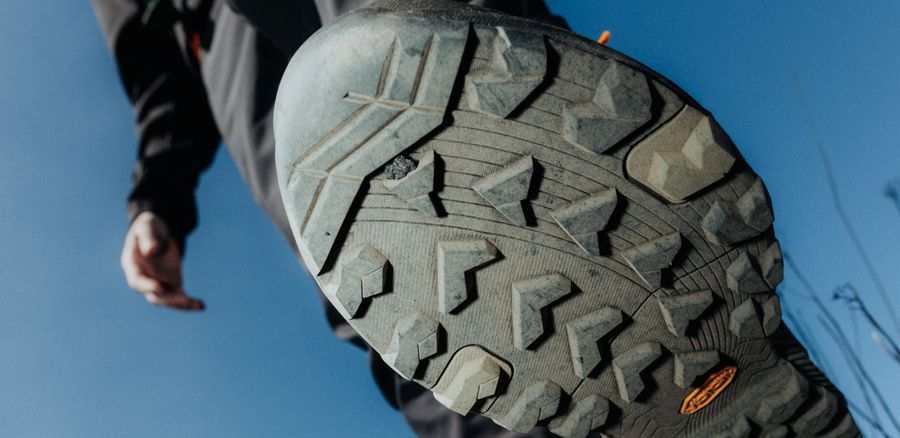
| Roots and stones | Look forGrip and lateral hold | WhyThe tread must suit the ground, and the foot should not slide sideways inside the shoe. |
| Longer walks | Look forTry with your pack | WhyCheck toe room downhill and heel hold uphill using the socks you plan to wear. |
Types compared
Low cuff (Low cut)
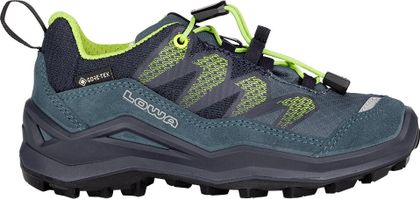
For paths where freedom around the ankle matters.
- Advantage: Freedom around the ankle
- Drawback: Less ankle coverage
Mid-height cuff (Mid cut)
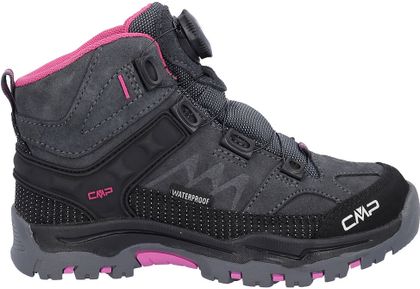
For walks where more ankle coverage is useful.
- Advantage: More cuff coverage
- Drawback: Less freedom around the ankle
What to check before buying
| Question | In brief | Why |
|---|---|---|
| How high a cuff? | In briefBalance freedom and cover | WhyLow cuffs allow more freedom; higher cuffs cover the ankle. |
| Which sole? | In briefConsider the route | WhyGrip and sole support become more important than a very soft roll on rocky paths. |
| Which membrane? | In briefChoose deliberately | WhyWaterproofness is a specific product feature; upper material alone does not establish it. |
| Audience and fit | In briefCheck this model | WhyCompare the actual heel shape, instep volume and width. Size labels alone cannot establish the fit. |
| Size guidance | In briefAbout 12 mm | WhyMeindl suggests this extra toe room for children’s footwear. Also check heel hold and shoe shape. |
Frequently asked questions
Should I break hiking footwear in?
Get used to it on short walks before planning a longer trip. A long outing will not reliably resolve pressure points.
Will a larger size solve a wide fit?
Not necessarily. Extra length can cause heel lift. Look for a suitable width or another last instead.
Can every hiking boot take crampons?
No. The footwear and binding need explicit compatibility. Deep tread or a high cuff does not establish this.
How should wet footwear dry?
Remove the footbed where intended and leave the footwear open at room temperature. Avoid direct radiator heat and follow the brand’s material care guidance.
What matters for this audience?
Check children’s footwear regularly while they stand. Meindl suggests about 12 mm of extra toe room as guidance, rather than a size guarantee.
Last updated: October 2026
What matters to you?
Easy paths
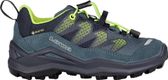
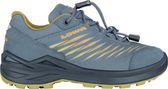
On easy paths, look for footwear that flexes at the forefoot and holds the heel. Compare sole flex and last shape; extra cuff height alone cannot improve fit.
- Heel hold
- Forefoot flex
- Suitable width
Day walks
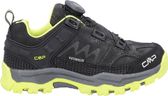
For day walks, compare tread, lateral hold and weight on your feet. Try the footwear with hiking socks and check toe room when walking downhill.
- Tread for your route
- Try with hiking socks
- Check toe room downhill
Rocky paths
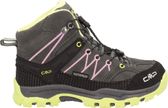
On roots and stones, the foot needs to stay secure inside the shoe. Compare sole support, tread and upper protection for the actual route.
- Lateral hold
- Suitable tread
- Protective uppers
Compare weather protection
Compare explicitly waterproof construction with airier alternatives. A membrane protects against wet conditions; cuff height and upper material alone do not establish waterproofness.
- Check membrane specification
- Consider weather and activity
- Compare lining types
No products match these filters.