Devold of Norway
More about the brand ↓Founded on Norway's west coast in 1853, Devold of Norway knits merino base layers by weight, wool midlayers, socks and classic sweaters.
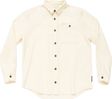
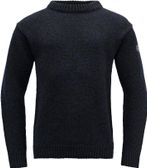
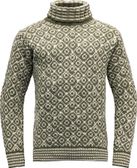
Wool sweaters
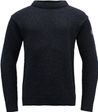
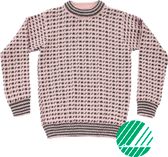
Knitted from 100% Norwegian new wool (32 to 36 microns): Nansen (740 g) recalls Nansen's 1888 Greenland crossing, Svalbard pairs heavy jacquard knit with a high collar, Islender classic rib.
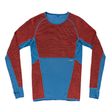
Breeze 150
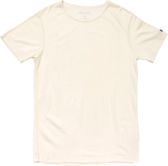
Year-round base layers in 100% superfine merino wool (150 g/m², 17.5 microns). Breeze cools on warm hikes, insulates under shells and handles a 40 °C wool wash thanks to Total Easy Care.
Duo Active
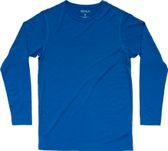
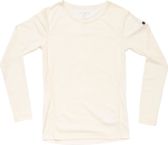
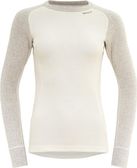
Two-layer winter base layer (205 g/m²) for wool-sensitive skin: according to Devold, a 100% recycled ThermoLite® inner face wicks sweat fast while fine merino wool outside retains warmth on snow.
Expedition
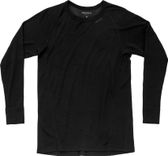
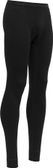
Dual-layer thermal wear for deep frost (235 g/m²): 100% merino sits next to skin while an outer knit of 90% Aquaduct-treated merino and 10% polyamide speeds up moisture evaporation.
Tuvegga & Mesh
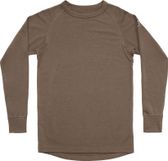
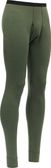
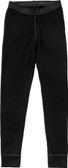
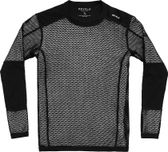
Tuvegga and Reverso (99% merino, 1% elastane) reverse for two climates: smooth flat knit cools on steep climbs, 3D air-channel knit warms on descents. Wool Mesh Pro vents via open merino mesh.
Jackets & tour
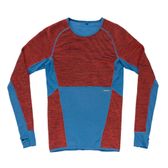
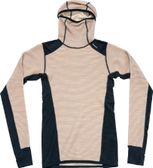
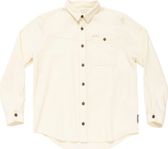
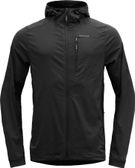
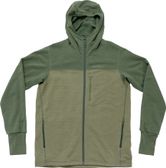
Wool midlayers and outer jackets: the dual-layer Explorer Hooded Jacket weighs 410 g (size L), the slim Herøy blocks wind in a woven merino blend, and the Overshirt uses 100% merino wool.


Good to know about Devold of Norway
Weights & fiber microns
Numbers in Devold names state fabric weight: 130 to 150 g/m² for summer and pace, 190 to 205 g/m² for all-round winter wear, and 235 g/m² for deep frost. Next-to-skin merino measures 17.5 to 20.5 microns, while coarse Norwegian wool sweaters sit at 32 to 36 microns.
Sizes & fit
Devold uses international sizing: women XS to XXL (chest 79 to 122 cm), men S to XXL (chest 91 to 128 cm), and kids EU 92 to 176. Technical base layers like Tuvegga fit close to the body, while heritage sweaters like Nansen and Svalbard fit looser over layers.
Care & Total Easy Care
According to Devold, wool absorbs up to 35% of its weight in moisture and resists odor, so airing out often replaces washing. Merino base layers with Total Easy Care handle a 40 °C wool cycle with enzyme-free detergent, whereas thick Norwegian wool sweaters require cold wool or hand wash.
Devold of Norway FAQs
Which Devold base layer works best for wool-sensitive skin?
Pick the Duo Active range (205 g/m²), which places a smooth ThermoLite® functional fiber directly against your skin while keeping the merino wool on the outside for warmth. If you prefer natural fibers next to skin, Breeze (17.5 microns) or silk blends like Expedition Merino Silk and Signature Silk feel particularly smooth.
When should I choose Tuvegga or Reverso vs. Wool Mesh Pro for ski touring?
Tuvegga and Reverso are reversible 2-in-1 base layers built for tours that alternate between steep climbs (smooth side in) and cold descents (3D air-channel side in). Wool Mesh Pro stays worn one way: its open merino mesh vents vapor rapidly during continuous output on cross-country tracks or climbs while trapping warm air under a shell.
How do the Nansen, Svalbard and Original Islender sweaters differ?
All three use 100% coarse pure new wool from Norwegian sheep, yet differ in knit density and collar style. The Original Islender started as Devold's seafarer work sweater with a flat crew neck, Nansen (around 740 g) comes in solid colors as a crew, high neck or zip neck, and Svalbard knits the classic two-tone Norwegian jacquard extra densely.
Do Devold wool sweaters and midlayers block wind and rain on their own?
No. Pure knit sweaters such as Nansen or Svalbard and merino midlayers like Explorer have no windproof or waterproof membrane. They work well as an outer layer in dry cold, while wind, wet snow or rain call for a hardshell or tightly woven weather jacket like the Trollkyrkja over the top.
Where are Devold garments made and where is the wool sourced?
According to Devold, the brand has operated its own ISO 9001, 14001 and 45001 certified factory in Panevėžys, Lithuania since 2015 with more than 330 employees. Devold states that its merino wool is mulesing-free and sourced directly from partner farms since 2018 via its Sheep to Shop program, while the coarse wool in classic sweaters comes from Norwegian sheep.
Can I wear Devold merino shirts for summer hiking and cycling?
Yes. Devold knits lightweight summer lines such as Endurance Merino 130 (69% merino wool, 29% Tencel™, 2% polyamide) alongside Breeze 150 and Classic Tee (150 g/m²). Fine merino fibers absorb moisture vapor inside the fiber core, create a cooling effect as sweat evaporates and provide natural UV protection on exposed ridge trails.