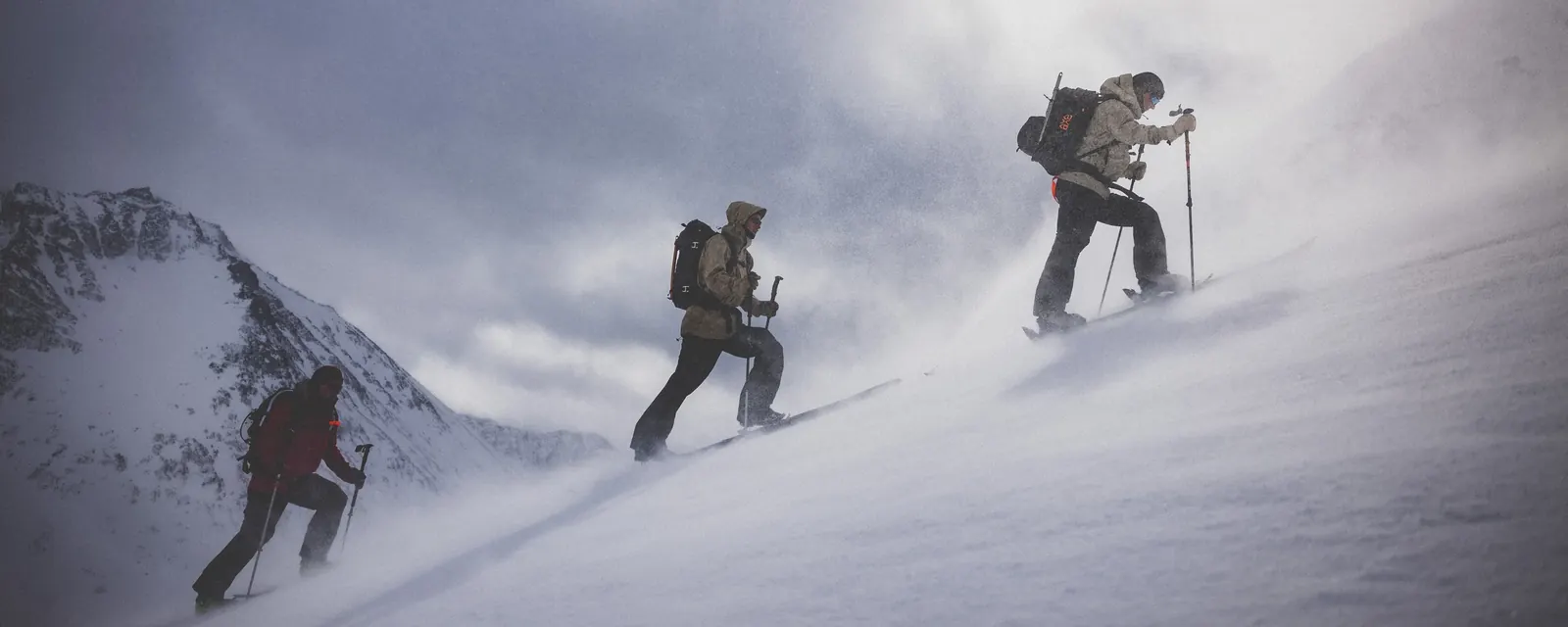
Explorers, fishermen and mountaineers have trusted wool for generations because it had to work outdoors. How Devold has been turning that experience into clothing since 1853 – and what of it lives on in merino today.
Key facts at a glance
- 01
Devold has been making wool clothing on Norway's west coast since 1853, first for fishermen, later for polar expeditions.
- 02
Wool keeps you warm even when it gets damp, and it absorbs moisture. That is why people have relied on it outdoors for generations.
- 03
Next to the skin you wear fine merino wool such as Expedition Merino 235, and over it a knitted jumper such as Nansen, Nordsjø or Svalbard.
- 04
The jumpers are not weather protection: against strong wind and rain you need a jacket on top.
Anyone fishing the Norwegian Sea in winter stood for hours in wind, spray and cold. There were no synthetic fibres and no membranes. What the fishermen on the Norwegian coast wore on their bodies was wool, and it had to work, or things got dangerous. The same was true for explorers, seafarers and mountaineers, who trusted wool clothing for generations. None of this had anything to do with lifestyle.
Devold stands for this story. The Norwegian company has been making wool clothing since 1853, today for everyone who is active outdoors. The choice of materials is huge these days, and yet many people who head outside regularly still reach for wool first thing in the morning.
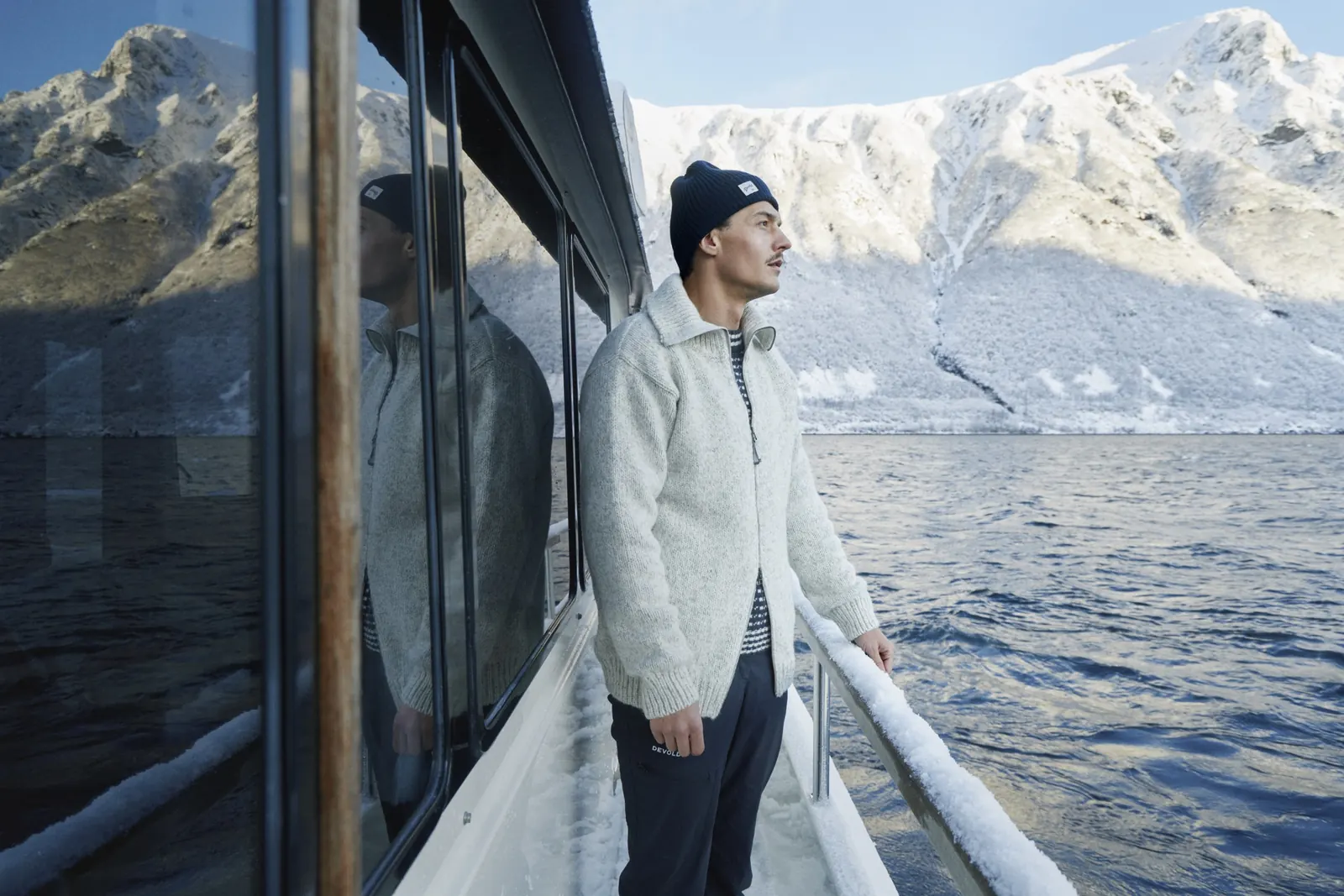
The story begins in 1853 in Ålesund on Norway's west coast. Ole Andreas Devold had returned from Germany and brought a modern mechanical knitting machine with him. His first products were wool underwear and mittens for the fishermen of the region. The clothing had to keep them warm, even when it got damp.
Devold became best known for its jumpers, though. The Original Islender, according to Devold the brand's first piece of workwear, dates back to the 1850s. Many patterns still go back to the archive from that time. Production later moved to the neighbouring village of Langevåg, where Devold is still based today. More than 170 years after the beginning, the same designs are still being worn.
Devold hoodies & jumpers
Already know what you're looking for? Here you'll find Nansen, Nordsjø, Svalbard and all other Devold jumpers and hoodies at SportFits.
Shop Devold jumpers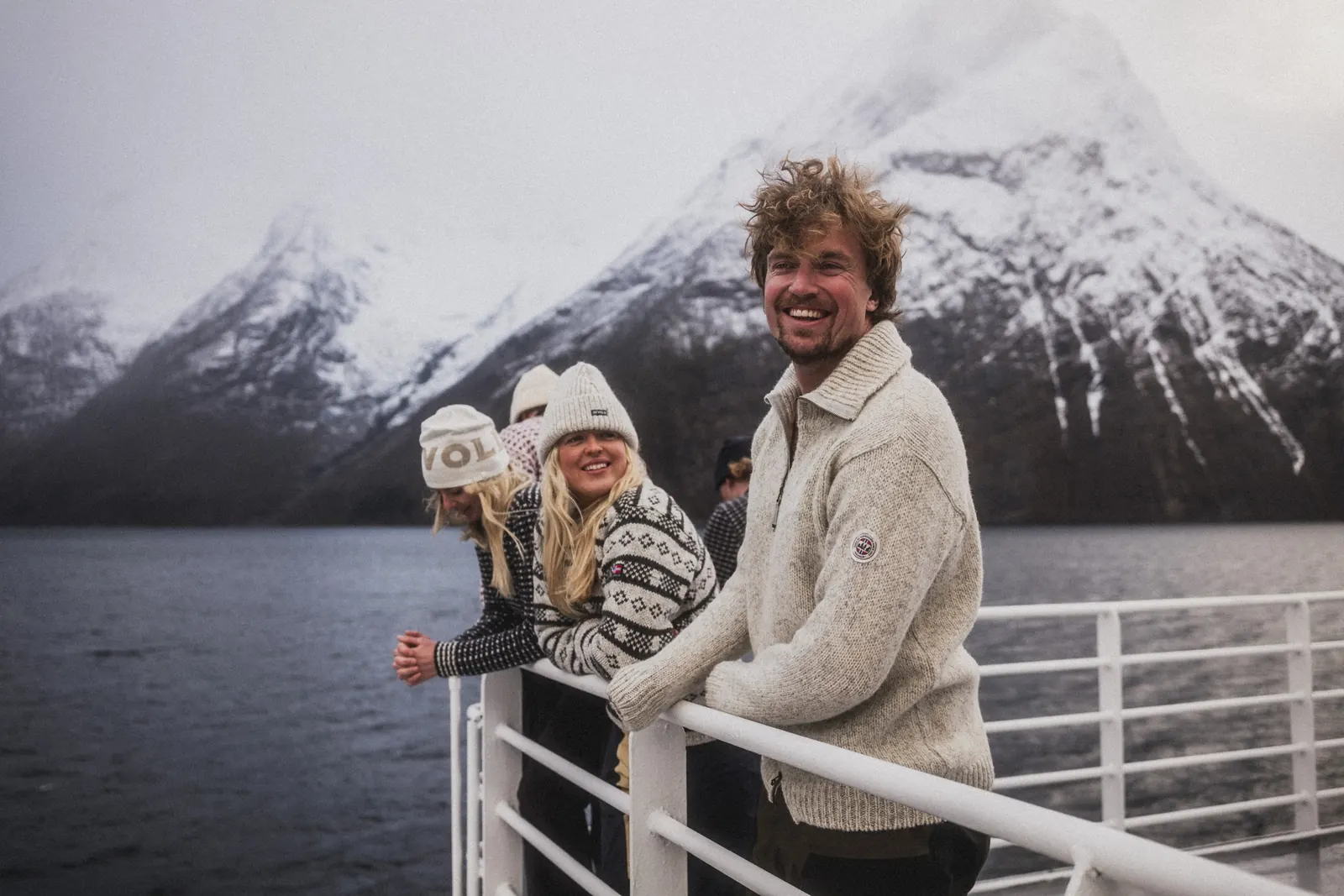
Into the ice with wool
The brand's rise coincided with the era of the great polar expeditions. When Fridtjof Nansen became the first to cross Greenland on skis in 1888, he wore wool underwear, an Islender jumper and hand-knitted jackets, according to Devold. The brand's Nansen jumper still bears his name. Roald Amundsen also relied on Norwegian wool on his South Pole expedition in 1911.
The American polar explorer Lincoln Ellsworth had Devold equip him for his first flight across Antarctica in 1933. Afterwards he wrote a letter of thanks to O. A. Devold Sønner, which is still kept in the brand's archive:
We have found them to be of the very best quality.
What people knew from experience back then is easy to explain today. Wool has a few properties that count outdoors:
- It keeps you warm, even when it is damp. The crimped fibre traps air. According to Devold, wool therefore keeps you warm even when you sweat or get caught in wet snow.
- It absorbs moisture. Wool fibres can store water vapour inside and release it to the outside. This way, wool regulates the moisture between skin and clothing and helps your skin feel drier.
- It is breathable and elastic. Merino wool is naturally elastic and adapts to your movements. Its particularly fine fibres make it feel soft and comfortable to wear.
The fibre is what makes the difference. Its fineness is measured in microns, i.e. thousandths of a millimetre. The lower the value, the finer and softer the wool feels. For the classic jumpers, Devold uses pure new wool from Norwegian sheep at 32 to 36 microns. For the base layers worn directly on the skin, the brand uses merino wool at 17.5 to 20.5 microns. You can read more about the fibre's strengths and limits in our article Merino wool: benefits and limits for outdoor clothing.
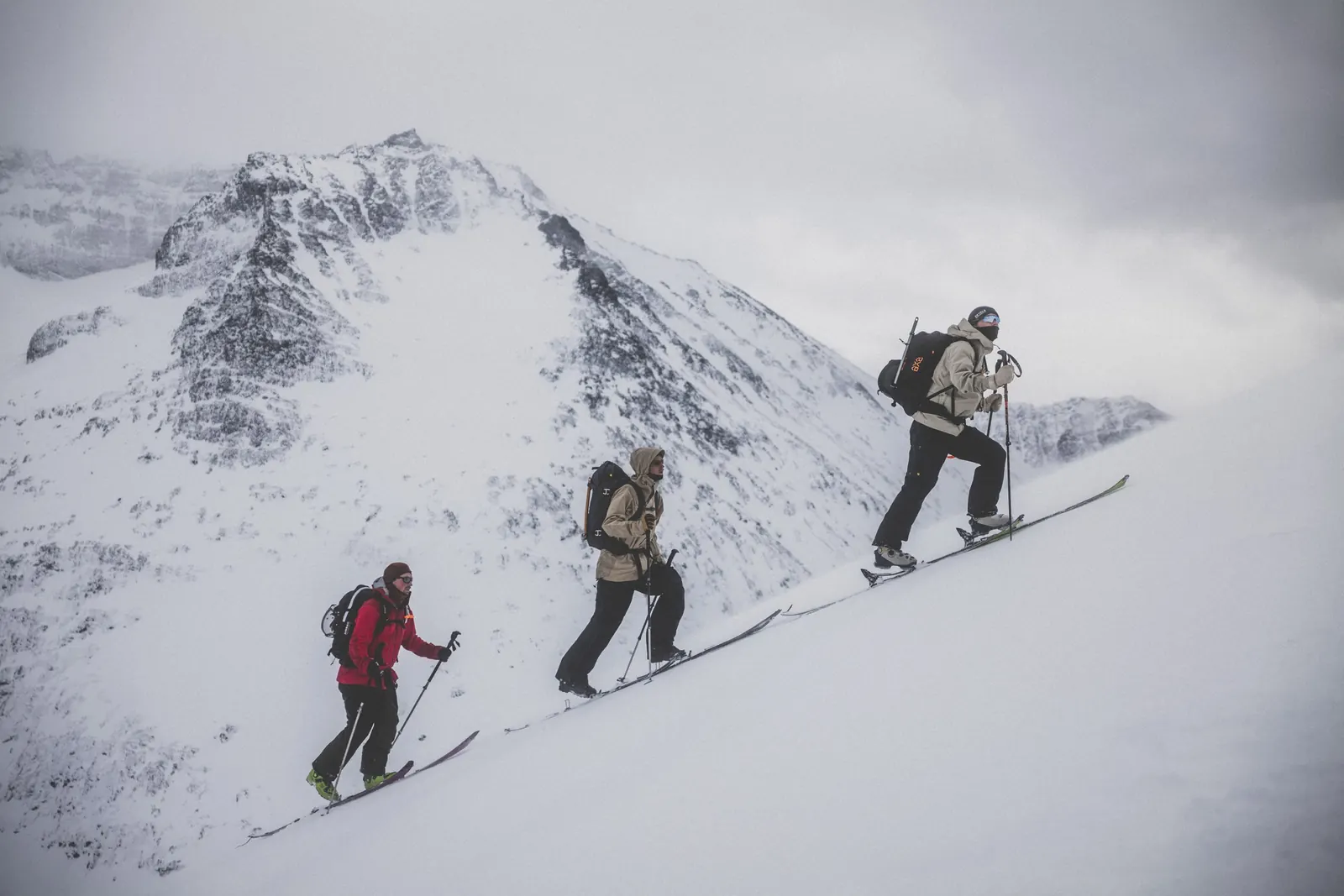
The demands have changed. Today it's ski touring, the cross-country trail or multi-day winter hikes rather than a fishing boat. The basic needs of people who spend time outdoors have stayed the same: stay warm, stay dry, move freely. And in a way, things come full circle here: Devold started out with wool underwear. Modern merino wool combines the proven properties of wool with a fine fibre, a high level of comfort and modern manufacturing.
Expedition Merino 235: for extreme cold
The Expedition line is Devold's base layer range for very cold conditions. Devold develops it for polar expeditions and long tours in deep winter. The fabric weighs 235 grams per square metre and has a two-layer structure: on the inside, pure merino wool at 18.7 microns sits against the skin; on the outside, a knit of 90 per cent merino and 10 per cent polyamide. The Aquaduct technology, a combination of knitting technique and fabric finish, is designed to move moisture away from the skin particularly well.
The details show what the base layers are built for: raglan sleeves give you plenty of freedom of movement at the shoulders, flat seams don't press under a backpack, and the back is extended. The Expedition Merino 235 Z.Neck adds extended sleeves with thumb loops, and the Longs have a wide, elastic waistband.
Expedition Merino 235 in the shop
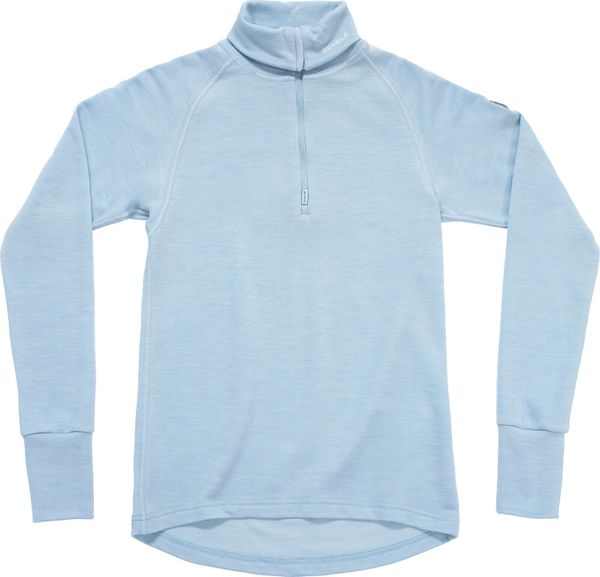 WomenDevold of NorwayExpedition Merino 235 Z.NECK90.75€View product →
 MenDevold of NorwayExpedition Merino 235 Z.NECK90.15€View product →
 WomenDevold of NorwayExpedition Merino 235 Shirt75.25€View product →
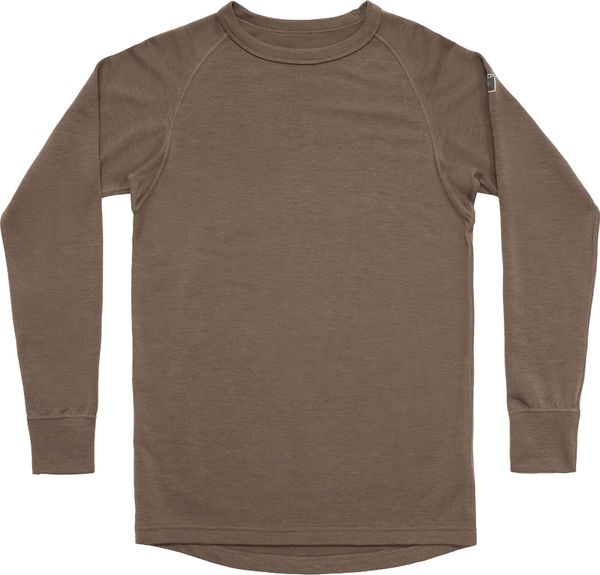 MenDevold of NorwayExpedition Merino 235 Shirt75.15€View product →
 WomenDevold of NorwayExpedition Merino 235 Longs72.75€View product →
 MenDevold of NorwayExpedition Merino 235 Longs93.55€View product →
For sweaty climbs in mild temperatures, the Expedition base layers are too warm. For those, Devold offers lighter merino lines.
Alongside the base layers, the thick jumpers are at the heart of the brand. Devold calls them its Original Icons: knitted from pure new wool from Norwegian sheep, with ribbed cuffs and hems and in patterns that have barely changed for decades.
Nansen Wool Sweater
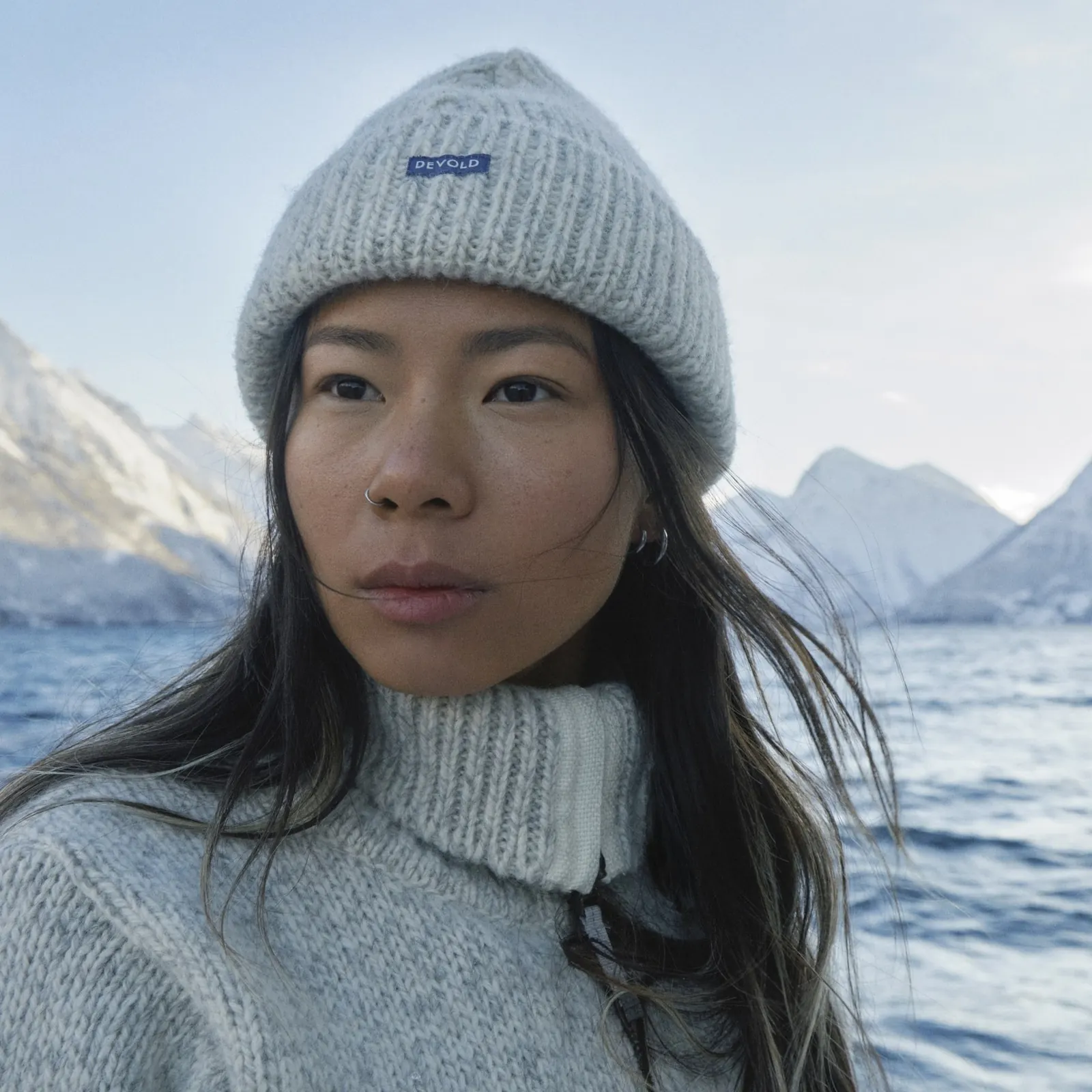
The Nansen Wool Sweater is named after Fridtjof Nansen and is a fixed part of the company's history. It is simple in design and coarsely knitted, made for harsh conditions outdoors and still fine for the city. Alongside the unisex version in XS to XXL there is a dedicated women's version with a relaxed fit in XS to XL. On cold, dry days you wear it as your outer layer; in wind and rain as a warm midlayer under your jacket.
Nansen Wool Sweater in the shop


Nordsjø Wool Sweater
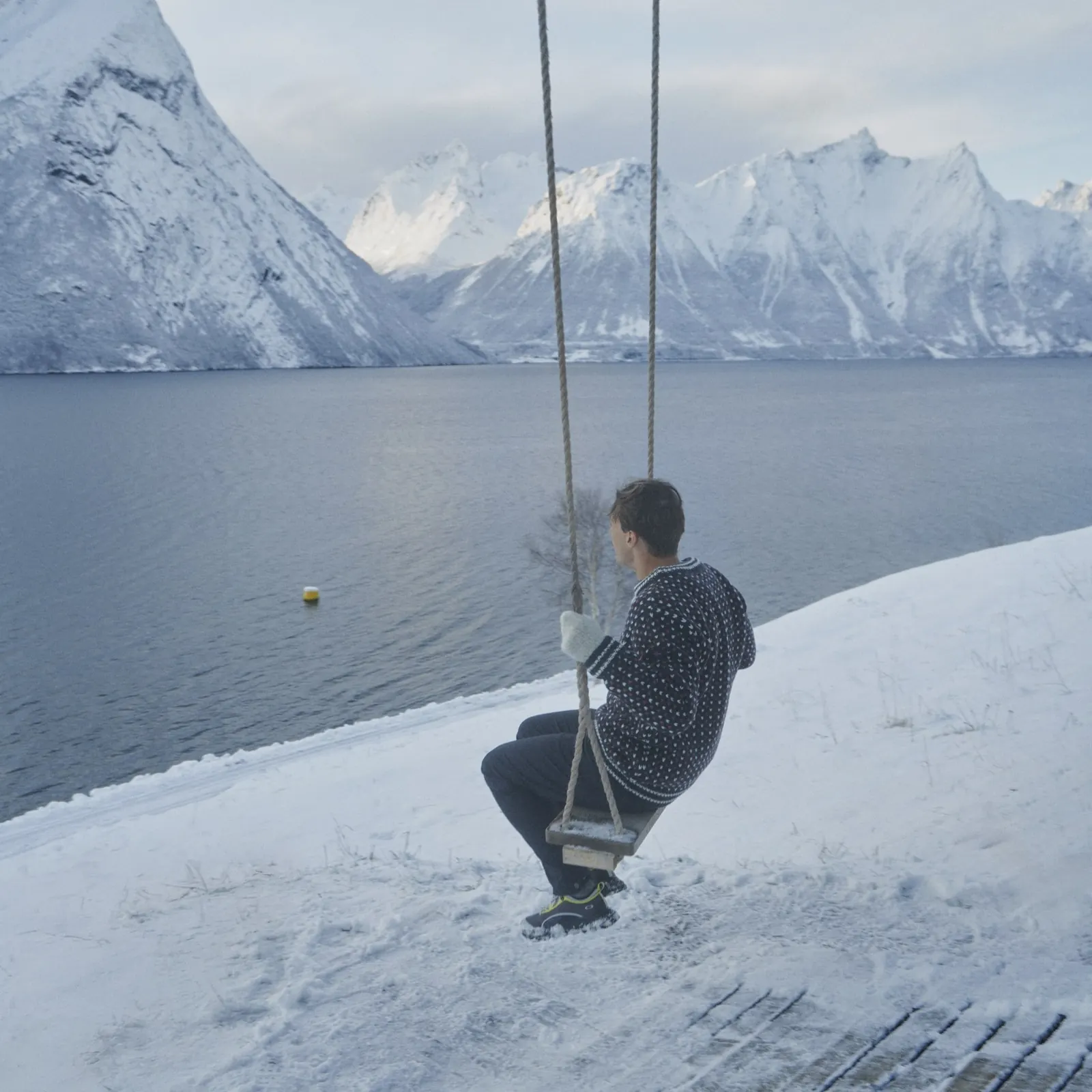
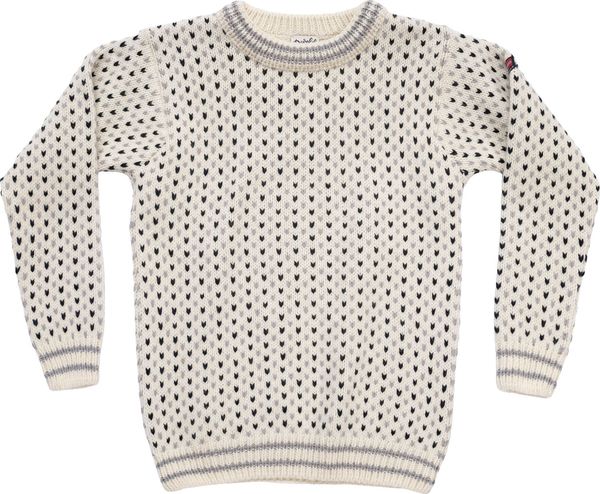
The Nordsjø Wool Sweater was originally made for fishermen on the Norwegian coast. Its signature is the herringbone check pattern. Devold describes it as the original Norwegian jumper, and the pattern has indeed become known worldwide in many variations. In the USA, one of them became a classic of the preppy and Ivy style. New to the range is the Nordsjø Two-tone Sweater in two colours.

Svalbard Wool High Neck
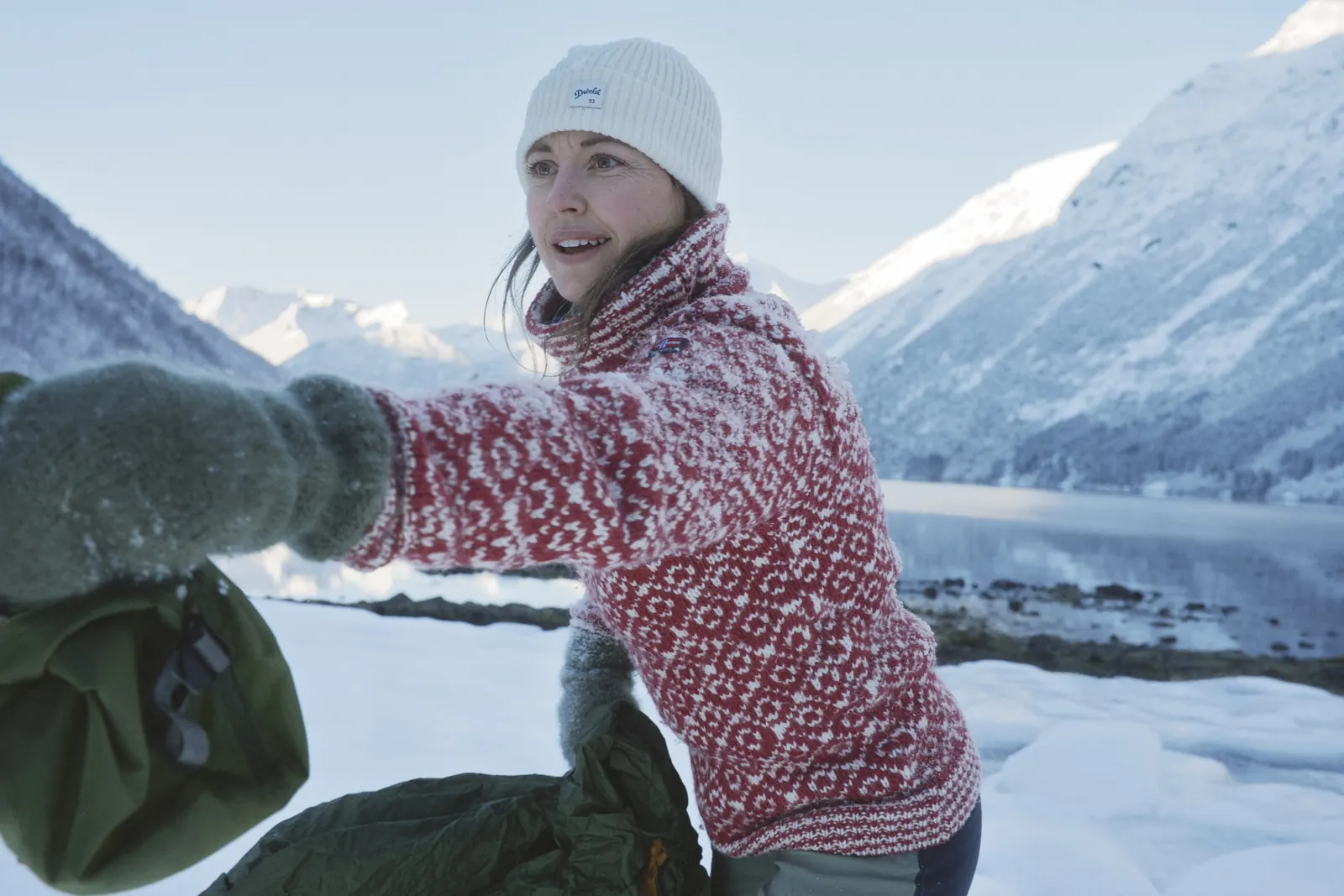
The Svalbard Wool High Neck is particularly thick, has a high collar and is knitted throughout as a two-colour jacquard. The small floats of the pattern stay on the inside and add extra warmth. It was designed by Italian designer Olmes Caretti, inspired by traditional Norwegian knitwear. About the bright red, he revealed, according to Devold: "I grew up right next to the Ferrari factory." If you prefer to ventilate, go for the Svalbard Wool Zip Neck with a zip and chin guard.


The rule of thumb is simple: merino directly on the skin, the knitted jumper on top, and a jacket as the outer layer in wind or wet weather. The table shows what each piece is best suited for:
| Model | Material | Layer | Best for |
|---|---|---|---|
Expedition Merino 235 | merino wool, 235 g/m² | directly on the skin | very cold days, long tours, breaks in the cold |
Nansen Wool Sweater | pure new wool | mid or outer layer | cold, dry days, outdoors and in the city |
Nordsjø Wool Sweater | pure new wool | mid or outer layer | cold, dry days, classic Norwegian look |
Svalbard High Neck / Zip Neck | pure new wool, jacquard | outer layer on cold days | especially cold days, the Zip Neck for ventilating |
How warm a piece of clothing keeps you also depends on you: whether you feel the cold easily, what you wear on top and whether you are moving or standing still.
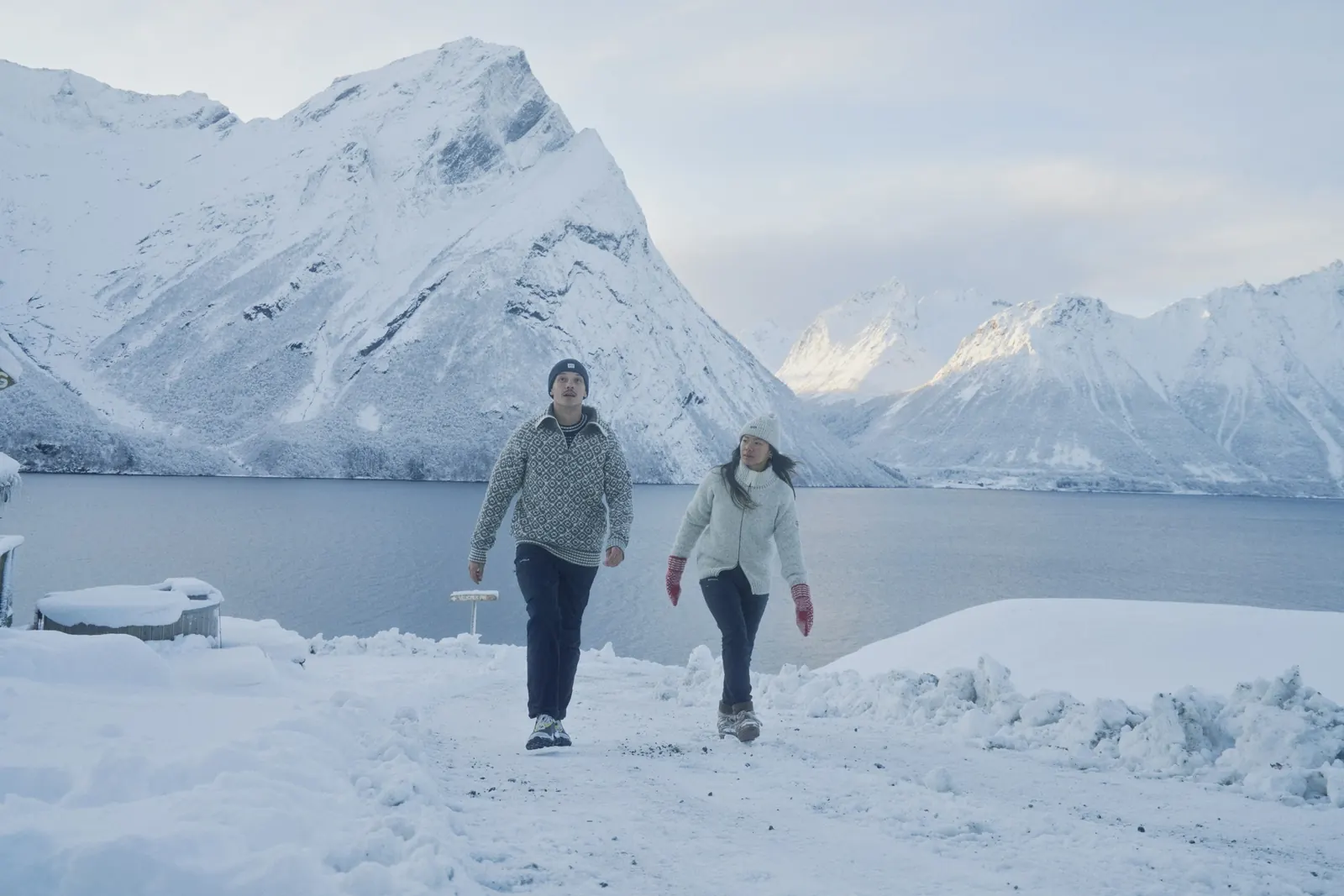
The fishermen of Ålesund, Nansen on the Greenland ice, the touring group climbing the snowy slope: what connects them is one material. It was always wool, and the reason is still the same today: it works outdoors. Devold puts it this way itself: you don't need to know why wool works. You just need to have worn it once in the right conditions.
Devold at SportFits
Merino base layers, Norwegian jumpers, hats and socks: the current Devold range at SportFits.
Shop the Devold rangeFrequently asked questions
What is the difference between merino wool and new wool?
Merino wool comes from the merino sheep and is particularly fine. Devold uses it at 17.5 to 20.5 microns for base layers worn directly on the skin. Devold knits the classic jumpers from pure new wool from Norwegian sheep at 32 to 36 microns. This fibre is sturdier and suits thick knitted jumpers.
Are Devold jumpers itchy?
That depends on your skin. The wool of the jumpers is considerably coarser than merino. If you have sensitive skin, it's best to wear a top underneath, for example from the Expedition line.
How do I wash the pieces?
The Expedition Merino 235 base layers can go in the washing machine at 40 degrees. The Nansen, Nordsjø and Svalbard jumpers should be washed by hand. You'll find exact instructions on the care label.
Is Expedition Merino 235 suitable for ski touring?
Yes, on very cold days and during long breaks. Devold made the line for extreme cold. On sweaty climbs in milder weather, many find it too warm; a lighter merino line is then the better choice.
Which size should I choose for the jumpers?
Nansen, Nordsjø and Svalbard are unisex models in XS to XXL. The Nansen Wool Sweater WMN is a dedicated women's model with a relaxed fit in XS to XL. The Expedition base layers come in XS to XL for women and S to XXL for men.

SportFits editorial team
Verena
Digital Marketing Manager at SportFitsSportFits
outdoors looks good on you