Don't have a SportFits user account yet? Then register now, save on your first order, and enjoy many benefits such as parcel tracking and easy returns.
This website uses cookies, which are necessary for the technical operation of the website and are always set. Other cookies, which increase the comfort when using this website, are used for direct advertising or to facilitate interaction with other websites and social networks, are only set with your consent.
Configuration
Technically required
These cookies are necessary for the basic functions of the shop.
"Allow all cookies" cookie
"Decline all cookies" cookie
Adyen JSESSIONID
Adyen _fbp
Adyen _ga
Adyen _gcl_au
Adyen _gid
Adyen _hjid
Adyen _mkto_trk
Adyen _rp_uid
Adyen _uetsid
Adyen _uetvid
Adyen datadome
Adyen gdpr
Adyen lastUpdatedGdpr
Adyen rl_anonymous_id
Adyen rl_user_id
Amazon Pay
CSRF token
Cookie preferences
Currency change
Customer recognition
Customer-specific caching
Editor functionality
Individual prices
PayPal payments
Selected shop
Session
Comfort functions
These cookies are used to make the shopping experience even more appealing, for example for the recognition of the visitor.
Note
Statistics & Tracking
Affiliate program
Conversion and usertracking via Google Tag Manager
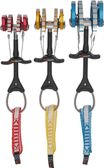
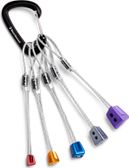
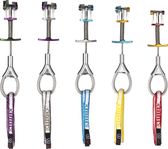
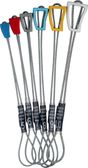
Build your rack around the cracks on your route. Nuts, cams and offset shapes complement each other; learn to place and assess protection through practical, qualified instruction.
Key points
Nuts suit appropriate constrictions; cams can also fit parallel cracks.
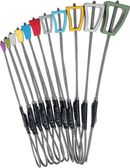
Compare actual size ranges rather than colour alone.
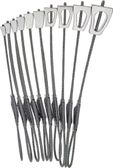
Offset shapes can help with irregular cracks.
Check wires, slings and moving parts before every use.
Bear in mindThe nut needs sound contact in the intended direction of pull.
A parallel crack
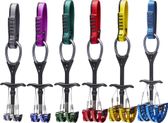
ChooseA cam within its working range
Bear in mindCheck contact of all lobes and follow the instructions.
Irregular cracks
ChooseOffset nuts or cams
Bear in mindMatch the shape to the actual contact surfaces.
Varied crack sizes
ChooseA coordinated set
Bear in mindCompare gaps and useful overlaps in your existing rack.
What to look for
Question
In brief
Why
Which size?
In briefCompare the dimensions in the manual
WhyColours and numbers vary between brands. Compare the actual working ranges side by side.
Set or single piece?
In briefFill gaps in your rack
WhyA set covers several ranges. An individual piece may be better for filling a specific gap.
What needs checking?
In briefWire, sling and mechanism
WhyDamage, corrosion or a stiff mechanism need assessment according to the manufacturer's instructions.
How do I learn?
In briefPractise with qualified instruction
WhyPlacements and rock assessment require practical skill. Build that experience before relying on your own protection.
Common questions
How does a nut differ from a cam?
A nut has no moving lobes and works in a suitable constriction. A cam uses moving lobes and, depending on the shape, can also fit parallel cracks. Each needs sound rock and correct placement.
Are the same colours equivalent across brands?
Compare the dimensions and working ranges of the actual models. Colours mainly help you identify a piece quickly within its own system; they are not a universal sizing chart.
When is an offset nut useful?
An asymmetric shape may fit irregular cracks or pin scars more closely. Actual contact and the direction of loading matter, and you need to learn to assess these through practical experience.
How should I care for cams?
Clean and dry them as instructed. Apply lubricant only where specified and keep it away from slings. Remove damaged or uncertain equipment from use until it has been assessed by a competent person.
This website uses cookies, which are necessary for the technical operation of the website and are always set. Other cookies, which increase the usability of this website, serve for direct advertising or simplify interaction with other websites and social networks, will only be used with your consent.
More information