Super deals: At least 50% off
Guide
Multisport shoes
Flexible footwear can feel comfortable on fast hikes. Still compare tread, lateral hold and wet protection for the routes you actually walk.
Key points
- Heel hold and toe room matter more than a familiar model name.
- Multisport does not define one construction; check the specific intended use.
- Consider a membrane for wet routes and non-membrane shoes for warm, dry paths.
- Check the specific last and width; the audience label alone is insufficient.
Which construction for your use?
| Use | Look for | Why |
|---|---|---|
| Easy paths | Look forFlexible construction | WhyA rolling sole is comfortable where the route does not demand strong edging support. |
| Roots and stones | Look forGrip and lateral hold | WhyThe tread must suit the ground, and the foot should not slide sideways inside the shoe. |
| Longer walks | Look forTry with your pack | WhyCheck toe room downhill and heel hold uphill using the socks you plan to wear. |
Types compared
Traditional laces (Individual zones)
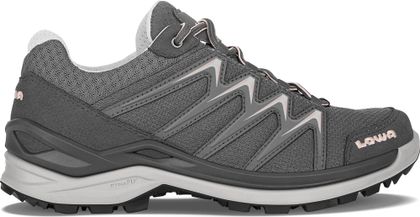
For individually adjustable hold across the instep.
- Advantage: Tension can be spread along the laces
- Drawback: Needs more steps when putting on
Quick lacing (Quick entry)
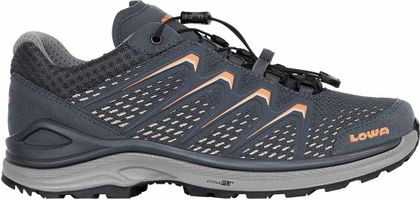
For frequent changes using a quick-lacing system.
- Advantage: Quick to operate
- Drawback: System parts are model-specific
What to check before buying
| Question | In brief | Why |
|---|---|---|
| How high a cuff? | In briefBalance freedom and cover | WhyLow cuffs allow more freedom; higher cuffs cover the ankle. |
| Which sole? | In briefConsider the route | WhyGrip and sole support become more important than a very soft roll on rocky paths. |
| Which membrane? | In briefChoose deliberately | WhyWaterproofness is a specific product feature; upper material alone does not establish it. |
| Audience and fit | In briefCheck this model | WhyCompare the actual heel shape, instep volume and width. Size labels alone cannot establish the fit. |
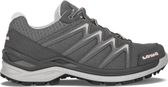
| Heel-to-toe drop | In brief10.3 mm | WhyLowa specifies 10.3 mm for the Lowa Innox Pro GTX LO Ws. This is model-specific; compare other models separately. |
Frequently asked questions
Should I break hiking footwear in?
Get used to it on short walks before planning a longer trip. A long outing will not reliably resolve pressure points.
Will a larger size solve a wide fit?
Not necessarily. Extra length can cause heel lift. Look for a suitable width or another last instead.
Can every hiking boot take crampons?
No. The footwear and binding need explicit compatibility. Deep tread or a high cuff does not establish this.
How should wet footwear dry?
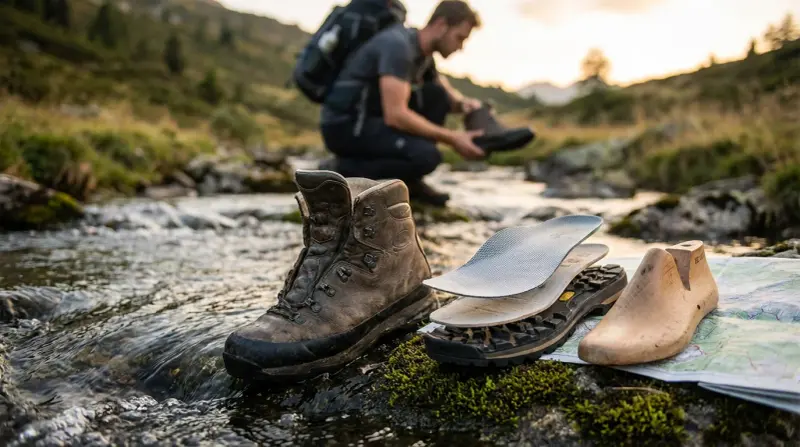
Remove the footbed where intended and leave the footwear open at room temperature. Avoid direct radiator heat and follow the brand’s material care guidance.
What matters for this audience?
Women’s models may use a different last from men’s versions. Compare the specific heel shape and instep volume rather than assuming a fixed width from the label.
Last updated: October 2026
Fast hiking
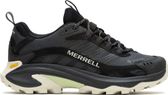
For fast hikes, compare flexibility, heel hold and weight on your feet. Light construction still needs to suit the ground and your movement.
- Flexible sole
- Secure heel
- Check model-specific weight
Mixed paths
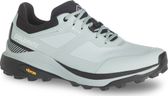
On mixed ground, suitable tread and lateral hold matter together. Multisport is not a fixed footwear class: check each model’s intended use.
- Consider the ground
- Compare lateral hold
- Read the intended use
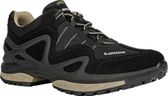
Everyday & touring
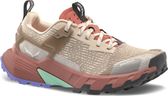
Footwear for everyday use and touring should move comfortably on your usual routes. Compare sole stiffness and fit rather than relying on a versatile label.
- Start with usual routes
- Compare last shape
- Try while walking
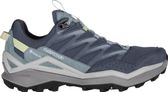
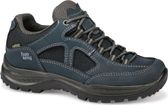
Compare weather protection
Membranes and more open uppers serve different priorities. Compare stated wet protection, lining and use in warm or changeable weather.
- Check stated wet protection
- Compare lining
- Consider the weather


