Super deals: At least 50% off
Guide
Women's Nordic Jackets
A cross-country jacket must allow pole movements and release excess heat. Light wind protection suits fast sessions; extra filling is for a gentler pace and breaks.
Key points
- Look for a windproof front and more breathable back and side panels.
- The hem should cover your lower back when reaching forwards.
- A warm break-time jacket needs to fit over your skiing clothes.
Which jacket for which session?
| Use | Choose | Bear in mind |
|---|---|---|
| Active training | ChooseLight wind-protective jacket | Bear in mindStretch panels allow broad arm movements. Excess filling becomes warm quickly. |
| Gentle skiing in frost | ChooseWarmer hybrid model | Bear in mindInsulation warms the torso while movement remains important at the sides and back. |
| Long breaks | ChooseInsulated over-jacket | Bear in mindPut it on before cooling down and leave room over your training layers. |
Wind layer or warm filling?
Light softshell (For active skiing)
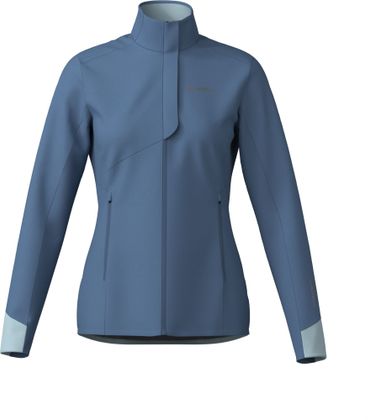
A wind-protective front and flexible panels suit active cross-country sessions.
- Advantage: Releases heat more readily
- Drawback: Little warmth for long waits
Insulated jacket (For colder spells)
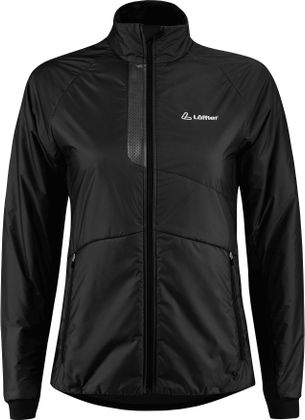
Added filling warms you at a gentler pace and during breaks.
- Advantage: Extra torso warmth
- Drawback: Can overheat during hard efforts
What to look for
| Question | In brief | Why |
|---|---|---|
| Which fit? | In briefMimic pole movements | WhyShoulders and chest should not feel restricted. Sleeves need to cover the wrists when reaching well forwards. |
| How much warmth? | In briefPace and breaks matter | WhyGentle outings need more warmth than hard training. Match layers rather than carrying too much filling throughout the session. |
| Rain or dry wind? | In briefDistinguish protection types | WhyWater-repellent softshell is not automatically waterproof. Read the fabric and seam details for wet conditions. |
Common questions
Can I use a running jacket?
If fit, warmth and wind protection suit the tracks. Poling requires free shoulder movement; a short jacket can ride up at the back. Try it with your intended layers.
What goes underneath?
A synthetic or merino base layer suited to effort and comfort. Cold weather may call for a thin midlayer. All layers together must leave your arms free.
Do I need a hood?
It can help on gentle windy outings but is not essential for intense training. It must not interfere with vision or movement.
How warm should a break-time jacket be?
Warmer than the layer for fast skiing. You generate less heat while standing and may be damp after training. Match insulation to the cold and planned length of the break.
Last updated: November 2026
What is planned on the tracks?
Fast training
A light jacket releases training heat more readily. Check your shoulders with a broad pole movement and the hem while leaning forwards.
- Little built-in insulation
- Stretch panels
- Hem covers the back
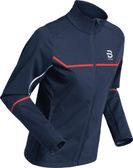
Windy outing
Wind protection at the front reduces chill. A more breathable back and side panels help prevent heat building up.
- Wind protection at front
- Flexible back
- Comfortable collar
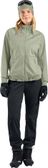
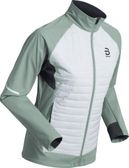
Gentle cold-weather skiing
A gentler pace allows a warmer jacket. Ventilate before a climb demands more effort.
- Warmth for your pace
- Technical layer beneath
- Accessible closure
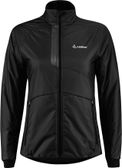
After training
An insulated jacket over training layers helps while waiting. Put it on before damp clothing starts to chill you.
- Insulation
- Fits over other layers
- Pack for breaks
No products match these filters.


