Super deals: At least 50% off
Guide
Baselayer Tops
A base-layer top should fit across shoulders, chest and back. Cuffs and hem should stay in place beneath rucksack straps.
Key points
- For high activity, prioritise moisture transfer over maximum warmth.
- Compare merino and synthetics by use and care.
- The first layer should sit close without restricting movement.
- Choose leg length deliberately when wearing high boots.
Which option suits your use?
| Use | Choose | Why |
|---|---|---|
| Hard training | ChooseLight performance top | WhyFabric and cut should move moisture at the back and underarms without restriction. |
| Cold days | ChooseWarm long-sleeve base layer | WhySleeves should cover extended arms; fabric should not bunch beneath a jacket. |
| Longer outings | ChooseMerino or merino blend | WhyCompare fibre content and seams under pack straps. A fabric name does not determine fit. |
| Children | ChooseComfortable neck opening | WhyThe top should cover the back when bending and go on without pulling. |
Types compared
Light performance top
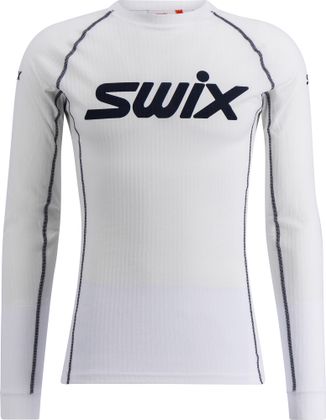
Thin performance knit with long sleeves suits sweaty movement when you also wear an outer layer.
- Advantage: Adds little bulk beneath a midlayer
- Drawback: Limited warmth during prolonged inactivity
Warm long sleeve
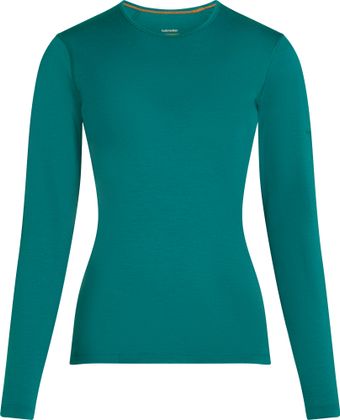
A long-sleeved merino top covers torso and arms in wool knit. It suits cold conditions and a more moderate pace.
- Advantage: Wool fibres help limit odour build-up
- Drawback: Drying can take longer than with thin synthetics
Merino blend
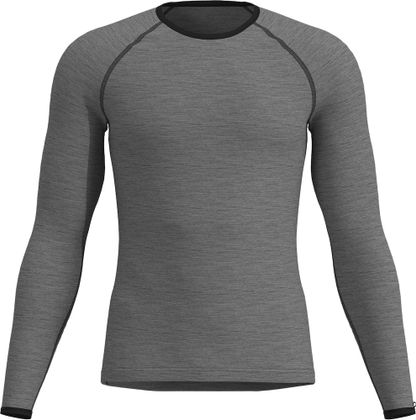
Wool outside and polypropylene inside form a layered knit. It suits cold days with changing effort levels.
- Advantage: Inner face transfers moisture towards the wool layer
- Drawback: The construction can feel too warm in mild weather
Example: Löffler Men Shirt Long Sleeve Transtex Merino 200 ›
What to look for when buying
| Question | In brief | Why |
|---|---|---|
| How intense? | In briefMatch weight to activity | WhyBody heat from hard effort needs a different first layer from long stops. Consider the outer layers too. |
| Which fabric? | In briefMerino, synthetic or blend | WhyMerino can limit odour; synthetics and blends can be constructed for rapid moisture transfer. |
| Which fit? | In briefClose without pressure | WhyFolds and bulky seams can become uncomfortable under other layers. Check raised arms and deep bends. |
| Which length? | In briefMatch to footwear | WhyA hem inside a close boot shaft can create pressure. Cropped legs finish above the shaft. |
Frequently asked questions
How do I check the fit?
Try the base layer under your next clothing layer. Raise your arms and squat: back and waist should stay covered without pressure from seams. Start with the maker’s size chart.
What does the maker’s fabric-weight figure mean?
Odlo distinguishes merino fabric weights of 160, 200 and 260 g/m². These are not universal temperature ratings.
How do I compare different designs?
Compare pieces intended for the same activity. Fabric weight, fibre content, cut and weather protection describe different properties. A higher figure is not automatically the better choice.
How do I care for it?
Follow the particular garment’s care label. Wool and blends may need different programmes from pure synthetics. Avoid unapproved treatments and dry as directed.
Last updated: October 2026
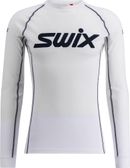
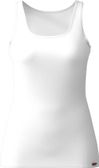
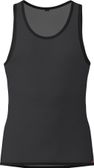
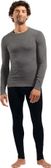
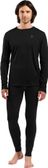
Hard training
For sweaty training, choose a top without unnecessary fabric against your skin.
- Light performance top
- Match weight to activity
- Close without pressure
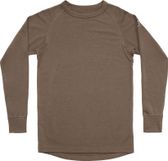
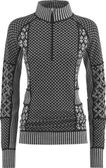
Cold days
A long-sleeved base layer adds arm and torso warmth if outer clothing leaves enough room.
- Warm long-sleeve base layer
- Match weight to activity
- Close without pressure
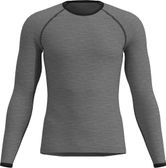
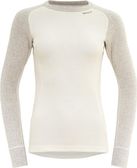
Longer outings
For a long trip, consider fabric feel and washing routine as well as warmth.
- Merino or merino blend
- Match weight to activity
- Close without pressure
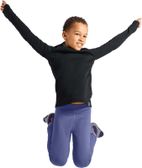
Children
A stretchy neck opening helps children dress and change independently.
- Comfortable neck opening
- Match weight to activity
- Close without pressure


Brands we carry



- 4F
- adidas
- adidas Terrex
- Almgwand
- Alé
- Armada
- Athlecia
- Bergans
- Berghaus
- Bogner
- Bogner Fire + Ice
- Celavi
- CEP
- Chillaz
- CMP
- Colmar
- Columbia
- Craft
- Daehlie
- Dainese
- Dale of Norway
- Dare2b
- Devold of Norway
- Dynafit
- EA7
- Ein schöner Fleck Erde
- Endura
- Falke
- Fjällräven
- Giro
- Goldbergh
- Gonso
- Halti
- Helly Hansen
- Horsefeathers
- Houdini
- Icebreaker
- Isbjörn
- J.Lindeberg
- Jack Wolfskin
- Kari Traa
- Karpos
- Klättermusen
- Krimson Klover
- La Sportiva
- LEGO® kidswear
- Lenz
- Liewood
- Lundhags
- Löffler
- Maloja
- Mandala
- Martini
- MC2 Saint Barth
- Millet
- Minymo
- Mons Royale
- Montura
- Mountain Hardwear
- Northwave
- O'Neill
- Oakley
- Ocun
- Odlo
- Picture
- Pinewood
- POC
- Protest
- Puma
- Rab
- Reusch
- RipCurl
- Rossignol
- Salewa
- Saxx
- Schöffel
- Scott
- Shimano
- Slope
- SOS
- Sportful
- Super.Natural
- Swix
- Tenson
- Ternua
- The North Face
- Therm-Ic
- Trespass
- U-Power
- Under Armour
- Uyn
- Viking
- We Norwegians
- Wheat
- Whistler
- Wild Country
- X-Bionic
- Ziener
No brand found