
Sale: from 50 % off
Brands we carry
Guide
Tarps & lightweight shelters
For a night with light luggage, the whole setup must work together: roof, anchors and any groundsheet or inner tent. Compare complete packed weight with the protection your route needs.
Key points
- Include guy lines, pegs and any required poles with the roof.
- Open tarps need a pitch suited to the wind direction.
- Ground and insect protection may be separate accessories.
What sort of night are you planning?
| Use | Choose | Bear in mind |
|---|---|---|
| Lightweight trek | ChooseCompact open tarp | Bear in mindYou need suitable anchors and pitching practice to position the sleeping area under shelter. |
| Changing campsites | ChooseVersatile guying points | Bear in mindMore attachment points allow different shapes; check which pitches work with your poles. |
| More enclosed sides | ChooseShaped shelter | Bear in mindConsider usable internal space, ventilation and a compatible floor or insect inner. |
Which roof for the night?
Light open tarp (Small in your pack)
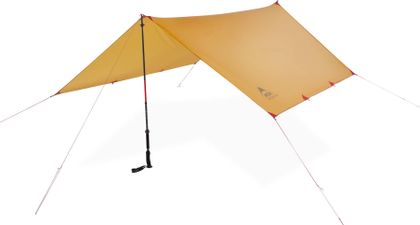
A light roof needs suitable supports and guy lines. Add an enclosed sleeping compartment if needed.
- Advantage: Low packed bulk for the roof
- Drawback: Floor and insect protection must be added if needed
Pyramid shelter (Low to the ground)
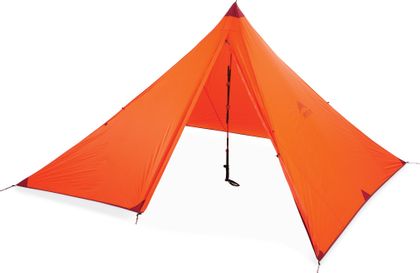
The sides extend well down to create a defined interior. Keep space between your sleeping bag and the fabric.
- Advantage: More side coverage around the sleeping area
- Drawback: Headroom reduces substantially towards the edges
What to look for
| Question | In brief | Why |
|---|---|---|
| How much space? | In briefMat size and roof shape | WhyStart with mat dimensions and allow for sloping sides. Flat fabric area is not the same as usable sleeping space. |
| Which weight? | In briefCount everything | WhyA lightweight roof still needs attachments. Include inner tent, groundsheet and poles if you need them on your route. |
| How should I pitch it? | In briefPractise before the trip | WhyTry your intended shape with your actual equipment. Use a drainage slope and avoid leaving a large open surface facing into the wind. |
Common questions
When does an open tarp make sense?
When you want low packed bulk and can find suitable pitching ground. It needs more attention to wind, rain direction and ground than a fully enclosed tent. Practise before relying on it in poor weather.
Do I need an inner tent?
An enclosed inner can help keep out mosquitoes and crawling insects. Check that it matches the roof and whether it is supplied. A mosquito net alone needs an additional roof for rain protection.
Why does the inside become damp?
Breath, damp ground and weather can contribute to condensation. Keep the ventilation required by the instructions and keep sleeping bags and equipment away from wet inner surfaces where possible.
Can I pitch it with trekking poles?
Only if tarp and poles are suitable and the required fittings match. Consider height adjustment and tip protection. Try the complete combination at home rather than improvising with unsuitable lengths outdoors.
Last updated: November 2026