Super deals: At least 50% off
Guide
Snowshoes
For flat winter trails a simple snowshoe with a strap binding is enough. Once the route climbs or crosses slopes, you need a heel lift, a toe crampon and side rails. Length follows your weight including your pack.
Key points
- For flat winter trails a simple snowshoe is enough.
- On slopes: heel lift, toe crampon and side rails.
- Length follows your weight including your pack.
Which snowshoes for which terrain?
| Use | Choice | Limit |
|---|---|---|
| flat to rolling ground, loose powder | ChoiceTubular frame with deck | LimitThe round tube has no edge and slips on firm traverses. |
| rolling to steep ground, firm and tracked trails | ChoiceMoulded plastic deck | LimitNoisier on hard snow than a fabric deck. |
| alpine routes, steep traverses | ChoiceSerrated aluminium frame | LimitThe fabric deck is more delicate than a solid one. |
| winter paths, sledging hill, gentle slopes | ChoiceKids | LimitThe load limit runs from 23 to 54 kg depending on model and length. |
| tails, straps, bags | ChoiceAccessories & spare parts | LimitTails only fit their own model series. |
Types compared
Tubular frame with deck
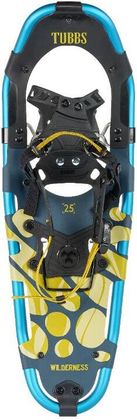
Flat to rolling ground, loose powder.
- Advantage: Flotation in deep snow
- Drawback: No edge, slips on firm traverses
Moulded plastic deck
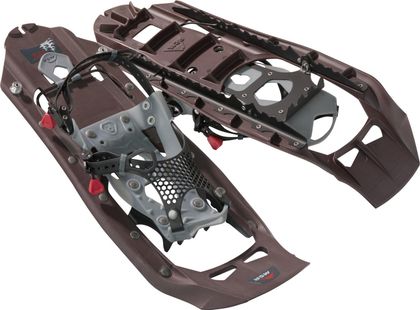
Rolling to steep ground, firm and tracked trails.
- Advantage: Steel rails under the deck
- Drawback: Noisier on hard snow than a fabric deck
Serrated aluminium frame
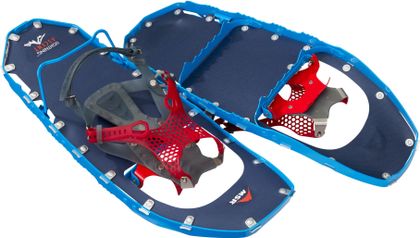
For alpine routes and steep traverses.
- Advantage: Grip all the way round at low weight
- Drawback: Fabric deck more delicate than a solid one
What to check before you buy
| Question | In short | Why |
|---|---|---|
| How long should a snowshoe be? | In short22 to 30 in | WhyGo by your weight with pack. Up to 79 kg, MSR suggests 22 in (56 cm) on packed snow and 25 in (64 cm) in deep powder. Tubbs rates one 30 in model for 77 to 114 kg. |
| When do I need a heel lift? | In shortfrom the first climb | WhyAs soon as the route climbs for a while. The bar flips up under your heel, offsets 12 to 19 degrees depending on the model and takes the strain off your calves. |
| How much traction do I need? | In shorttoe plus side rails | WhyA toe crampon grips on the way up. For traverses you also need toothed side rails or a serrated frame. Without them the snowshoe slides sideways. |
| Straps or dial closure? | In shortstraps or BOA | WhyBoth hold. MSR straps can be swapped one by one on the hill; a dial such as BOA tightens the binding evenly. Check that your boot size is within the binding's range. |
Frequently asked questions
Which boots fit the binding?
Sturdy, warm winter or mountain boots. Depending on the binding, MSR quotes EU sizes 36 to 47 or 39 to 48, and 36 to 43 for one women's binding.
Do I need avalanche kit for snowshoeing?
The SLF combines complete emergency equipment with practised companion rescue in uncontrolled terrain. Without the skills, stay on open, secured routes or join a professional guide.
Can I walk anywhere on snowshoes?
No. Rules differ by country and region, so check locally for wildlife reserves and closed areas.
How do I look after snowshoes?
Towel them dry after each outing and hang them up in the open. Before the next trip, inspect rivets, pivot rod, straps and deck for damage.
Last updated: October 2026
What for?
Flat
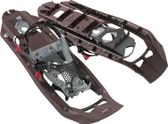
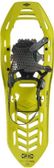
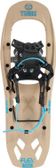
For flat trails a snowshoe without a heel lift is enough, with a strap binding and a toe crampon. Pick the length by your weight including your pack: Tubbs rates one 25 in model for 54 to 91 kg.
- length by weight
- strap binding
- toe crampon
Rolling hills
You need a heel lift, a toe crampon and side rails. The heel lift is a bar under your heel that offsets 12 to 19 degrees, depending on the model, and eases your calves.
- heel lift 12 to 19°
- toe crampon
- side rails
Alpine
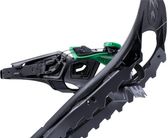
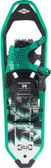
Choose a serrated frame or toothed rails, a strong toe crampon and a heel lift. SLF counts slopes from about 30 degrees as steep: off secured trails, carry transceiver, shovel and probe.
- traction all round
- heel lift
- secure binding
- avalanche rescue kit
Kids
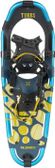
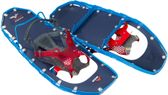
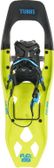
Mostly 16 to 20 in, sized by weight with clothing: Atlas rates its youth model at 14 to 36 kg for 17 in, 23 to 54 kg for 20 in. Pick a binding your child can fasten alone.
- 16 to 20 in
- weight with clothing
- simple binding
No products match these filters.