Super deals: At least 50% off
Guide
Unisex snowshoes
Snowshoe size depends on body weight with equipment and on snow conditions. Hard-snow traverses call for lateral traction, while longer climbs also benefit from a heel lift.
Key points
- Compare the load range with your weight including clothing and rucksack.
- More surface area helps in soft snow but needs room in your stride.
- Front teeth grip uphill; side teeth support traverses.
- Try bindings and closures with your winter boots and gloves.
What snow will you encounter?
| Use | Choose | Bear in mind |
|---|---|---|
| Flat winter paths | ChooseSimple, manageable snowshoe | Bear in mindOn firm tracks, an easy stride is more useful than unnecessary extra surface area. |
| Deep soft snow | ChooseLarger supporting area | Bear in mindFollow the maker's load guidance and include the weight of your pack. |
| Longer climbs | ChooseHeel lift | Bear in mindThe raised bar supports the foot angle uphill; lower it again for level walking. |
| Hard-snow traverses | ChooseSide rails or a toothed frame | Bear in mindLateral grip matters; select terrain to suit your experience, the snow and avalanche conditions. |
Which construction suits the route?
Plastic deck (Firm paths)
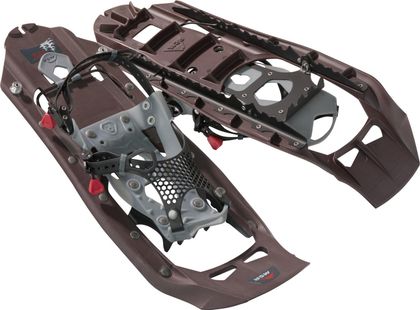
A solid deck with traction rails suits frequently used winter trails.
- Advantage: Durable supporting deck
- Drawback: Noisier on hard snow
Tubular frame (Soft snow)
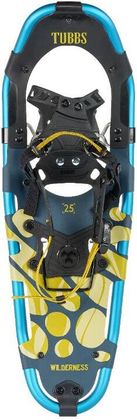
Decking and frame spread the load across a broad area.
- Advantage: Flotation in loose snow
- Drawback: Round tubes offer less side grip
Toothed frame (For traverses)
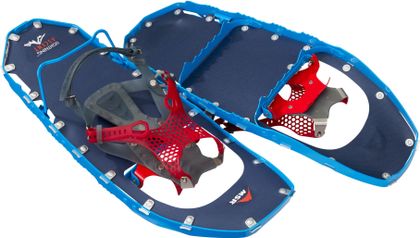
Frame teeth add traction around the foot.
- Advantage: Lateral grip
- Drawback: Protect decking from sharp edges
What to look for
| Question | In brief | Why |
|---|---|---|
| How large should they be? | In briefLoad range before shoe size | WhyStart with your weight including equipment. Soft snow needs more flotation than a firm track; use the recommendation for the chosen size. |
| Which binding fits? | In briefTry it with winter boots | WhyThe sole and upper need secure support. Closures should work with gloves and hold the foot without pressure. |
| Do I need extensions? | In briefMatch the exact series | WhyCompatible extensions increase the supporting area on suitable models. Check the stated fit rather than choosing by brand alone. |
Common questions
Can I use ordinary walking boots?
Choose footwear that is warm, supportive and protected against snow. Check the binding guidance and actual fit; very soft or narrow shoes may be poorly controlled.
Will unisex snowshoes fit every foot?
Frame width and bindings depend on your boots and stride. You should walk without repeatedly knocking the frames together. Compare narrower constructions too.
What else belongs in unmanaged winter terrain?
Plan around the forecast and avalanche bulletin. The German Alpine Club recommends a transceiver, probe and shovel with practised use away from secured routes. Route choice and training remain central.
How should I store snowshoes afterwards?
Remove snow and dirt, dry the frames and bindings, and inspect straps and teeth for damage. Cover sharp parts in transit to protect the decking and your rucksack.
Last updated: November 2026
What terrain are you planning?
Flat and firm
A manageable shape often works well on firm winter trails. The binding must hold your boot securely; excessive frame width can interfere with walking.
- Suitable binding
- Consider stride width
- Compare load range
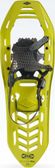
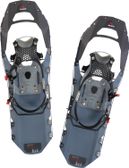
Hills and climbs
A raised heel bar supports the foot angle on climbs. Check whether you can operate it while wearing gloves.
- Heel lift
- Front teeth
- Glove-friendly closures
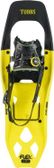
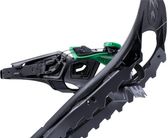
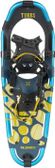
Traversing slopes
Side teeth or a toothed frame help on traverses. Choose terrain within your experience and the current avalanche conditions.
- Lateral traction
- Secure binding
- Consider avalanche conditions
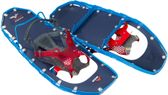
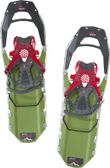
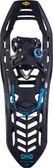
Deep snow with a pack
Compare size guidance with your weight including equipment. More surface area improves flotation but makes the stride less compact.
- Use total weight
- More supporting area
- Keep a manageable stride
No products match these filters.