Super deals: At least 50% off
Guide
Sleeping Pads
Choose a sleeping pad by the coldest night and by what you want to carry. The R-value under ASTM F3340 tells you how warm it is: REI suggests below 2 for nights around 10 °C, and 4 to 5.4 for frost around -7 °C.
Key points
- Compare ASTM F3340 R-values; a higher value means more insulation.
- An R 3 mat stacked on an R 2 mat gives a total of R 5.
- Thickness adds comfort but does not replace insulation.
Which mat for which trip?
| Use | Choice | Limit |
|---|---|---|
| Trekking, bikepacking, mountain trips | ChoiceAir pad | LimitThorns and sharp stones can puncture it. Pack a patch kit. |
| Camping, canoeing, trips by car or bike | ChoiceSelf-inflating pad | LimitHeavier and bulkier than an air pad |
| Winter base layer, kids, breaks | ChoiceFoam pad | LimitBulky, carried on the outside of the pack |
| Car camping, campsites, guest beds | ChoiceComfort mat | LimitWeighs about 2 kg, not one for the backpack |
Types compared
Air pad (inflatable)
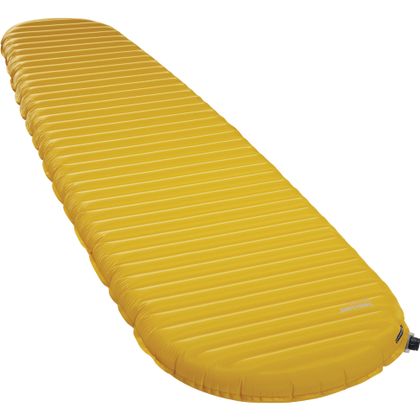
For trekking and cycle tours when every gram counts.
- Advantage: Light, small pack size
- Drawback: One hole and it goes flat
Self-inflating pad (foam and air)
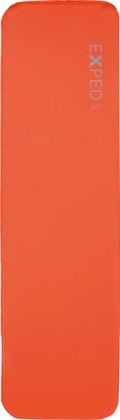
For camping and trips when comfort beats weight.
- Advantage: Partly inflates itself
- Drawback: Heavier than an air pad
Foam pad (closed-cell)
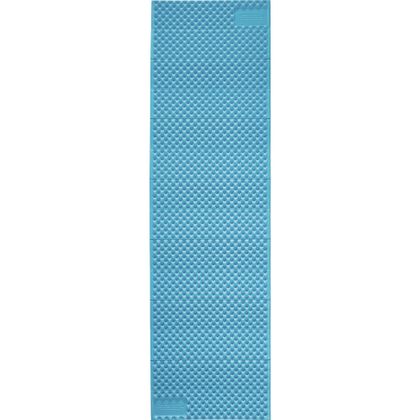
As a winter base layer, for breaks and kids.
- Advantage: Cannot burst
- Drawback: Bulky
What to check before you buy
| Question | In short | Why |
|---|---|---|
| What does the R-value mean? | In shortHigher is warmer | WhyThe R-value measures how well the pad holds in heat. Since 2020, ASTM F3340 sets out the measurement between a warm and a cold plate. Values measured this way are comparable. |
| Which R-value suits me? | In shortNo temperature guarantee | WhyAn R-value is not a guaranteed temperature limit. Compare the maker’s guidance and the coldest night; sleeping bag, clothing and how easily you feel cold also matter. |
| Air, foam or both? | In shortChoose by weight | WhyAir pads weigh least and pack smallest. Self-inflating pads combine foam and air. Foam pads cannot burst but are bulky. |
| How wide does the pad need to be? | In short51 cm standard | WhyMost pads are 51 cm wide and 183 cm long. If you turn a lot, take 64 cm. Tall people choose a long version at 198 cm so their feet don't rest on the ground. |
Frequently asked questions
Why am I cold despite a thick pad?
Warmth depends on the R-value, not thickness. Air pads only become warm through fills or reflective films inside. So compare the values under ASTM F3340.
How do I find a hole in an air pad?
Inflate the pad firmly and dip it into water section by section, or brush it with soapy water. Where bubbles rise, that's the leak.
What is the difference between open-cell and closed-cell foam?
Closed-cell foam is used in foam pads: it needs no air and cannot burst. Open-cell foam is used in self-inflating pads. It expands and draws in air as it does.
Can I join two pads together?
Yes, with a coupler kit: straps hold two single pads side by side so no gap opens up at night. There are also double pads.
Last updated: October 2026
What do you need the pad for?
Campsite
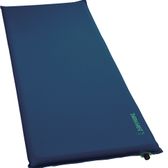
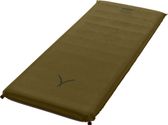
At a campsite, you can trade weight for comfort. Check length, width and thickness against your tent floor; choose insulation for the coldest expected night.
- Check sleeping area
- Thickness for comfort
- Match the R-value
Trekking
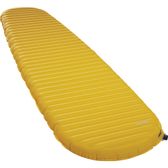
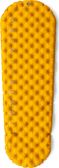
When you carry everything, take an air pad: according to Therm-a-Rest, light models weigh 370 g at R 4.5. Pair it with a down sleeping bag, which also packs small.
- Air pad
- Under 500 g
- Pump sack
- Patch kit
Winter
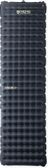
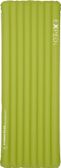
For freezing nights, compare mats explicitly intended for winter and their R-values. Foam underneath adds insulation and backup. An R-value is not a guaranteed temperature limit.
- Compare winter use
- Check the R-value
- Foam mat as backup
Backup
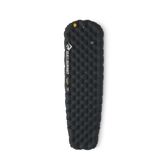
A closed-cell foam mat needs no valve and still works with minor damage. Under an air mat it adds insulation; the R-values add together.
- No inflation
- R-values add up
- Carry outside the pack

No products match these filters.