
Sale: from 50 % off





Guide
Ski Goggles
For most days on snow you need ski goggles with a category S2 lens, which lets through 18 to 43% of visible light, and a frame that meets your helmet without a gap. Add a second lens if you often ski in snowfall or on glaciers.
Which ski goggles suit me?
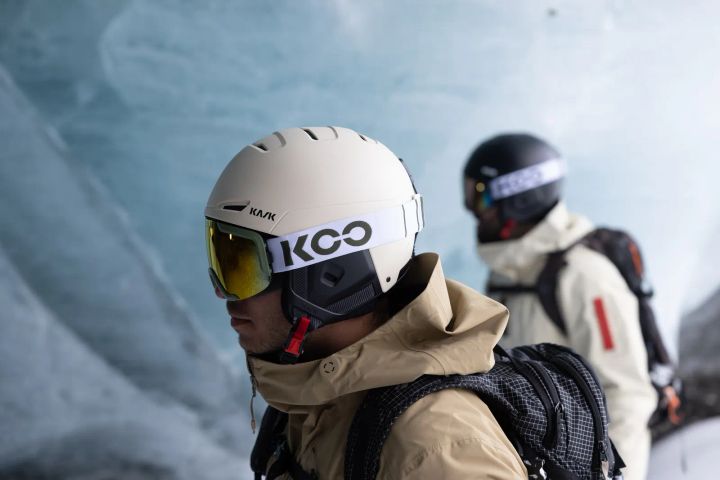
Which lens category do I need?
S2: 18–43% light
Read more
S2 covers sun with passing cloud. S1 (43 to 80%) is for fog and snowfall, S3 (8 to 18%) for cloudless days. The categories are set by EN ISO 18527-1, which replaced EN 174.
Does a pale lens block UV?
Yes, if UV400
Read more
Yes, if it is marked UV400. Tint only controls brightness. According to the WHO, UV rises by about 10% per 1,000 m of altitude, and fresh snow almost doubles your exposure.
What stops goggles fogging?
Double lens
Read more
A double lens with an anti-fog coating on the inside. The air between the two lenses insulates like double glazing. Never rub the inner lens when it is wet, or the coating comes off.
Will they fit over my glasses?
OTG models only
Read more
Only OTG goggles, short for ‘over the glasses’. They are deeper and have cut-outs in the foam for the arms of your glasses. Try them on with the glasses you ski in.
Cylindrical or spherical lens?
Spherical: wider view
Read more
A spherical lens curves side to side and top to bottom, which opens up the view above and below. A cylindrical lens curves side to side only. Lens shape has no bearing on the category.
Lens types compared
S1 (43–80% light)
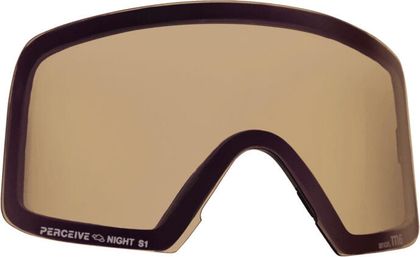
For fog, snowfall and dusk.
- Advantage: Contrast in flat light
- Advantage: Usually yellow, orange or rose
- Drawback: Dazzles in sunshine
S2 (18–43% light)
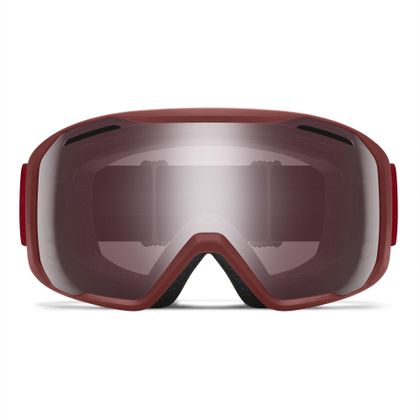
For sun and cloud in turn.
- Advantage: One lens for most ski days
- Drawback: Too dark in heavy snowfall
S3 (8–18% light)
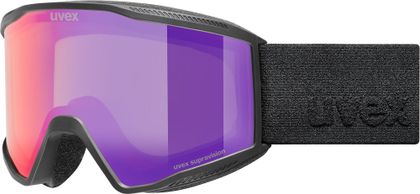
For clear skies and glaciers.
- Advantage: Glare control at altitude
- Drawback: Too dark in trees and shade
Photochromic
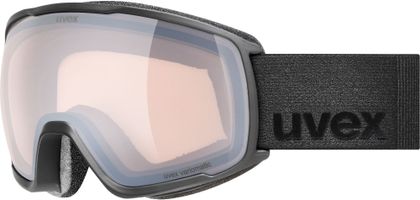
Tints itself, from S1 to S3 depending on the model.
- Advantage: For changeable weather
- Drawback: No clear lens (S0) for night skiing
| Type | Use | Strength | Limit |
|---|---|---|---|
| S1 (43–80% light) | fog, snowfall, dusk | contrast in flat light, usually yellow, orange or rose | dazzles in sunshine |
| S2 (18–43% light) | sun and cloud in turn | one lens for most ski days | too dark in heavy snowfall |
| S3 (8–18% light) | clear skies, glaciers | glare control at altitude | too dark in trees and shade |
| Photochromic | changeable weather | tints itself, from S1 to S3 depending on the model | no clear lens (S0) for night skiing |
| Spare lens | a second category for the same frame | quick swap, often magnetic | fits its own goggle model only |
Most models sit under men's and unisex ski goggles. Women's ski goggles have narrower frames, and kids' ski goggles are smaller to match children's helmets. A second lens for your frame is listed under spare lenses and accessories.
How should ski goggles fit?
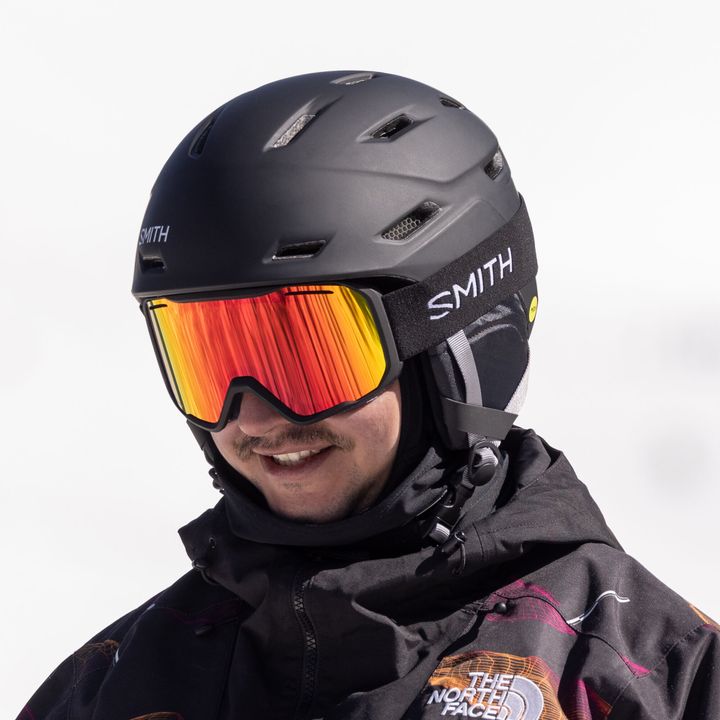
Four steps
- Try them with your helmet. Helmet on first, then the goggles. The frame should meet the helmet brim with no gap. A gap means a cold forehead.
- Check the pressure. The foam should touch your face all the way round without pressing on your nose. Air coming in from below means the shape does not match your face.
- Set the strap. Run the strap round the outside of the helmet, level. Silicone strips on the inside stop it sliding on the shell.
- Keep them on your face. Do not park goggles on your forehead or helmet on the lift. They pick up moisture there and fog, as Sweet Protection points out.
Where you ski matters. In Scandinavia in midwinter, or in the flat light of the Scottish Highlands, an S1 or S2 lens earns its place. For spring days in the Pyrenees and glacier skiing in the Alps, pack S3. Under EN ISO 18527-1 fog resistance is an optional requirement, so an anti-fog coating is not a given. Check for it before you buy.
Key points at a glance
- For most days on snow, an S2 lens will do.
- UV400 blocks UV; the tint only controls brightness.
- Try them with your helmet: no gap to the frame.
Frequently asked questions
What does VLT mean on ski goggles?
VLT stands for visible light transmission: the share of visible light, in per cent, that passes through the lens. The lower the figure, the darker the lens. The VLT sets the category, so a 30% lens is S2 and a 12% lens is S3.
Why do my goggles still fog up?
Usually because warm, damp air cannot escape. Snow is blocking the vents, or the goggles sat on a wet hat. Shake the snow out, dab the moisture with the goggle bag and keep moving. The airflow dries the rest.
Are polarised ski goggles better?
Not for everyone. A polarised lens filters light reflected off the snow, so there is less glare. It also makes icy patches harder to spot. If you often ski hard, icy pistes, choose a lens without a polarising filter.
Do I need interchangeable lenses?
Not if you ski one week a year. Goggles with a fixed S2 double lens will do. If you are out in all weathers for many days each winter, a second lens or a photochromic one is worth having.
How do I clean ski goggles?
Wipe the outside with the microfibre bag, using water and mild soap if needed, then blot it dry. Only dab the inner lens. Never rub it and never use cleaner on it. Let the goggles dry in the air, away from radiators.
More from the magazine
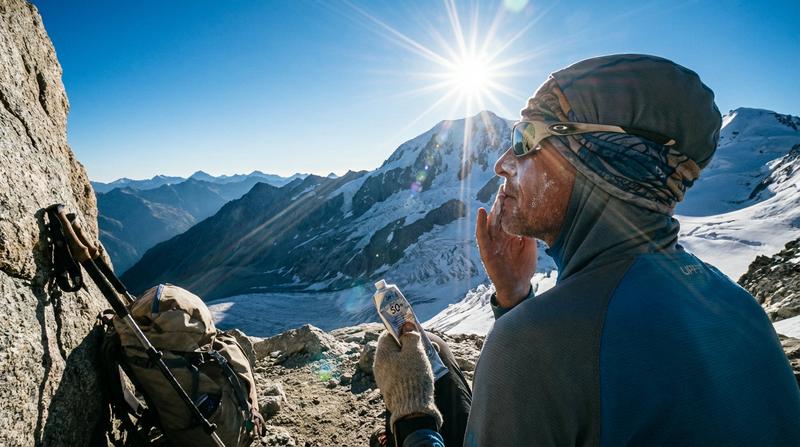 UV protection in the mountainsUV radiation rises by up to 18% for every 1,000 metres of altitude, and snow reflects up to 94% of it. What research shows about UV risk in mountain sports and how to protect yourself.
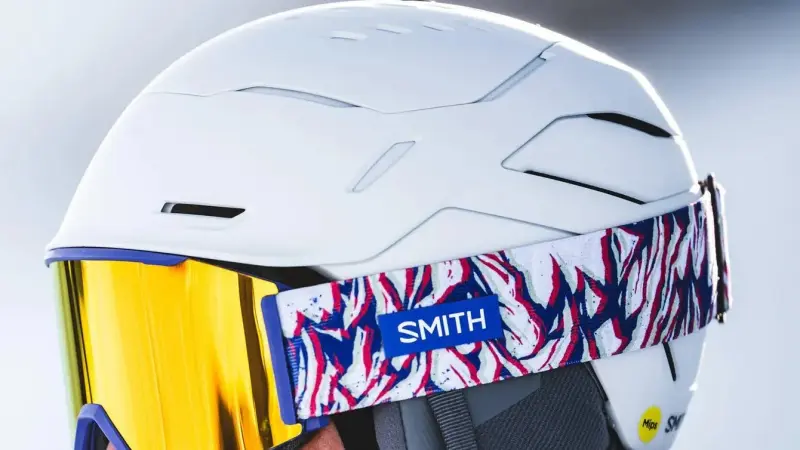 MIPS: how the helmet technology worksA thin layer inside the helmet that slides in angled falls. What research says Mips does, where its limits are and how to tell whether a helmet has it.
Last updated: October 2026