Super deals: At least 50% off
Guide
Trail Running & Speed Hiking Shoes
Trail running and speed hiking shoes are lighter and more flexible than hiking boots, made for fast day trips on good paths. For a heavy pack, scree and snow, choose a hiking boot.
Key points
- Dry paths: 3 to 4 mm lugs, mud: 5 to 7 mm.
- Gore-Tex keeps rain out but dries slowly.
- Heavy pack, scree, snow: hiking boot.
Which shoe for which trail?
| Use | Choice | Limit |
|---|---|---|
| Runs on forest trails, paths, in the mountains | ChoiceTrail running shoe | LimitLow cut, little support on boulder fields. |
| Fast day trips, huts and summits with a light pack | ChoiceSpeed hiking shoe | LimitToo soft for heavy packs and multi-day trips. |
| Wet meadows, rain, autumn | ChoiceMultisport shoe with membrane | LimitWater from above stays inside and dries slowly. |
| Stony paths, wet grass, autumn | ChoiceMid-cut speed hiker | LimitHeavier. Not enough for scree and snow. |
Types compared
Trail running shoe (Running off-road)
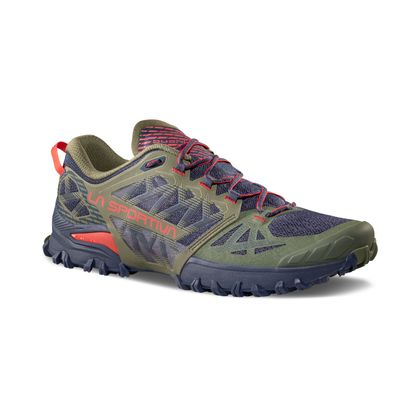
For runs on forest trails, paths and in the mountains.
- Advantage: Light and cushioned
- Drawback: Little ankle support
Speed hiking shoe (Walking fast)
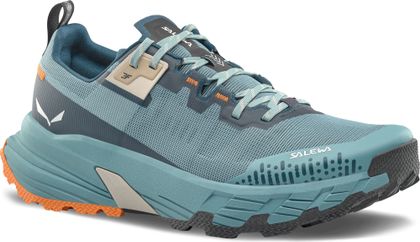
For fast uphill walking with a light pack.
- Advantage: Sole made for walking and climbing
- Drawback: Too soft for heavy loads
Multisport shoe (With Gore-Tex)
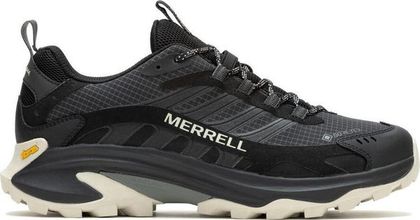
For hiking, speed hiking and runs in the wet.
- Advantage: Membrane keeps rain out
- Drawback: Dries slowly once water gets in
What to check before you buy
| Question | In short | Why |
|---|---|---|
| How deep should the tread be? | In shortLugs of 3 to 7 mm | WhyOn dry, firm ground, lugs 3 to 4 mm deep are enough and the shoe runs smoothly. Mud and loose scree need 5 to 7 mm: the lugs bite deeper and shed mud. |
| What protects against sharp stones? | In shortPlate and toe cap | WhyA stiff plate in the midsole keeps sharp stones out; Lowa, for example, uses a carbon reinforcement. A rubber cap at the front protects your toes when you stub them on roots. |
| Membrane or mesh? | In shortWet or heat | WhyA membrane such as Gore-Tex keeps dew, rain and puddles out. Water that runs in over the top stays inside and dries slowly. In summer and at streams, open mesh dries faster. |
| How much drop? | In shortMedium: 5 to 8 mm | WhyDrop is the height difference between heel and forefoot. 5 to 8 mm counts as versatile off-road. 0 to 4 mm brings you closer to the ground and puts more load on your calves. |
Frequently asked questions
Can I hike in trail shoes?
On day hikes on good paths, yes. The soft rubber sole grips on wet rock and roots.
What does a toe cap do?
A rubber cap at the front of the shoe protects your toes when you stub them on stones or roots. On rocky paths it pays off; on soft forest trails it is not essential.
How do I care for Gore-Tex shoes?
Brush off the dirt and proof the upper. Water-based products go on the damp shoe. If the upper soaks through, sweat can no longer get out through the membrane.
Do trail shoes work on tarmac?
For short stretches, yes. On long stretches of tarmac a road running shoe runs more smoothly: deep lugs are made for soft ground.
Last updated: October 2026
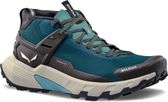
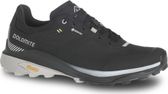
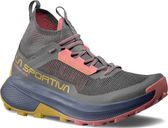
Speed hiking
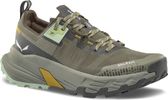
For fast day routes with a light pack, compare weight, tread and heel hold. Heavy loads or alpine terrain call for more sole stiffness and support.
- Light pack
- Tread for your terrain
- Secure heel
Everyday
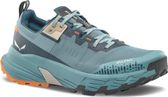
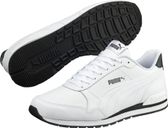
On firm tracks, check how smoothly the shoe rolls through each step. Try low-cut multisport shoes with your usual socks and check for forefoot pressure.
- Check the rolling feel
- Secure heel
- Room for toes
Via ferrata
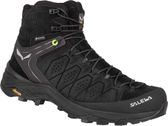
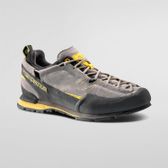
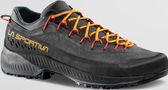
For via ferratas and rocky approaches, choose an approach shoe: it has a flat rubber zone at the front for small footholds and lacing that runs to the toes.
- Rubber zone at the front
- Lacing to the toes
- Check the fit
Kids
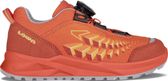
Measure the foot and add at least 12 mm. Check the fit every few months: children's feet grow by about 1 mm a month.
- Foot length plus 12 mm
- Check every few months
- Check the fit


Brands we carry


- adidas
- adidas Terrex
- AKU
- Altra
- CMP
- Columbia
- Craft
- Danner
- Dolomite
- Dynafit
- Garmont
- Gola
- Haglöfs
- HAIX
- Halti
- Hanwag
- Helly Hansen
- Jack Wolfskin
- La Sportiva
- Lowa
- Lundhags
- Mammut
- Merrell
- Millet
- Oakley
- Puma
- Reima
- Rossignol
- Salewa
- Saucony
- Scarpa
- Scott
- Tecnica
- The North Face
- Timberland
- Uyn
- Viking
- Whistler
- X-Bionic
- X-Socks
No brand found