Super deals: At least 50% off
Guide
Men's Nordic Jackets
On the tracks, your front needs wind protection while your back needs to release heat. Carrying a warm jacket for breaks often works better than excessive insulation throughout the session.
Key points
- Combine a windproof front with a more breathable back.
- Shoulders and sleeves must allow unrestricted pole movements.
- Gentle outings and breaks need more warmth than fast training.
Which jacket for your pace?
| Use | Choose | Bear in mind |
|---|---|---|
| Fast training | ChooseLight wind or softshell jacket | Bear in mindLittle insulation and stretch zones help release excess heat. |
| Windy tracks | ChooseWindproof front | Bear in mindBack and sides should release moisture; an entirely sealed outer can become too warm. |
| Gentle outings in the cold | ChooseWarmer model | Bear in mindLeave space for a base layer and ventilate before harder efforts. |
| Breaks and waiting | ChooseInsulated over-jacket | Bear in mindAdd warmth as you cool down without overheating during the whole session. |
Light or insulated?
Softshell jacket (For training)
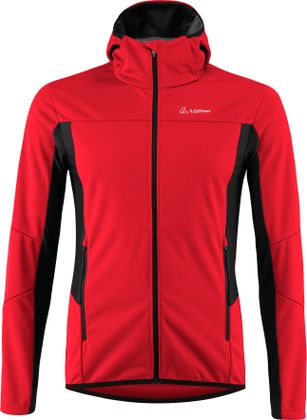
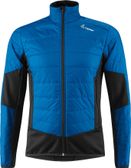
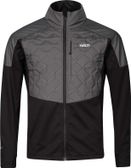
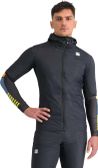
A windproof front can be combined with flexible, breathable panels at the back.
- Advantage: Freedom for pole movements
- Drawback: Not automatically waterproof
Insulated jacket (For extra warmth)
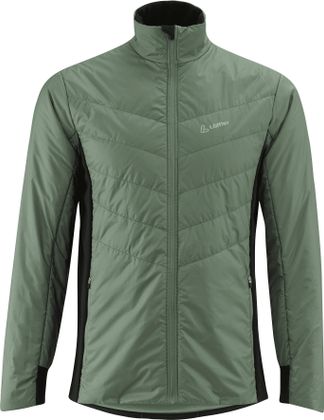
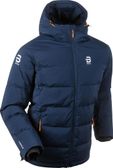
Additional filling suits a gentler pace or periods of low activity.
- Advantage: Warmer when less active
- Drawback: Can overheat during fast training
What to look for
| Question | In brief | Why |
|---|---|---|
| How close-fitting? | In briefMimic pole movements | WhyShoulders need to move freely. The hem should cover your back when reaching forwards. |
| Do I need a membrane? | In briefConsider rain and wind | WhyA windproof front often suffices in dry cold. Rain calls for explicitly waterproof equipment. |
| What goes beneath? | In briefA thin technical layer | WhyMatch synthetic or merino fabric to how much you sweat. Thick cotton stays damp longer after exertion. |
Common questions
Can I wear my insulated downhill ski jacket?
Possibly for a very gentle outing. For active cross-country skiing a thick piste jacket usually becomes too warm and can restrict pole movements. A light jacket is easier to combine with layers.
Must the entire jacket be windproof?
Not necessarily. The front meets the wind directly, while breathable back and underarm panels help release heat. Read the product details for the exact construction.
What about long breaks?
Put on a warm layer before cooling down. Damp clothing and cold wind are an uncomfortable combination. The additional jacket needs to fit over your skiing layers.
How do I care for softshell?
Wash according to the label and close all fastenings. Fabric softener is unsuitable for many technical materials. Renew proofing only with a product appropriate to the fabric.
Last updated: November 2026
What is your outing like?
Fast training
High effort generates warmth quickly. A light jacket with a flexible back is usually more suitable than a thick winter jacket.
- Light construction
- Free shoulders
- Release heat
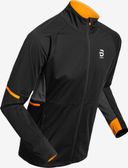
Windy tracks
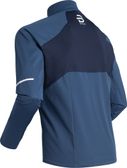
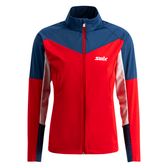
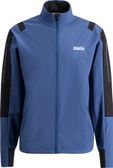
A windproof front reduces chill from the wind. A more breathable back remains useful for releasing moisture.
- Windproof front
- Breathable panels
- Comfortable closed collar
Gentle cold-weather outing
Slow skiing and longer stops can need a warmer jacket. Open it before demanding sections make you too hot.
- Warmth for your pace
- Space for a base layer
- Easy-to-use zip
Breaks and waiting
An insulated jacket over your skiing clothes helps during breaks. It need not be the same jacket you wear throughout the session.
- Insulation
- Fits over skiing layers
- Put on before cooling down
No products match these filters.


