Super deals: At least 50% off
Guide
Men’s touring midlayers
A flexible, relatively thin layer suits the climb. Thick casual fleeces and stop jackets hang alongside; they serve a different purpose from a light touring midlayer.
Key points
- Shoulders and back must move freely during the pole swing.
- Thin grid fleece lets more air through; a shell supplies wind protection.
- Plan an additional warm jacket for a long cold stop.
When do you need warmth?
| Use | Choose | Bear in mind |
|---|---|---|
| Brisk climb | ChooseThin stretch midlayer | Bear in mindAvoid starting overdressed. |
| Changing effort | ChooseFull-zip jacket | Bear in mindEasy to open or remove. |
| Colder descent | ChooseWarm layer under the shell | Bear in mindCheck the complete outfit. |
| Long break | ChooseExtra insulated jacket | Bear in mindDifferent from warmth during climbing. |
Pullover or full zip?
Light pullover (Under a shell)
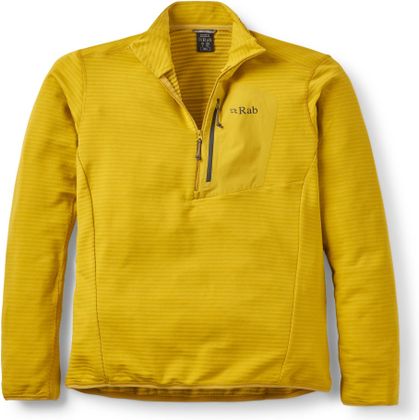
A close-fitting layer with little fastening material at the torso.
- Advantage: Little bulk under the jacket
- Drawback: Pulls over the head to remove
Fleece jacket (For changing)
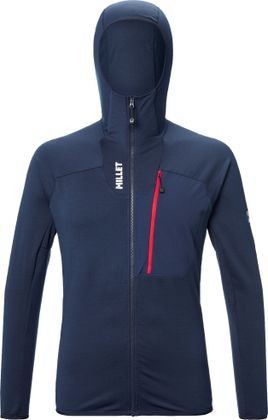
Opens completely when warmth needs and pace change.
- Advantage: Quick to ventilate or remove
- Drawback: More fastenings layered together
What to look for
| Question | In brief | Why |
|---|---|---|
| How thick? | In briefConsider the climb first | WhyIf you sweat heavily uphill, little extra warmth is needed. The thick jacket can stay in your pack for the stop. |
| How should it fit? | In briefTry a pole-swing movement | WhyReaching forwards should not pull at the armpits or expose the back. Try with base layers and shell. |
| Hood or collar? | In briefCheck neck space | WhySeveral hoods may bunch under a helmet. A soft collar or thin hood must work with your other clothing. |
Common questions
Is every model here meant for climbing?
No. Thick wool jackets, pile fleece and insulated jackets are often too warm during hard effort. Read the construction of the actual model.
Can fleece replace a shell?
Temporarily in calm, dry weather, but ordinary fleece does not reliably stop wind and rain. Plan weather protection separately.
Should the midlayer fit tightly?
Close without restricting movement is practical under a shell. Excess fabric bunches up, while an overly tight cut limits the pole swing.
What should I do before descending?
Adapt layers to wind, cold and pace. Dry or change damp layers and add warmth before you become chilled.
Last updated: November 2026
Which part of the tour?
Brisk climb
Releasing warmth matters more than thick fill. Try the pole swing in the midlayer.
- Thin layer
- Free arms
- Opening collar
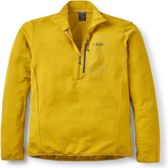
Changing pace
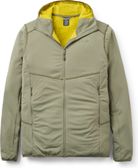
A full zip helps regulate warmth. A suitable outer layer provides wind protection.
- Fully opening
- Matching shell
- Avoid excess bulk
Colder descent
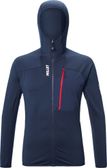
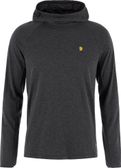
A warmer middle layer can suit the descent. Check space beneath the closed shell.
- Suitable warmth
- Do not crush layers
- Comfortable neck
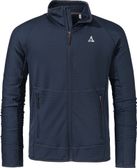
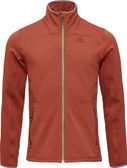
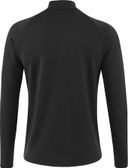
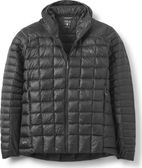
Cold stop
Warmer fleece or insulated jackets help at low activity but do not automatically provide rain protection.
- Additional warmth
- Room over layers
- Separate weather protection
No products match these filters.


Brands we carry


Show all brands
- Bergans
- Berghaus
- Black Diamond
- CMP
- Columbia
- Craft
- Crazy
- Dare2b
- Devold of Norway
- Dynafit
- Elevenate
- EVOC
- Fjällräven
- Halti
- Helly Hansen
- Houdini
- Icebreaker
- Jack Wolfskin
- Karpos
- Klättermusen
- La Sportiva
- Löffler
- Maier Sports
- Maloja
- Mammut
- Martini
- MAUL Sport
- Millet
- Mons Royale
- Montura
- Mountain Hardwear
- O'Neill
- Odlo
- Picture
- Rab
- Rossignol
- Salewa
- Schöffel
- Scott
- Sportful
- Super.Natural
- Swix
- Ternua
- Uyn
- VAUDE
- Whistler
- Ziener
No brand found
