Super deals: At least 50% off
Guide
Touring Skis
For most ski tours, an all-round touring ski with an 85 to 95 mm waist does the job, sized between your own height and 10 cm shorter. Go narrower and lighter if the climb matters most, wider if you tour for the descent.
Key points
- All-round touring skis: 85 to 95 mm waist.
- Length: between your height and 10 cm less.
- Pin bindings need touring boots with inserts.
Which touring ski for which terrain?
| Use | Choice | Limit |
|---|---|---|
| Piste touring, long climbs, high-alpine tours | ChoiceUphill-focused, under 85 mm | LimitGives ground on the descent in crust and chopped-up snow |
| Day tours in changing snow | ChoiceAll-round, 85–95 mm | LimitLess float in deep powder than a wide ski |
| Tours where the descent comes first | ChoiceFreetouring, 96–105 mm | LimitMore weight; long climbs become hard work |
| Powder days with a short climb | ChoiceFreeride, over 105 mm | LimitHeavier still: the wrong tool for long tours |
Types compared
Uphill-focused (under 85 mm)

For piste touring, long climbs and high-alpine tours.
- Advantage: Low weight
- Drawback: Gives ground in crust and chopped-up snow
All-round (85–95 mm)

For day tours in changing snow.
- Advantage: Balanced up and down
- Drawback: Less float in deep powder than a wide ski
Freetouring (96–105 mm)
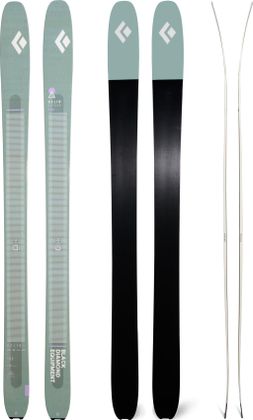
For tours where the descent comes first.
- Advantage: Float in deep snow
- Drawback: More weight
What to check before you buy
| Question | In short | Why |
|---|---|---|
| What waist width should a touring ski have? | In short85–95 mm | WhyAn 85 to 95 mm waist, measured under the binding, covers most tours: the ski does not keep diving in deep snow, fits a normal skin track and holds on traverses. |
| How long should a touring ski be? | In shortUp to 10 cm below height | WhyChoose an all-round touring ski between your height and 10 cm less. Shorter makes kick turns (tight turns on a steep skin track) easier; longer stays steady at speed. |
| How heavy should a touring ski be? | In short1,100–1,450 g per ski | WhyThe German Alpine Club quotes 1,100 to 1,450 g per ski at 170 cm for all-round touring skis. Lighter climbs better. Heavier damps vibration and pushes through breakable crust. |
| What do rocker and camber mean? | In shortFloat and edge grip | WhyRocker means tip and tail rise early, which adds float and makes turning easier. Camber is the slight arch under the binding that presses the edges into hard snow. |
Frequently asked questions
Can I ski pistes on touring skis?
Yes. On hard pistes at speed, though, light touring skis feel less settled than alpine skis because they have less mass to damp vibration.
Is a touring ski wider than a piste ski?
An all-round touring ski is: it measures 85 to 95 mm underfoot, while piste skis typically sit at around 73 to 78 mm. The real difference, though, is weight.
Are pin bindings as safe as alpine bindings?
Not all of them. ISO 13992, the standard for touring bindings, is voluntary, and according to the German Alpine Club most pin bindings are not certified to it.
Which touring ski is right for a first season?
An all-round touring ski at the shorter end of the length range.
Last updated: October 2026
What for?
Piste touring
For piste touring, compare weight and controllable edge grip. Narrow all-round models around 88 mm can also suit mixed tours. Compare weights at the same ski length.
- Around 88 mm all-round
- Weight by ski length
- Matching skins
Ski touring
For classic ski touring, choose an all-round touring ski with an 85 to 95 mm waist and 1,100 to 1,450 g per ski. Size it between your height and 10 cm less so it stays manageable in kick turns.
- 85–95 mm
- 1,100–1,450 g per ski
- up to 10 cm below height
- tip rocker
Freeride touring
Descent-focused touring skis around 95 to 108 mm add surface area in deep snow. Width and weight cost energy uphill; choose according to how much climbing you do.
- Around 95 to 108 mm
- More surface area
- More weight uphill
Long climbs
On long climbs, compare the weight of skis, bindings and skins together. Narrow skis are easier in kick turns. Check compatibility between bindings, boots and ski crampons.
- Compare total weight
- Manageable length
- Check compatibility

No products match these filters.


