%Super deals: At least 50% off
Women's cycling gilets
Buying guide ↓Guide
Women's cycling gilets
A cycling gilet adds protection from wind or cool air over a jersey. Check the chest, waist and back while leaning forwards, and choose insulation for the temperature and your effort.
Key points
- The back should stay covered in riding position.
- An airy back panel helps release heat on climbs.
- Insulation is more useful in cold weather or at an easier pace.
When will you put it on?
| Use | Choose | Bear in mind |
|---|---|---|
| A descent after climbing | ChooseA light, packable wind gilet | Bear in mindThe front blocks airflow while a breathable back releases heat. Put it on before descending while you still feel warm from the climb. |
| A cool, steady ride | ChooseExtra insulation around the body | Bear in mindA warmer front can feel comfortable at a consistent pace. Coordinate it with your jersey sleeves because the arms remain uncovered. |
| Changeable touring weather | ChooseWeather protection for the conditions | Bear in mindProlonged rain needs suitable fabric and seams. Open mesh leaves your back exposed to rain and spray from the wheel. |
What to look for
| Question | In brief | Why |
|---|---|---|
| Does it fit the chest? | In briefAvoid strain across the zip | WhyClose the gilet over your usual jersey and lean into riding position. Armholes should neither gape nor press beneath your arms. |
| How long is the back? | In briefCheck it on the bike, not just standing | WhyThe hem should not rise above the waistband when you bend forwards. Less length at the front can reduce fabric bunching over your stomach. |
| Where will you pack it? | In briefCompare with your jersey pocket | WhyA layer used repeatedly needs to be accessible. Also check whether you can still reach the pockets of the jersey underneath. |
Common questions
Can a gilet take the place of a jacket?
In dry wind it can be a useful addition. If your arms and shoulders become cold or rain continues, take a suitable jacket. Consider the forecast, your pace and the rest of your clothing rather than the gilet alone.
Why choose a mesh back?
It lets heat and moisture escape more readily, especially uphill. Open sections also allow water through. For wet roads, a more closed back panel or an additional rain layer may suit the conditions better.
How close should the fit be?
The fabric should remain fairly quiet while riding without restricting deep breaths. Compare the cut over your usual jersey, particularly at the chest and hips. Simply sizing up may not solve a shape that does not suit you.
How do I use an insulated gilet?
A light long-sleeved layer underneath keeps the arms mobile while warming the torso. That can already feel too warm on a hard climb. Vent with the zip and consider an additional layer for longer stationary breaks in cold conditions.
Last updated: November 2026
Wind in mild weather
A thin wind gilet takes little room on a changeable ride. Check how it fits over your normal jersey.
- Keep the front quiet
- Check back coverage
- Pack it small
Cold rides
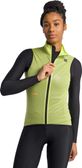
Insulated designs suit cooler conditions. Match the layer underneath to your effort to avoid excess heat uphill.
- Inspect the insulation
- Cover arms separately
- Use the front zip

Brisk road rides
For faster riding, the fabric should sit calmly. Leave enough room across the chest for breathing and shoulder movement.
- Check riding posture
- Move the shoulders
- Set the hem

Longer touring days
Compare the gilet with your jacket and jersey. Ventilation and weather protection need to suit the expected conditions.
- Read weather details
- Reach jersey pockets
- Try the layers together