
Sale: from 50 % off
Guide
Winter cycling shoes
A winter cycling shoe has to fit your pedals, block the wind and leave room for a warm sock. Around freezing, pick a lined shoe with a waterproof membrane; when it stays below freezing, a heavily insulated one.
Key points
- The sole must match your pedals: 2-bolt or 3-bolt.
- Rain, slush and road spray call for a membrane.
- Half to one size up, so thick socks don't squeeze.
Which shoes for which winter ride?
| Use | Choice | Limit |
|---|---|---|
| Tarmac and winter training, 3-bolt cleat | ChoiceWinter road shoe | Limitwalking: the cleat stands proud and slides on ice |
| Trails, forest roads, gravel and commuting, 2-bolt cleat | ChoiceWinter MTB shoe | Limitdoes not fit road pedals |
| Rain and wet roads above freezing | ChoiceLightly lined membrane shoe | Limitnot warm enough below freezing |
| Frost, snow, long rides | ChoiceHeavily insulated shoe | Limittoo warm on mild days |
| Occasional rides, autumn and spring | ChoiceOvershoe on a summer shoe | Limitnot made for walking, not enough in prolonged frost |
Types compared
Winter road shoe (3-bolt)
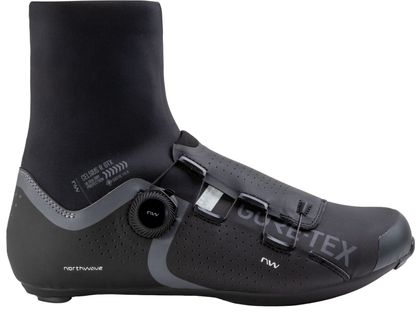
For tarmac and winter training.
- Advantage: Stiff sole
- Drawback: Cleat stands proud, slides on ice when walking
Winter MTB shoe (2-bolt)
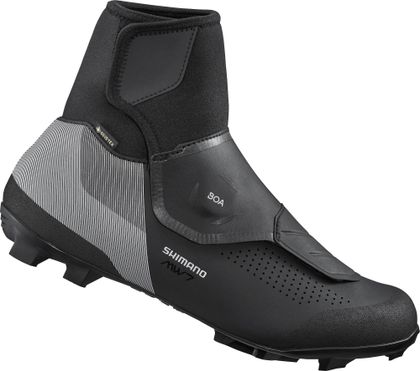
For trails, forest roads, gravel and commuting.
- Advantage: Treaded sole
- Drawback: Does not fit road pedals
Heavily insulated shoe
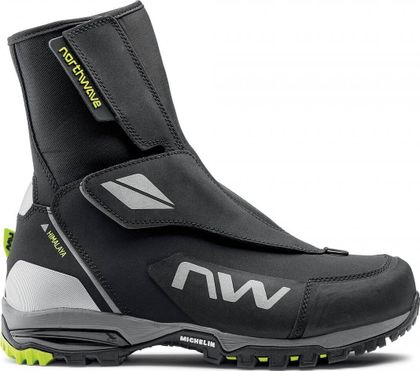
For frost, snow and long rides.
- Advantage: Thick insulation, 200 to 400 g at Northwave
- Drawback: Too warm on mild days
What to check before you buy
| Question | In short | Why |
|---|---|---|
| Two-bolt or three-bolt? | In short2-bolt or 3-bolt | WhyMatch the sole to your pedals. Two-bolt SPD cleats sit recessed in a treaded sole and suit mountain bike, gravel and commuting. Three-bolt road cleats stand proud of a smooth sole. |
| How much colder is it at speed? | In short0 °C feels like −6 °C | WhyAt 0 °C and 30 km/h the wind chill is about −6 °C. At −5 °C it is about −13 °C. That is why wind protection comes first in a winter cycling shoe and insulation second. |
| How much insulation do I need? | In short3 warmth levels | WhyA light lining behind a membrane covers cold, wet days above freezing. Frost calls for real insulation: Northwave quotes 200 g PrimaLoft or 400 g Thinsulate for such models. |
Frequently asked questions
Are overshoes enough, or do I need winter cycling shoes?
For occasional rides, overshoes are enough. Thin ones keep out wind and water, and thicker neoprene ones add warmth.
Are winter cycling shoes really waterproof?
Shoes with a membrane keep water out from the outside, but the opening at the ankle remains the weak point.
Which socks should I wear in winter cycling shoes?
Wool socks, such as merino. Merino keeps insulating when wet, while cotton loses its insulation once it is soaked.
How do I dry wet winter cycling shoes?
Take out the insole and let the shoe dry naturally at a moderate temperature. Gore-Tex advises against direct heat and against leaving footwear wet for long.
More from the magazine
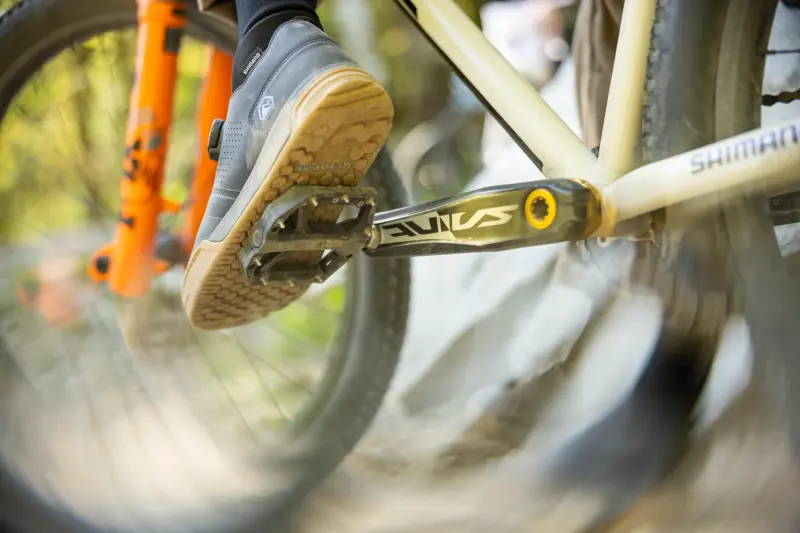 SHIMANO MTB shoes: which model suits you?Flat or SPD, trail or bike park: we explain SHIMANO's GE, GF and XC mountain bike shoes and help you choose the right model for your riding style.
 From road bike to gravel: what changesRiding a road bike and thinking about gravel? Here is what really changes, what you can take with you and which parts you need to buy new.
Last updated: October 2026