
Sale: from 50 % off
Piste days
A visor helmet must sit securely and comfortably on your head. Compare lens and ventilation features only after establishing fit.
- Measure head circumference
- Consider head shape
- Visor fits your face
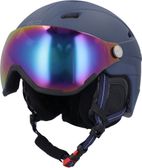
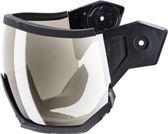
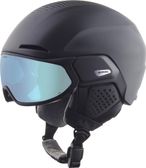
Changing light
A photochromic visor responds to light. Check the stated tint range and allow for adjustment time.
- Read tint range
- Adjustment takes time
- Fit remains the priority
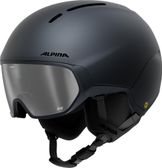
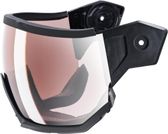
Children
The helmet should match current head size and stay steady during movement. The visor must not press on face or nose.
- Current size
- Secure fit
- Suitable visor fit
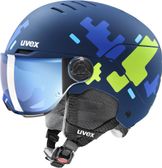
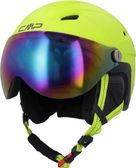
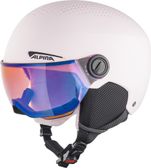
With your own glasses
Check that the visor closes over your frame without pressure on nose or arms. Not every visor fits every frame, even one designed for glasses wearers.
- Bring your own glasses
- Check the closed visor
- No pressure on arms
Guide
Visor Ski Helmets
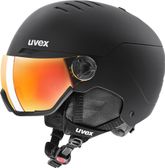
A visor helmet combines helmet and lens: fit the helmet to your head shape first, then check the closed visor against your face. If you wear glasses, try the combination with your own frame.
Key points
- Choose by head circumference and check head shape during fitting.
- The closed visor should not press on your nose or glasses.
- Lens tint also needs to suit poor light conditions.
- Replacement visors must be explicitly compatible with the helmet series.
Which visor for your ski day?
| Use | Choose | Bear in mind |
|---|---|---|
| Ordinary piste days | ChooseWell-fitting helmet with fixed tint | Bear in mindCheck the specific lens. Mirror finish and colour alone do not indicate light transmission. |
| Changing light | ChoosePhotochromic visor | Bear in mindRead the model's tint range and limits. Adjustment is not instantaneous. |
| Prescription glasses | ChooseSufficient room beneath the visor | Bear in mindBring your own frame. Closing the visor must not press on its arms or nose bridge. |
| Children | ChooseHelmet in their current size | Bear in mindThe adjustment system cannot compensate for the wrong basic size. The visor fit matters too. |
Fixed or changing tint?
Fixed tint (One light range)
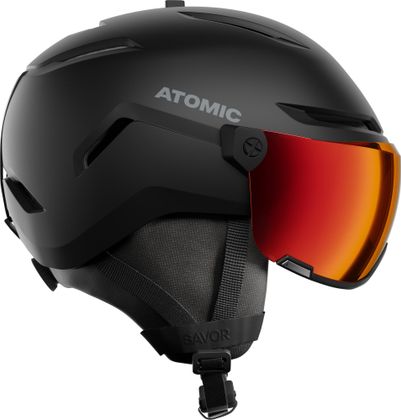
The lens remains equally light. Very different conditions may need a compatible replacement visor.
- Advantage: Consistent lens behaviour
- Drawback: Not equally suited to every light condition
Photochromic (Reacts to light)
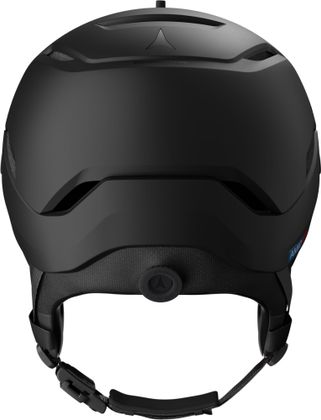
The lens changes its tint within the range it is designed to cover.
- Advantage: Fewer manual changes needed
- Drawback: Adjustment takes time and has limits
What to look for
| Question | In brief | Why |
|---|---|---|
| Which size? | In briefCheck circumference and shape | WhyThe helmet should feel evenly secure without pressure points. Tightening the adjustment dial cannot make an oversized shell fit. |
| Will my glasses fit? | In briefCheck with the visor closed | WhyEven a large visor may not leave room for every frame. Turning and nodding should not move the glasses. |
| Can I replace the visor? | In briefMatch the exact series | WhyAttachments and shape differ. Check the approved combination before ordering a replacement. |
Common questions
Is a visor helmet fog-free?
That cannot be promised generally. Moisture, airflow and any glasses underneath all matter. Keep ventilation clear and clean coatings according to the manufacturer's instructions.
What matters in fog?
A sufficiently light lens intended for those conditions. A dark sun visor lets too little light reach your eyes in poor visibility. Check the specific version's intended use.
Can I fit any visor from the same brand?
No. Series and fittings differ even within one brand. Explicit compatibility matters.
What after a fall?
Uvex requires replacement after a fall or collision because protection during another impact can be impaired. Follow the user instructions for your own helmet too.
Last updated: November 2026