
Sale: from 50 % off


Guide
Touring & Freeride Gloves
On the climb you want a good grip on poles and fastenings; descending calls for greater warmth and weather protection, so match your combination to effort and conditions.
Key points
- Thin gloves make skins and bindings easier to handle.
- Plan a dry, warmer pair for descents and breaks.
- Leather needs suitable care; check each model's water protection.
Which gloves for each stage?
| Use | Choose | Bear in mind |
|---|---|---|
| Sweaty ascent | ChooseThin fingered glove | Bear in mindCheck your grip on poles and zips, and change damp gloves when the effort stops. |
| Cold descent | ChooseInsulated glove or mitten | Bear in mindCheck filling and water protection rather than judging warmth only by visible thickness. |
| Changing tasks | ChooseFingered or three-finger design | Bear in mindTry with your own poles; individual fingers make fine adjustments easier to manage. |
Which design suits you?
Fingered glove
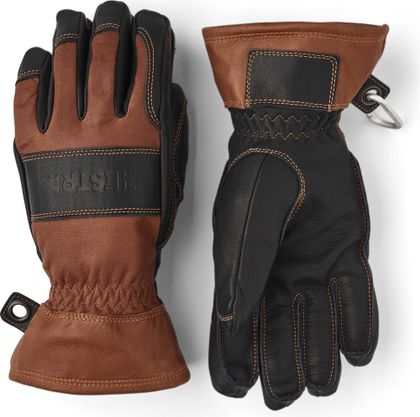
For holding poles, straps and small fastenings with individual fingers.
- Advantage: More precise handling
- Drawback: Fingers are separated
Mitten
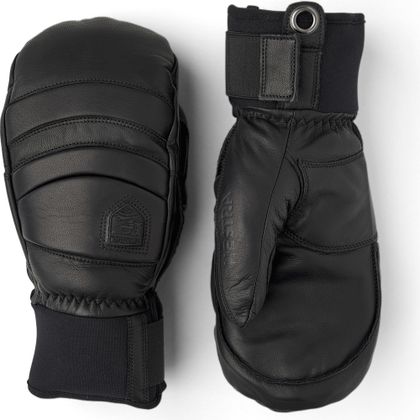
The fingers share one insulated compartment.
- Advantage: Shared warmth around the fingers
- Drawback: Small fastenings are harder to operate
What to look for
| Question | In brief | Why |
|---|---|---|
| Which fit? | In briefCheck with fingers curved | WhyLeave room at the fingertips while holding a pole; compressed filling provides less insulation. |
| Which cuff? | In briefCombine with your jacket | WhyA long cuff can keep snow out but should not restrict the wrist when paired with your jacket sleeve. |
| Which water protection? | In briefRead fabric and lining details | WhyA waterproof insert and well-maintained leather do different jobs; follow the model's care instructions. |
Common questions
Will one pair last a whole ski tour?
That can work in mild conditions, but damp gloves feel cold when you stop. A dry, warmer spare pair gives a reserve for descents and delays. Plan around the route, weather and your sensitivity to cold rather than judging only by the effort of climbing.
Are mittens always the better choice?
They can provide more warmth but make small fastenings harder to operate. Fingered gloves offer more dexterity, with three-finger designs in between. Try your pole grip and jacket zip to judge which shape leaves enough movement for your tasks.
Is a leather glove waterproof?
Leather requires care and can become wet through without a suitable inner construction. For specified water protection read the model's membrane, seam and care details. Use leather wax or grease only when the manufacturer recommends it for that glove.
How should I dry the gloves?
Avoid putting them directly on a radiator. Open the cuffs and remove a detachable liner where the design permits. Let the gloves dry fully at room temperature; afterwards care for dampened leather as the manufacturer recommends for that model.
Last updated: November 2026