Super deals: At least 50% off
Guide
Running & Gym Shoes
Your surface decides first: on tarmac you run in a cushioned road shoe, on forest trails in a trail shoe with lugs. Then comes the fit: the heel stays put and there is a thumb's width of room at the front.
Key points
- Drop: 0 to 4 mm is low, 9 mm and up is high.
- Leave a thumb's width in front of your longest toe.
- Neutral or stability: decide by feel.
Which type for which use?
| Use | Choose | Reason |
|---|---|---|
| Tarmac, farm tracks, daily training | ChooseNeutral running shoe | ReasonMedium cushioning, smooth roll-off, light. Little grip in mud and on wet roots |
| Training on firm ground | ChooseStability shoe | ReasonFirmer foam on the inside supports the foot. Only helps if it feels comfortable |
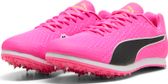
| Races from 5 km to marathon, tempo runs | ChooseRacing shoe with plate | ReasonLight, carbon plate in the foam, direct toe-off. Road races: sole no higher than 40 mm |
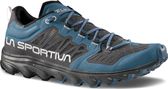
| Forest trails, roots, mountain paths | ChooseTrail shoe | ReasonLugs from 3 to 7 mm, toe protection. More shoe than you need on tarmac |
| Gym, strength, Hyrox, classes | ChooseGym shoe | ReasonFlatter, wider sole for hold in sideways moves. Too little cushioning for long runs |
Types compared
Neutral running shoe
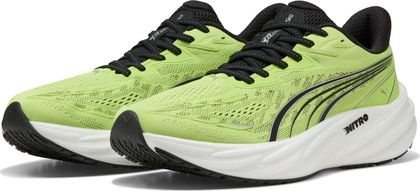
For daily training on firm ground.
- Advantage: Medium cushioning
- Drawback: Little grip on wet forest ground
Stability shoe
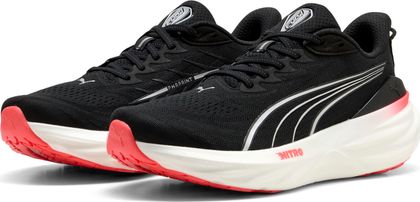
For runners whose foot rolls inward a lot.
- Advantage: Firmer foam supports the inside
- Drawback: Only worth it if it feels good
What to look for when buying
| Question | In brief | Why |
|---|---|---|
| What does drop mean? | In briefHeel minus forefoot | WhyDrop is the height difference between heel and forefoot. 0 to 4 mm counts as low, 5 to 8 mm as medium, 9 mm and up as high. A low drop puts more load on your calves. |
| How high can the sole be? | In briefRoad races: 40 mm | WhyStack is the sole height under your foot. World Athletics allows a maximum of 40 mm for road races and 20 mm on the track. There is no limit in training: choose what feels good. |
| Neutral or stability? | In briefChoose by feel | WhyStability shoes support the inside of the foot with firmer foam. A review in the British Journal of Sports Medicine found no clear evidence that pronation predicts injury. |
Frequently asked questions
Can I race in carbon-plated shoes?
Yes, if the sole stays within the limit. World Athletics allows a maximum of 40 mm for road races and, since 1 November 2024, 20 mm on the track. There is no limit for mountain and trail races.
Can I wear running shoes in the gym?
For the treadmill and bike, yes. For squats, lunges and jumps, a gym shoe is the better choice: it is flatter and holds the foot in sideways moves. A thickly cushioned running shoe gives way.
What does a 0 mm drop shoe do?
Heel and forefoot sit at the same height, as when barefoot. That puts more load on calves and Achilles tendon, so switch in small steps and keep runs short at first.
Do I need Gore-Tex running shoes?
In autumn and winter they can be worth it: the membrane keeps rain and puddles out. But water that runs in over the top stays inside and dries slowly. In summer, open mesh is airier.
Last updated: October 2026
Women
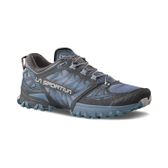
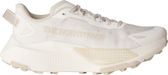
According to Altra, its women's models are built on a separate last with a narrower heel. Choose by fit: the heel doesn't slip and there is a thumb's width at the front.
- Own last
- Narrower heel
- Thumb's width at the front
Men
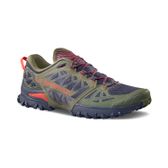
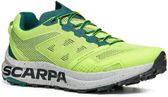
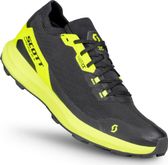
Choose by fit, not by your everyday size: according to Scott, running shoes are often half to one and a half sizes larger. Leave a thumb's width at the front.
- Larger than everyday shoes
- Thumb's width at the front
- Try on in the afternoon
Kids
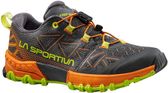
Measure the foot and add at least 12 mm. Check the fit every few months: children's feet grow by about 1 mm a month.
- Foot length plus 12 mm
- Check every few months
- Check width and fit
Off-road
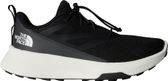
For forest trails, roots and mountain paths, choose a trail shoe with lugs: 3 to 4 mm on dry ground, 5 to 7 mm for mud and scree.
- Lugs of 3 to 7 mm
- Toe protection
- Grippy sole


Brands we carry


- adidas
- adidas Terrex
- Altra
- CMP
- Columbia
- Craft
- Danner
- Dolomite
- Dynafit
- EA7
- Falke
- Ferrino
- Garmont
- Gola
- Halti
- Helly Hansen
- La Sportiva
- Lowa
- Mammut
- Merrell
- Millet
- Oakley
- Puma
- Reima
- Rossignol
- Salewa
- Saucony
- Scarpa
- Scott
- Tecnica
- The North Face
- Timberland
- Under Armour
- Uyn
- Veja
- Viking
- X-Bionic
No brand found