Super deals: At least 50% off
Guide
Cross-Country Boots
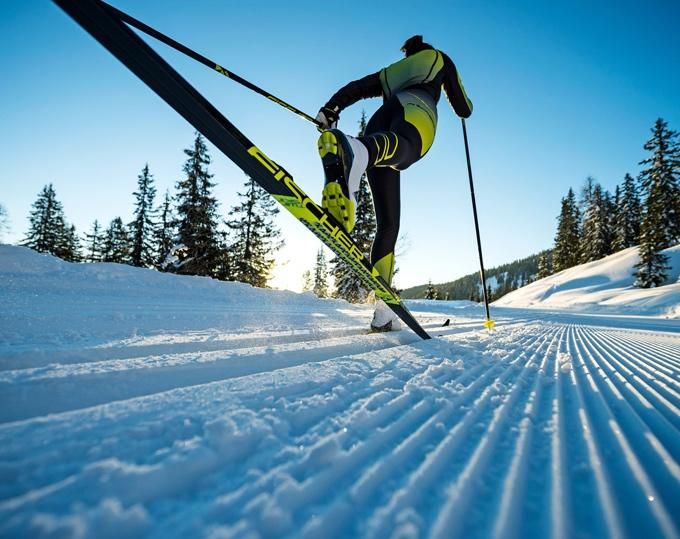
Your technique picks the boot. Classic skiing calls for an ankle-high cross-country boot with a soft sole that flexes; skating needs a high cuff and a stiff sole. Then check that the sole matches the binding on your skis.
Which cross-country boot suits me?
Classic or skate boot?
Technique decides
Read more
Classic boots are ankle-high with a soft sole that rolls through each kick. Skate boots have a high cuff and a torsionally stiff sole, so your ankle cannot roll over when you push off.
Does every boot fit every binding?
3 systems match
Read more
No. NNN, Prolink and Turnamic share one interface, so a cross-country boot with any of these soles fits all three bindings. Older SNS bindings only take SNS boots.
How snug should the boot be?
Heel locked, toes free
Read more
Heel held firmly, toes not touching the front. Classic boots want a little more forefoot room for the roll, skate boots fit closer. Start with your usual shoe size.
When is a combi boot worth it?
One pair, two styles
Read more
When you ski both techniques and want a single pair. A combi boot joins a softer sole to a high cuff. It saves you a second pair but stays a compromise.
How warm should the boot be?
Slower means warmer
Read more
The more gently you ski, the more protection from cold you need. Race-oriented cross-country boots save weight and insulate less. Recreational boots add lining and a grippier sole.
Boot types compared
| Type | Use | Strong at | Limit |
|---|---|---|---|
| Classic boot | Classic technique in groomed tracks, including Nordic cruising | Soft sole rolls with the foot, ankle-high cuff leaves the joint free to move | Too soft for skating: the ankle rolls over. |
| Combi boot | Both techniques with one pair, first seasons, children | Softer sole plus a high cuff that supports you when skating | A compromise. Neither as free as a classic boot nor as firm as a skate boot. |
| Skate boot | Skating on the wide groomed lane | High cuff and torsionally stiff sole drive power onto the ski edge | Close fit. Too stiff for classic: the sole will not flex. |
| Backcountry boot | Ungroomed snow away from the tracks, as on Scandinavian fells | Often insulated and fitted with a gaiter that keeps snow out | Needs a backcountry binding such as NNN BC or Xplore. Does not fit track bindings. |
Women's, men's, kids': some brands cut women's cross-country boots narrower than men's cross-country boots. With very narrow or wide feet, try both. Fit comes first. Kids' cross-country boots are softer and mostly combi models, so one pair covers both techniques.
How do I try boots on at home?
Four steps
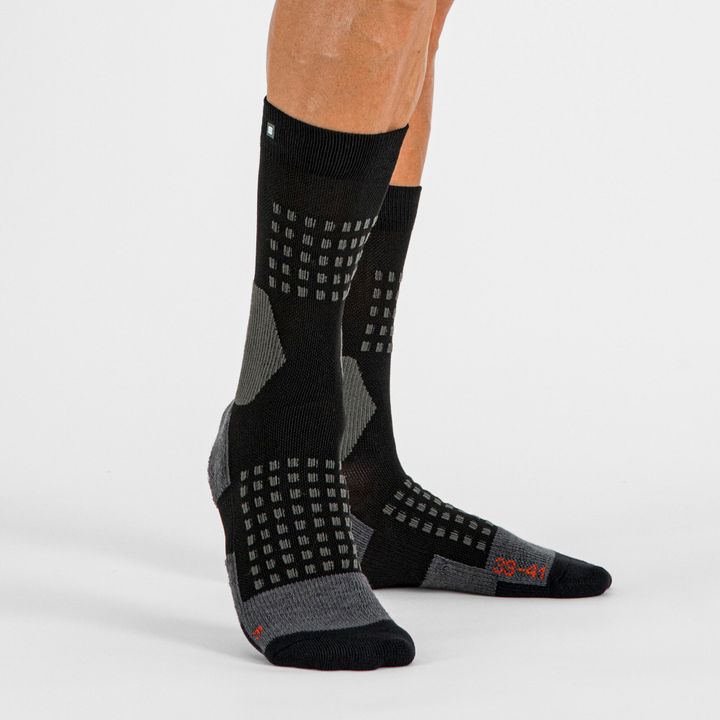
- Wear your ski socks. Try the boots with the socks you ski in: thin to medium, wool or synthetic. Thick alpine ski socks take up too much room in a slim cross-country boot.
- Seat the heel, then lace. Step in with the laces loose and tap your heel back on the floor. Only then lace up firmly. That shows you the true length of the boot.
- Walk and flex. Walk for a few minutes and bend forward as you would in a kick. Your toes stay clear of the front. If the heel lifts a lot, the boot is too big and will cause blisters.
- Match sole and binding. Read the system printed on sole and binding. NNN, Prolink and Turnamic work together. If the binding says SNS, you need a boot with that exact SNS sole (Profil or Pilot) or a new binding.
Key points at a glance
- Classic: soft and ankle-high. Skate: high cuff, stiff sole.
- NNN, Prolink and Turnamic fit together, SNS does not.
- Heel locked, toes free: start with your usual shoe size.
Frequently asked questions
Can I skate in classic boots?
For a few strides, yes. For a season, no. A classic boot clips into a skate binding, but it lacks the high cuff and the torsionally stiff sole. On the sideways push your ankle rolls over and the power never reaches the ski.
Will new boots fit my old SNS bindings?
No. SNS Profil and SNS Pilot came before Prolink and are no longer sold. Current soles do not fit them, and the manufacturer warns that combining the two can damage the binding. Have a current binding mounted instead.
Which socks go in a cross-country boot?
Thin to medium technical socks in merino or synthetic fibre. As a rule of thumb, skip cotton and thick alpine ski socks: they are too warm and too bulky here. Dedicated cross-country socks are padded at the shin and instep.
What does a heat-mouldable liner do?
It shapes the boot to your foot: the liner is warmed and takes on the form of your foot as it cools. That eases pressure points. It pays off mainly for experienced skiers who want a more exact fit. In your first winters you can do without.
Can I walk in cross-country boots?
From the car park to the track, yes. For a winter walk, no. Sporty classic soles give little grip when you walk, and skate soles are stiff. Recreational models have a grippier sole and suit a longer approach.
Last updated: October 2026
No products match these filters.

