Super deals: At least 50% off
Guide
Mountain Bike Shoes
MTB shoe selection starts with the pedal: grippy rubber for flat pedals or a compatible cleat fitting for clipless systems. Then consider walking and weather.
Key points
- Flat pedals need a suitable rubber sole; clipless pedals need compatible fittings.
- For frequent pushing, consider tread and walking comfort.
- A stiff shoe can be less comfortable for walking.
- Try winter shoes with the socks you will actually use.
Which option suits your use?
| Use | Choose | Why |
|---|---|---|
| Flat pedals | ChooseGripping rubber sole | WhyMatch the sole to the pedal pins. Cleat fittings are not required here. |
| Cross-country | ChooseCompatible cleat fittings | WhyCheck pedal, cleat and shoe as a complete compatible system. |
| Trails with walking | ChooseTread and walking comfort | WhyA very stiff shoe can become awkward on longer sections off the bike. |
| Cold and wet days | ChooseInsulated weather protection | WhyCompare insulation, water protection and sock space separately. |
Types compared
Flat-pedal shoe
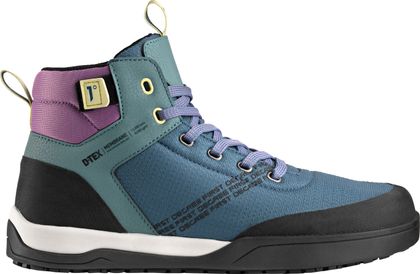
A treaded rubber outsole without a cleat fitting rests on pedal pins. It suits riders who frequently reposition the foot.
- Advantage: No unclipping needed before dismounting
- Drawback: Pedal hold also depends on pins and rubber compound
XC clipless shoe
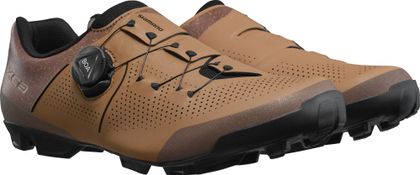
A recessed cleat fitting sits within a treaded sole. It suits XC riders with matching clipless pedals and short walks.
- Advantage: Connection stays engaged when pulling on the pedal
- Drawback: Cleats need their own appropriate adjustment
Winter cycling shoe
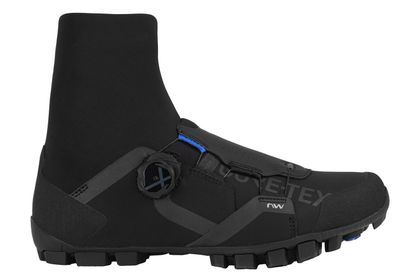
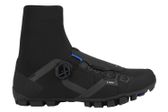
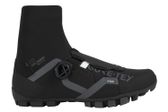
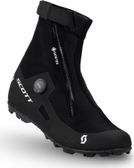
A higher opening and insulated weather construction surround the foot. It suits rides with prolonged exposure to cold.
- Advantage: Covers the transition between shoe and leg
- Drawback: Extra construction reduces room for thick socks
What to look for when buying
| Question | In brief | Why |
|---|---|---|
| Which pedal? | In briefCheck the fitting first | WhyNot every cleat system fits every shoe. Bolt pattern and maker’s compatibility must match. |
| How stiff? | In briefBalance riding and walking | WhyLong periods of pedalling and frequent walking place different demands on sole flexibility. |
| Which width? | In briefAvoid squeezing the forefoot | WhyA dial distributes tension differently from laces; neither should create pressure points. |
| Which weather? | In briefChoose insulation deliberately | WhyAn insulated weatherproof shoe needs instep space and can feel too enclosed in warm weather. |
Frequently asked questions
How do I check the fit?
Try the shoe fastened with your cycling socks. The heel should stay held when pulling through the pedal stroke. Check the instep; a dial must not compensate for insufficient width with pressure.
How do I use the size chart?
Shimano’s XC302 size chart assigns a 26.5 cm foot length to EU 42. This chart applies to that model.
Can I rely on my usual size?
Use the chart for the exact model. Size labels can differ between brands and lasts. Compare both feet and check the product’s width and fit notes before ordering.
How do I care for it?
Remove mud after riding and keep fittings and fastening clean. Fit and check cleats as directed by the pedal manufacturer. Follow the shoe maker’s drying instructions.
Last updated: October 2026
What for?
Flat pedals
On flat pedals, you should be able to reposition your foot without slipping on an overly smooth sole.
- Gripping rubber sole
- Check the fitting first
- Avoid squeezing the forefoot
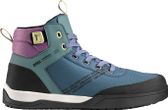
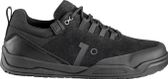
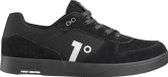
Cross-country
With clipless systems, the shoe fitting and chosen cleat must explicitly work together.
- Compatible cleat fittings
- Check the fitting first
- Avoid squeezing the forefoot
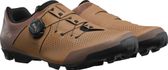
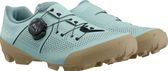
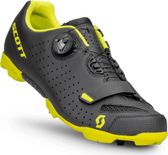
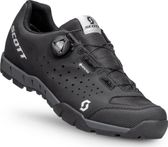
Trails with walking
On walking sections, do not judge the shoe only by pedalling stiffness.
- Tread and walking comfort
- Check the fitting first
- Avoid squeezing the forefoot
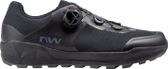
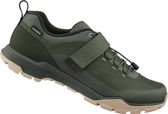
Cold and wet days
In cold rain, consider internal space, weather protection and the opening around the leg together.
- Insulated weather protection
- Check the fitting first
- Avoid squeezing the forefoot
No products match these filters.


Brands we carry


Show all brands
- Bridgedale
- Dainese
- Endura
- First Degree
- Five Ten
- Giro
- ION
- Mavic
- Northwave
- Oakley
- Scott
- Shimano
- Unparallel
- VAUDE
No brand found
