
Sale: from 50 % off
Guide
Indoor Cycling Shoes
The pedal decides between 2- and 3-bolt mounting. Then compare ventilation, heel hold and toe room: indoors there is no cooling wind.
Key points
- Pedal first: 2-bolt for SPD, 3-bolt for systems such as SPD-SL or Look Delta.
- Indoors there is no cooling wind; mesh improves ventilation.
- Fit cleats as instructed; Shimano specifies 5–6 Nm for its mounting bolts.
Which shoe for which pedal?
| Use | Choice | Limit |
|---|---|---|
| Studio classes, home bikes with SPD pedals | ChoiceIndoor shoe, 2-bolt | LimitWon't fit Look Delta or road pedals. |
| Switching between studio, home bike and turbo | ChoiceIndoor shoe, 2- and 3-bolt | LimitThe cleat sits proud. Some soles need an adapter plate for 2-bolt cleats. |
| Turbo sessions on your own road bike, racing | ChoiceRoad shoe, 3-bolt | LimitOften less mesh, not built for walking. |
| Riders who already own a pair and use SPD | ChoiceMTB or gravel shoe, 2-bolt | LimitLugged sole and a denser upper: usually warmer indoors. |
| A taster class | ChoiceGym trainers in toe cages | LimitThe soft sole bends over the pedal and your foot isn't locked in. |
Types compared
Indoor shoe, 2-bolt
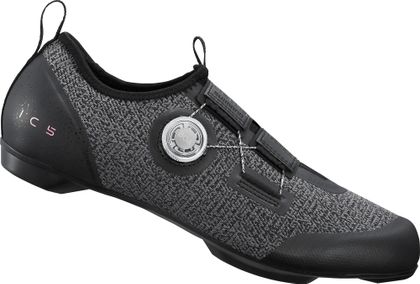
For studio classes and home bikes with SPD pedals.
- Advantage: Recessed cleat
- Drawback: Won't fit Look Delta or road pedals
Indoor shoe, 2- and 3-bolt
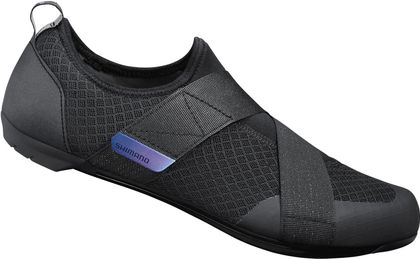
For switching between studio, home bike and turbo.
- Advantage: One sole for SPD and 3-bolt cleats
- Drawback: The cleat sits proud
Road shoe, 3-bolt
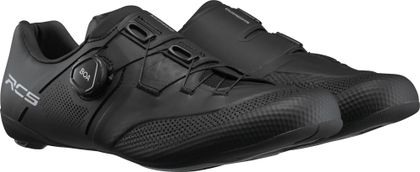
For turbo sessions on your own road bike, racing.
- Advantage: Usually stiffer sole, up to 12 on Shimano's scale
- Drawback: Often less mesh
What to check before you buy
| Question | In short | Why |
|---|---|---|
| 2-bolt or 3-bolt? | In shortCheck the pedal first | Why2-bolt means SPD, Shimano's system with a small cleat, often recessed into the sole. 3-bolt is the road standard (SPD-SL, Look): a large plate that sits proud. |
| How stiff should the sole be? | In short5 to 6 out of 12 | WhyShimano rates soles from 2 (flexible) to 12 (race). Its indoor cycling shoes sit at 5 to 6: firm enough to push against, with enough give for the walk to the changing room. |
| How much ventilation do I need? | In shortMesh over the forefoot | WhyAs much as you can get. There is no airflow indoors, so feet heat up quickly. Many indoor cycling shoes therefore use a mesh upper, an open-weave fabric that lets heat escape. |
| Strap or dial? | In shortA strap usually does | WhyA hook-and-loop strap across the midfoot holds well and closes in a second. A dial closure (BOA) tightens a cable in small steps, and you can adjust it with one hand. |
Frequently asked questions
Can I use road shoes for indoor cycling?
Yes, as long as the cleat matches the pedal. On a turbo trainer with your own road bike that is the simplest route.
Which cleats fit the Peloton Bike?
Delta-compatible cleats with 3 bolts. They fit any cycling shoe with a 3-bolt mount.
Are gym trainers enough for a class?
For your first few sessions, yes. Many studio bikes have dual-sided pedals: SPD on one side, a toe cage with a strap on the other.
Do cleats come with the shoes?
Usually not. Shimano, for one, does not include cleats with its shoes; you buy them separately or get them with a set of pedals.
More from the magazine
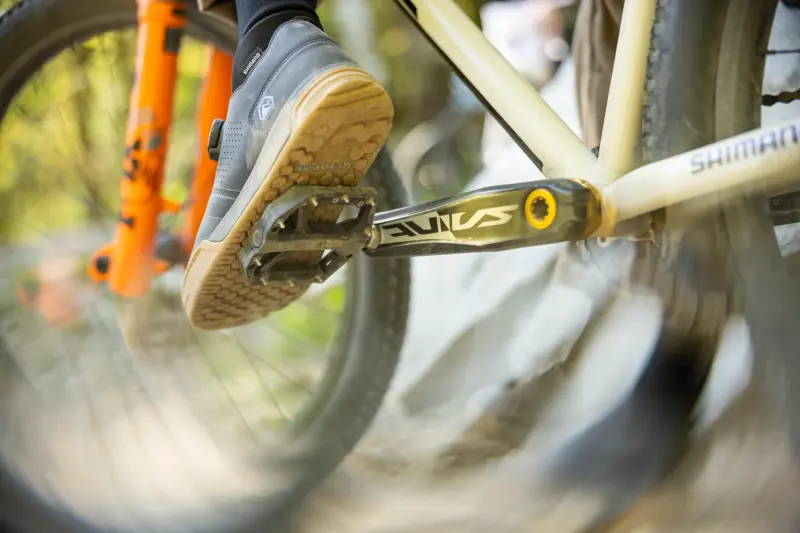 SHIMANO MTB shoes: which model suits you?Flat or SPD, trail or bike park: we explain SHIMANO's GE, GF and XC mountain bike shoes and help you choose the right model for your riding style.
 Mobility after cycling: 5 exercises in 10 minutesStiff back, tight hips, tense neck? These five mobility exercises ease the usual post-ride complaints in ten minutes.
Last updated: October 2026