Super deals: At least 50% off
Guide
Sleeping Bags
A sleeping bag needs the right temperature specification, inner shape and fill. Choose it together with your mat and usual sleepwear.
Key points
- Compare comfort temperature with the expected overnight temperature.
- Extreme temperature describes a risk zone, not a buying target.
- Include sleeping mat, clothing and personal sensitivity to cold.
- Balance packed size, weight and freedom to move.
Which option suits your use?
| Use | Choose | Why |
|---|---|---|
| Limited packing space | ChooseLightweight down bag | WhyCompare packed size and the exact version’s comfort temperature, not just the family name. |
| Prefer synthetic fill | ChooseSuitable synthetic bag | WhyCheck temperature range and packed volume. Fill type alone does not establish warmth. |
| More room to move | ChooseRoomier camp bag | WhyCheck internal shape at shoulders and feet. Extra room can feel comfortable but needs more packing space. |
| Light sleeping system | ChooseQuilt or compact touring bag | WhyAn open quilt must work with its mat and attachment system. It does not replace every enclosed design. |
Types compared
Light down bag
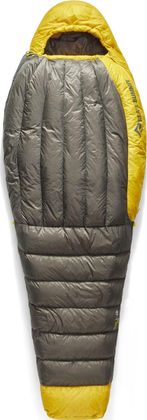
Compressible down fill sits in a close-fitting shell. It suits trips where pack space and empty weight matter especially.
- Advantage: Substantial insulation for relatively little fill weight
- Drawback: Wet down loses much of its loft
Synthetic sleeping bag
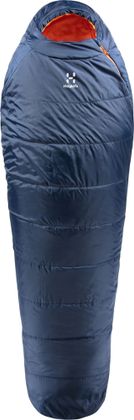
Synthetic fibres insulate an elongated sleeping space. It suits trips where handling damp conditions is a priority.
- Advantage: Fill tends to retain its volume better when damp
- Drawback: Often bulkier than down for similar warmth
Roomy camp bag
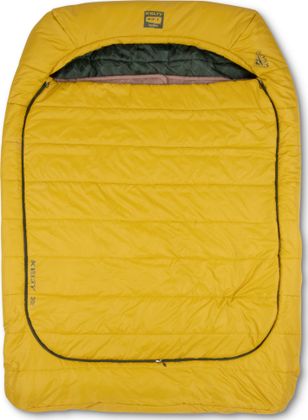
A broad interior leaves more space around the body. It suits fixed camps and people who move frequently in their sleep.
- Advantage: Easier to turn with bent legs
- Drawback: A larger shell increases packed bulk
What to look for when buying
| Question | In brief | Why |
|---|---|---|
| Which temperature? | In briefStart with the comfort rating | WhyRatings provide guidance. Wind, fatigue, moisture and the sleeping mat affect perceived warmth. |
| Which shape? | In briefRoom at body and feet | WhyToo little room compresses the fill; excessive room makes the sleeping system and packed size larger. |
| Which fill? | In briefConsider packed size and care | WhyDown and synthetic designs differ by model. Compare similar comfort ratings rather than fill weight alone. |
| Which mat? | In briefPlan the complete sleep system | WhyFill beneath your body is compressed. A sleeping bag does not replace a suitable mat’s ground insulation. |
Frequently asked questions
How do I check the fit?
Lie inside wearing your sleep clothing. Hood and collar should close without strongly compressing fill at shoulders or feet. Check that you can operate the zip from inside.
Which maker specification helps when comparing?
Haglöfs lists -11 °C comfort and -18 °C limit for the Tarius -18. Do not mistake the model name for its comfort rating.
How do I compare different designs?
Compare versions intended for the same use. Dimensions, capacity, weight and weather protection describe different properties. Check interfaces and the complete setup with your existing equipment.
How do I care for it?
Air after sleeping and store as directed. Washing and drying depend on fill and model. A down sleeping bag and a coated bivvy bag do not need the same treatment.
Last updated: October 2026
What for?
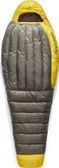
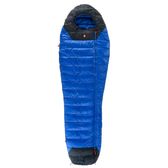
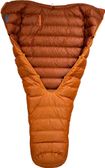
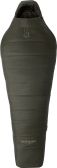
Limited packing space
With limited packing room, compare the compressed size of the variant with the temperature rating you need.
- Lightweight down bag
- Start with the comfort rating
- Consider packed size and care
Prefer synthetic fill
Synthetic fill does not remove the need to check the finished bag’s comfort rating.
- Suitable synthetic bag
- Start with the comfort rating
- Consider packed size and care
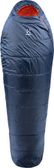
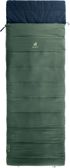
More room to move
If you turn frequently at night, your shoulders and knees need room inside the chosen shape.
- Roomier camp bag
- Start with the comfort rating
- Consider packed size and care
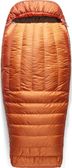
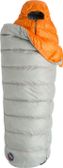
Light sleeping system
With a quilt, mat, attachment and side closure are part of planning warmth.
- Quilt or compact touring bag
- Start with the comfort rating
- Consider packed size and care
No products match these filters.


Brands we carry




Show all brands
- Bergans
- Big Agnes
- Bridgedale
- Carinthia
- Dale of Norway
- DB Journey
- Deuter
- Edelrid
- Exped
- Ferrino
- Fjällräven
- Grand Canyon
- Grüezi Bag
- Haglöfs
- Isbjörn
- Jack Wolfskin
- Kelty
- Kohla
- Marmot
- Millet
- Montura
- Mountain Hardwear
- MSR
- Nemo
- Nordisk
- Osprey
- Outdoor Research
- Outwell
- Pajak
- Pinewood
- Rab
- Robens
- Salewa
- Sea to Summit
- Sierra Designs
- Tatonka
- Ternua
- The North Face
- Therm-A-Rest
- Trespass
- VAUDE
- Whistler
No brand found
