
Sale: from 50 % off
By lift
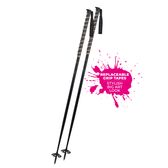
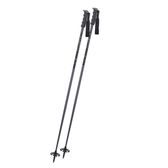
A fixed-length pole covers many descents. Check your preferred length and a grip you can hold securely with your ski gloves.
- Fixed length
- Grip with gloves
- Suitable snow baskets

With a climb
An adjustable design can suit different sections. Practise opening and closing the lock with gloves and respect the markings on the shaft.
- Check adjustment range
- Close locks securely
- Respect shaft markings


Compact on a rucksack
Compare folded or collapsed length with your pack's attachment. Secure loose sections and position tips so they cannot hit anyone while carried.
- Compare packed length
- Secure the sections
- Protect the tips
Traverses and changing terrain
An extended grip helps with lower hand positions. If you also change length often, look for easy controls and clean locking surfaces.
- Check grip length
- Allow for gloves
- Inspect the lock
Brands we carry
Guide
Freeride ski poles
For freeriding, grip, baskets and pole length need to work together. Fixed length is simple for descents, while adjustment can help on changing terrain.
Key points
- A large basket provides more supporting area in soft snow.
- Fixed length avoids dealing with a locking mechanism.
- Adjustable poles need locks you can close securely with gloves.
- Consider straps and release systems together with your gloves and terrain.
Descents or changing terrain?
| Use | Choose | Bear in mind |
|---|---|---|
| Lift-served descents | ChooseFixed-length pole | Bear in mindChoose a length for your skiing position; a simple construction needs little adjustment on the way. |
| Climbing and descending | ChooseAdjustable pole | Bear in mindA suitable length range covers different sections. Check the lock before every outing. |
| Short traverses | ChooseExtended grip | Bear in mindHold the uphill pole lower without resetting its length at every change of direction. |
| Compact transport | ChooseFolding or telescopic construction | Bear in mindCompare packed length with the rucksack attachment and protect the tips when carrying. |
Fixed or adjustable?
Fixed length (Simple to use)

A continuous shaft stays at its chosen length without an adjustment routine.
- Advantage: No length lock to set
- Drawback: Cannot change length on the move
Adjustable (Flexible use)

Several sections allow different pole lengths.
- Advantage: Adapt to climbs and descents
- Drawback: Keep locks clean and check them
What to look for
| Question | In brief | Why |
|---|---|---|
| Which length? | In briefConsider skiing posture | WhyUse the maker's size advice as a starting point. The grip and wrist should stay relaxed without lifting your shoulder during a pole plant. |
| Which baskets? | In briefMatch the snow depth | WhyBroad baskets sink less in soft snow. For replacements, compare the mounting system and stated model compatibility. |
| What matters at the strap? | In briefTry it with gloves | WhyAdjust the strap and read any release-system instructions. In unmanaged terrain, deciding when to use straps belongs to your practical safety training. |
Common questions
Can freeride poles be used on piste?
Yes, if the length and grip suit you. Large baskets are designed for soft snow; a compatible smaller basket may feel more convenient on firm pistes.
How do I maintain the length adjustment?
Remove snow and moisture as directed, then let the sections dry. Check locking force before a tour. Use lubricants only where the maker specifically allows them.
Are carbon poles always preferable?
Compare weight, stiffness and intended use. Aluminium and carbon respond differently to loads and damage. Choose around your route and how you handle your equipment.
Can I fit any replacement basket?
Compare the fitting and exact model compatibility. Threads, push-fit systems and flexible baskets differ. The basket must attach securely and stay in place in the snow.
Last updated: November 2026