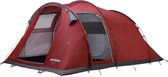
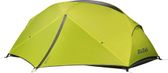
%Super deals: At least 50% off
4-person tents
Buying guide ↓Four sleeping places leave little space for luggage; plan a vestibule to hold it.
Guide
4-person tents
Compare the sleeping floor with the mats you actually use. For luggage, wet shoes and rainy days, the space outside the inner tent matters as much as the number of sleeping places.
Key points
- Compare inner dimensions with your sleeping-mat widths.
- Allow vestibule space for luggage and footwear.
- Judge total weight and packed size by how you will travel.
How will you reach the campsite?
| Use | Choose | Bear in mind |
|---|---|---|
| Trekking with shared kit | ChooseA carryable tent with enough sleeping area | Bear in mindShare poles, inner and fly sensibly within the group. Check that your mats fit side by side without pushing the fabric walls outwards. |
| Travelling by car | ChooseA roomier camping tent | Bear in mindExtra sheltered space helps with rain and luggage. Compare the full pitching area and internal height with the campsite space available. |
| Moving camp often | ChooseA straightforward pitching system | Bear in mindClear assembly helps when arriving late. Practise beforehand and check how inner and outer are handled together in wet weather. |
What to look for
| Question | In brief | Why |
|---|---|---|
| How much room is usable? | In briefCheck the floor rather than the name | WhySloping walls reduce usable space. Long mats and tall airbeds need more room than low, narrow sleeping pads. |
| Where does the luggage go? | In briefChoose covered storage for the load | WhyA vestibule keeps wet shoes outside the sleeping area. A small entrance, however, is not a shared living room for the whole group. |
| How will you ventilate it? | In briefCompare doors and sheltered vents | WhySeveral sleepers create more moisture. Airflow helps manage condensation; keeping every opening closed can make the interior damper. |
Common questions
Will four adults always fit comfortably?
The stated number mainly describes sleeping places. Compare inner length and width with your mats and decide where clothes and luggage will go. A roomier floor plan may suit a long comfort-focused holiday better than a tightly filled sleeping area.
Is an inner tent a complete tent?
Read the specific item's supplied contents. An inner, vestibule or mesh insert can be an individual component. Full weather protection requires the matching complete structure and any parts specified in its instructions.
Why consider a second entrance?
It can make access easier without climbing over other sleepers and may improve ventilation. Still compare vestibule sizes and the room needed for guy lines. Two small porches do not automatically provide a large sheltered living area.
How do we store the tent after the trip?
Dry inner and fly fully before long-term storage. Remove grit from zips and avoid leaving damp pegs packed against fabric. Follow the manufacturer's material guidance for cleaning and repairs rather than using general household treatments.
Last updated: November 2026
Travelling with backpacks
For carrying, compare total weight and packed size. Your mats should still fit without pressing on the walls.
- Check mat dimensions
- Share the weight
- Practise pitching
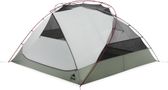
More space at the entrance
Roomier porches provide luggage space. Read the floor plan rather than assuming the sleeping capacity includes living space.
- Inspect the vestibule
- Plan pitching room
- Consider ventilation
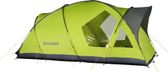
Compact camp footprint
Compact structures can need less pitching space. Add guy lines and access to the area taken by the tent floor itself.
- Measure the floor area
- Allow for guy lines
- Keep the entrance clear
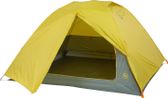
Comfort at a fixed camp
At a longer-term pitch, room may matter more than low weight. Plan transport size and drying before travelling home.
- Plan transport
- Compare inner height
- Store fully dry